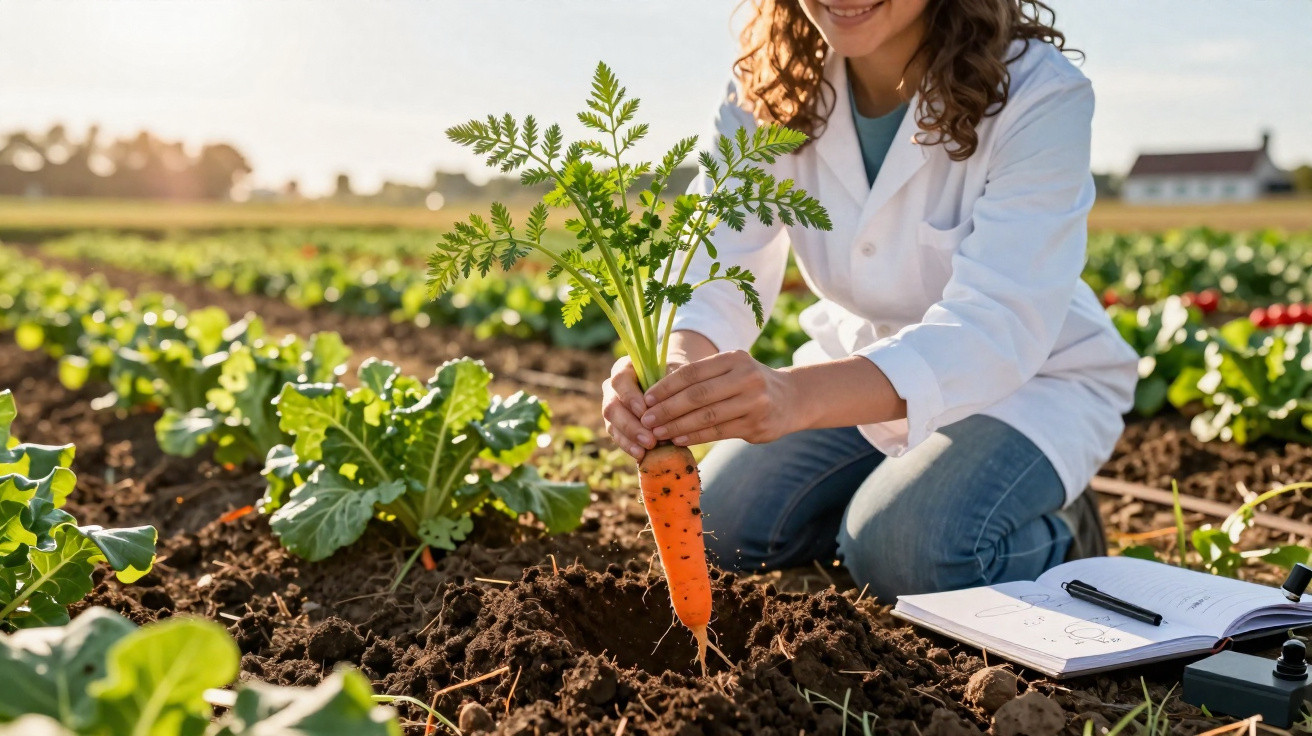
A 2025 study highlights the dramatic decline in the nutrient density of modern vegetables - and suggests how this trend could be reversed. Rather than applying ever larger quantities of chemical fertiliser to fields, researchers in India are focusing on organic nutrients and tiny soil allies: specific microorganisms that actively support plant growth.
Today’s vegetables: attractive on the outside, weaker within
Over the past eight to nine decades, the quality of many vegetables has changed substantially. High-yield varieties, monocultures and intensive use of artificial fertilisers have increased harvest volumes, but have also significantly reduced nutrient density.
Analyses indicate that commercially grown varieties have lost between 25 and 50 percent of their original nutrient density, depending on the nutrient measured. Minerals essential to human metabolism have been particularly affected, with notable declines reported in iron, copper and magnesium.
The reason is that, despite fertilisation, many soils are considered “depleted”. They may contain nutrient salts, but they support increasingly less life. Intensive cultivation and the continual application of chemical fertilisers have greatly reduced microbial diversity in the soil. Yet this unseen soil life is crucial to how effectively plants absorb nutrients and convert them into vitamins, minerals and secondary plant compounds.
The fewer microorganisms are active in the soil, the less nutritious the food on the plate ultimately becomes - regardless of how large or flawless the vegetables look.
The researchers’ approach: nourish the soil rather than simply fertilise it
In a project published in 2025, a research team in India tested a different method. Instead of artificial fertilisers, it used only organic sources, including farmyard manure and vermicompost - humus produced through earthworm activity. These materials were supplemented with “plant growth-promoting microorganisms”, known technically as PGPM (Plant Growth-Promoting Microorganisms).
These microorganisms mainly include specialised bacteria around plant roots, known as rhizobacteria, as well as beneficial fungi. They establish themselves around the roots and form a close partnership with the plant.
What these microorganisms do in the soil
- Fix nitrogen: They capture gaseous nitrogen from the air and make it available to plants.
- Make nutrients available: They convert phosphorus and other minerals into forms that roots can absorb more easily.
- Improve soil structure: They support the formation of a crumbly soil structure and the build-up of humus, allowing the soil to retain more water.
- Reduce stress: They help plants tolerate heat, drought and salt stress more effectively.
- Create a protective barrier: Some microorganisms displace disease-causing microbes from the root surface.
From a scientific perspective, these microorganisms therefore act as both a type of biofertiliser and bioprotection - without leaving chemical residues.
More minerals: figures that will catch farmers’ attention
The research team compared vegetables grown using the organic-microbial method with plants cultivated using conventional mineral fertilisers. The differences were clear.
| Nutrient | Change with the organic method |
|---|---|
| Zinc | +48.48% |
| Iron | +31.70% |
| Calcium | +23.84% |
Such increases are relevant not only to nutrition experts. In countries where people depend heavily on vegetables as a principal nutrient source, every additional percentage point can make the difference between deficiency and an adequate supply.
More flavour, more plant compounds
Mineral levels were not the only factor to change. The profile of secondary plant compounds also shifted - the substances that give vegetables their colour and aroma and can often make them valuable for health.
Examples from the study
- Potatoes: 45% more flavonoids and 49% more total phenolic compounds.
- Onions: 27% more flavonoids and 31% greater antioxidant capacity.
- Legumes such as peas and cowpeas: significant increases in antioxidants and vitamins.
Flavonoids and phenolic compounds act as free-radical scavengers in the body and are associated with a lower risk of cardiovascular disease and certain cancers. Higher levels in vegetables therefore mean not only stronger colours and more intense flavour, but also a benefit for long-term health.
The research team also assessed the produce through organoleptic testing - tastings that evaluate aroma, texture and flavour. Vegetables produced organically with PGPM performed consistently better. The improvement in perceived flavour was as high as 27.9 percent.
The combination of microorganisms and organic nutrition makes vegetables not only more nutritious, but simply tastier - a crucial factor if children and adults are to eat more of them.
“Hidden hunger”: when calories are sufficient but nutrients are not
Nutrition specialists use the term “hidden hunger” when people consume enough calories but still have deficiencies in vitamins and minerals. Estimates suggest that this affects more than two billion people worldwide.
This is precisely where the approach examined in the study could help. If farmers grow vegetables with higher nutrient density, nutritional intake improves even when consumption quantities remain unchanged. This applies both to countries with limited resources and to wealthier nations where food is abundant but quality is often overlooked.
Environmental benefits: lower emissions and less nutrient leaching
Avoiding synthetic fertilisers offers benefits beyond nutrition. Organic fertilisation and the development of active soil biology can also improve the environmental performance of farming.
- Fewer greenhouse gases: Producing artificial fertiliser requires large amounts of energy. Using organic sources instead saves CO₂.
- Lower nutrient losses: Living soil retains nitrogen and phosphorus more effectively, so fewer nutrients reach groundwater.
- More humus: Vermicompost and manure increase humus content, which also stores additional carbon in the soil.
For farmers, this approach may also be economically attractive: healthy soils are more resilient to weather extremes and require fewer external inputs over the long term.
What does this mean for consumers in the United Kingdom?
The study was carried out in India, but its central finding can readily be applied to Europe. Soils here are also under pressure, and high-yield varieties also dominate, even though they are not always the most nutrient-rich.
People can take several steps themselves:
- Buy vegetables from organic farming: Many organic farms already use organic fertilisers and encourage soil life.
- Use compost and worm castings in the garden: Kitchen scraps and garden waste can be turned into nutrient-rich humus using worm composters.
- Choose variety: Heritage varieties and different types of vegetables provide a broader range of nutrients on the plate.
Those wishing to go a step further can look for farms using terms such as “regenerative agriculture”. This often refers to methods that prioritise humus formation, soil life and minimal disturbance of the soil.
Why microorganisms are the real key
Many people associate fertile soil mainly with nutrient salts - in other words, the figures printed on a fertiliser bag. This new research brings another factor to the forefront: the soil microbiome. This refers to the entire community of bacteria, fungi and other microorganisms living in the ground.
The soil microbiome works like an invisible supply network. It unlocks nutrients, communicates chemically with plant roots and regulates the availability of minerals according to the plant’s needs. Without this network, many nutrients remain “locked” in the soil and do not reach the plant - no matter how much fertiliser is applied.
Over the long term, plant breeding and agriculture could place greater emphasis on supporting varieties and cultivation systems that work optimally with soil life, rather than focusing solely on maximum yield per hectare.

















Comments
No comments yet. Be the first to comment!
Leave a Comment