The bar lights had only just been switched on, and the room looked brutally different from the glamorous scene of two hours before.
Lipstick marks circled coupe glasses, martinis had turned cloudy, and faint fingerprints caught in the neon glow. In one corner, the dishwasher droned while doors banged and steam drifted upwards in slow curls. A young server loaded soiled glasses into plastic racks, already thinking about the end of their shift.
Then the head bartender stopped. He lifted a single glass from the clean rack and held it up to the light. He said nothing, merely raised an eyebrow. From the floor it had appeared flawless. Beneath the bar light, though, it revealed a greasy ring, minute specks and a slight damp smell.
Almost amused, he smiled and reached for a cloth and a pan of steaming water. His next step looked traditional, even wilfully old-fashioned. Yet it instantly made the dishwasher-clean glass seem distinctly second best.
Why bartenders do not completely trust the dishwasher
Speak to almost any bartender and you will hear a version of the same joke: “The dishwasher makes the glasses legally clean, not actually clean.” A machine blasts them with water, dries them at high heat and meets every hygiene requirement. On paper, it does everything properly. Under the real lighting of a bar, however, the result can tell a different story.
Detergent can leave a hazy coating. Tiny water marks can dull the shine. A slight odour may combine yesterday evening’s beer with today’s rinse cycle. These minor imperfections might go unnoticed in your kitchen, but they become glaring when you are looking through the stem of a £16 martini. A dishwasher removes surface dirt; bartenders pursue the sense that a glass is clean.
One London bar manager told me she can identify a “dishwasher-only” bar as soon as she enters. It is not because she spots the appliance, but because the glasses look a little worn out, as if they have already had a full night before you have even placed an order. In a business where half the life of a cocktail happens on Instagram, that understated tiredness costs money.
At a busy cocktail bar in New York, staff logged complaints over a three-month period. Customers returned drinks because they “tasted weird”, smelled wrong or “seemed flat”. Almost one in four of those complaints had nothing to do with the recipe. Instead, staff traced them to glass residue: invisible soap film, lingering smells and microscopic grease from lipstick or hand cream. The cocktail itself was sound. Its glass had undermined it.
A different chain found something more unusual. Its recipes, ice and garnishes were identical across every venue. Even so, customers at the location where barbacks hand-finished the glassware described spritzes as “crisper” and G&Ts as “more aromatic”. Its sales figures supported the feedback, with more repeat orders for sparkling cocktails at that particular bar. There were no better spirits and no premium soda. There was simply cleaner glassware. That is the point at which it becomes clear: a clean glass is more than an aesthetic detail. It can directly alter flavour, carbonation and aroma.
There is a sensible explanation for this. A dishwasher does not truly distinguish between different kinds of glass. It handles a martini glass much as it would a dinner plate: detergent, hot water, rinse, dry, finished. Cocktails, however, are delicate ecosystems. A fine layer of soap can destroy the bubbles in a highball. A trace of grease can hold on to aroma molecules in a Negroni. Even small scratches containing dried detergent may catch wine tannins and distort the flavour.
When bartenders refer to “polishing the glass”, they are not simply being theatrical or sentimental. They are physically removing the final obstacles between a drink and your senses. That last human touch can make a good cocktail suddenly smell fuller, taste cleaner and look ready for a glossy social-media post. It is not magic; it is physics, chemistry and a measure of professional pride.
The steam and polish technique bartenders swear by
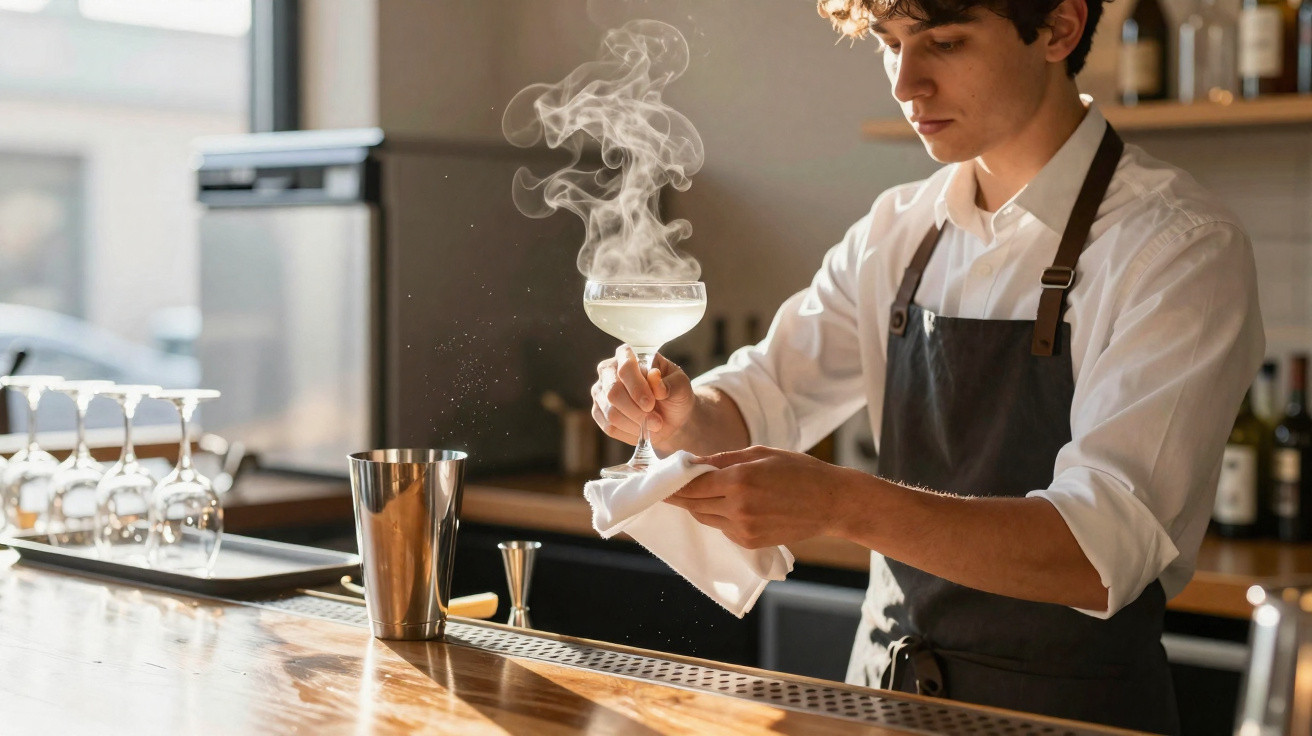
This is the technique found in nearly every serious bar, whether it is a hotel lounge or a cramped speakeasy. The glass emerges from the dishwasher technically clean, but still not ready for service. The bartender raises it to the light and turns it slowly, searching for smears, cloudiness and water spots.
The ritual follows. With one hand, they take a fresh lint-free bar cloth. With the other, they hold the glass above a burst of hot steam, produced by a kettle, a pan of boiling water or, occasionally, an espresso machine. Within seconds, the inside mists over. While the glass remains warm and damp, the cloth goes inside, twists gently and polishes the surface. The outside receives the same treatment, with firm, precise strokes around the bowl and stem. The haze vanishes, along with fingerprints and that faint dishwasher smell.
The result can look almost unreal. The glass becomes transparent in a way rarely seen at home. There is no coating, no rainbow streaking, only clean clarity that makes ice appear crisper and colours look richer. It quickly shows you just how much ordinary glassware can mislead the eye.
At home, this may sound excessive. And yes, after leftover pasta on a Tuesday evening, nobody is steaming every wine glass. Let’s be honest: nobody genuinely does it every day. Still, if the way your cocktails arrive matters to you, whether for guests, Instagram or a peaceful martini alone, this extra step can transform the experience.
Begin with the essentials. Use the smallest amount of washing-up liquid you can reasonably manage, then rinse as though you are overdoing it slightly. Avoid strongly fragranced detergents, as their scent lingers in exactly the wrong way. If you own a dishwasher, let it handle the main cleaning. Before you serve a drink, though, add the bartender’s step: a fast steam and polish.
The usual errors are remarkably consistent. Old, fluffy cotton cloths leave fibres inside the glass. Microfibre cloths may appear nearly clean while still smelling of last week’s meal. People touch the rim with bare, oily fingers immediately after polishing. Or they stack damp glasses closely together, trapping both moisture and odours. On a large night, especially when you are tired or tipsy, standards can slip without you realising. That is when cloudy, scented glassware creeps in.
Bartenders develop small routines to stop themselves making those mistakes: separate cloths solely for glassware, no holding glasses by their rims, and a quick sniff test for any glass that has been sitting out. It is minor discipline, quietly obsessive, and honestly rather contagious once you have seen what it achieves.
“Glass is like stage lighting,” says Marie, head bartender in Paris. “When you get it right, nobody comments. When you get it wrong, everyone feels that something is off without knowing why.”
Her team polishes every cocktail glass before service, without exception. The actions are short and repeated, like a piece of backstage choreography. Rather than slowing the team down, the process creates its rhythm. On especially busy evenings, one barback may spend an entire hour doing nothing but steaming and polishing. That may sound excessive until you see guests take their first sip, their eyes resting on the glass for half a second longer than normal.
- Use hot steam, rather than merely hot water, to mist the glass quickly.
- Polish using a clean, lint-free cloth reserved exclusively for glassware.
- Hold every glass by its stem or base, never by the rim.
- Inspect glasses beneath strong lighting before pouring a drink.
- After polishing, leave glasses to air for a few seconds so any trapped humidity can escape.
What this small ritual changes in your drink - and in the moment
Offering someone a flawlessly clear glass feels almost intimate. It communicates: I noticed the details. I made time for this, and for you. At a time when everything can seem hurried, that slight glimmer of care has an effect. You register it even if you cannot quite put it into words. The drink appears taller, the ice looks colder and the first sip feels more considered.
In technical terms, the benefits are straightforward. Carbonation improves because nothing is destroying the bubbles. Aromas are clearer because no unfamiliar smells compete with citrus oils or vermouth. The liquid looks cooler because light can pass directly through it. Emotionally, it connects with something more traditional: the quiet satisfaction of an object that is genuinely, thoroughly clean. On a difficult day, that tiny piece of perfection can be surprisingly comforting.
Socially, it is the sort of detail people mention afterwards without realising that they are referring to it. “Their martinis just taste more… precise.” “Their spritzes feel lighter.” “Their glasses sparkle like a hotel bar.” You may have thought the same thing on entering a friend’s home that somehow looks effortlessly immaculate. On a feed crowded with competing cocktails, the drink in the spotless glass earns the longest look and the fastest share.
We have all done it: taken time over a recipe, selected good spirits, sliced fresh fruit and crushed clear ice, only to pour everything into a glass that still faintly smells of last week’s curry or yesterday’s wine. It does not entirely spoil the occasion, but it takes you slightly out of it. The bartender’s technique reverses that effect. It makes serving a small ceremony, slowing you down for ten worthwhile seconds.
Perhaps that is why this old-school practice remains in modern bars filled with technology and gadgets. It is manual, almost deliberately so: skin, steam, cloth and light. No expensive equipment is required, only intention. The kind of intention that says your drink deserves a proper stage. And perhaps you do as well.
| Key point | Detail | Why it matters to the reader |
|---|---|---|
| Steam and polish technique | Mist the glass with hot steam, then polish it with a clean cloth | Makes cocktail glasses clearer and fresher than dishwasher-only cleaning |
| Effect on flavour | Removes film, smells and grease that flatten bubbles and aromas | Helps drinks taste crisper, brighter and closer to bar quality |
| Simple home ritual | Check under light, steam quickly, then polish for thirty seconds | An easy improvement for hosting, date nights or photo-worthy cocktails |











Comments
No comments yet. Be the first to comment!
Leave a Comment