The kitchen smells of rapidly defrosted frozen pizza, your phone keeps buzzing and a half-listened voice note is playing in the background. It is 18:37, you have just got home from work, you are tired, slightly irritable – and have absolutely no idea what you want to eat today. So you reach for whatever is available. Or order a takeaway. Again. As you wait for it to arrive, you wonder: “How do those people who always seem to eat sensibly manage it without constantly standing in the kitchen?”
This is exactly where many nutritionists begin. Not with restrictions or extreme diets, but with a surprisingly straightforward trick that almost sounds embarrassingly simple. Which is precisely why it works so well.
Why eating so often descends into chaos
We all know that moment when hunger arrives before a thought has formed. You stand in front of the fridge, looking into it as though it were a blank document, while your brain supplies only one response: “Overwhelmed.” No inspiration, no structure, just tiredness. At times like these, the most convenient choice nearly always wins – and it is rarely the best one.
This is where it becomes clear just how closely food is tied to everyday life. It is not simply about calories or nutritional values, but about energy, time pressure, stress and habits. Anyone expected to cook creatively after a long day often loses the battle as soon as they open the fridge door.
A nutritionist from Cologne told me that the first thing she asks her clients about is their usual after-work moments, not their favourite vegetable. Honest everyday situations reveal more about how we eat than any calorie chart. The good news is that this is exactly where change can start: with a trick that takes pressure off your mind rather than cramming it with more information.
Here is an example from an office in Munich: three colleagues, all in their early thirties, all facing the same issue. They wanted to “eat more healthily”, but every week they stumbled over the same obstacles: last-minute meetings, train delays and no desire to cook. In the end, they were stopping at the bakery or the Asian takeaway on the corner almost every day.
One day, one of them brought back a tip from a nutrition consultation: stop asking, “What will I eat tomorrow?”, and ask instead, “What will I eat repeatedly this week?” It was a small shift in perspective. Suddenly, they spent ten minutes together on Mondays deciding on three standard lunch ideas that could be easily adapted: a couscous bowl, topped wholemeal bread, or leftovers from the previous day with extra vegetables.
After two weeks, something interesting happened. They spent less time thinking about food, made better choices automatically and, as a bonus, spent less money. The huge challenge of “eating more healthily” had shrunk into a manageable routine. No perfection, no cookery show – simply less chaos.
From a logical perspective, it is almost obvious: our brains like repetition. The more often we have prepared the same good decision in advance, the less willpower it takes in everyday life. Impromptu food choices often come from exhaustion, not enjoyment.
Anyone trying to reinvent every meal is constantly playing creative roulette with their energy levels. It is no wonder that takeaway delivery wins so often. Nutritionists understand this, so they work with more than charts; they also create psychological relief. Your body needs nutrients, while your mind needs simplicity.
This is where the tip comes in – one that eventually appears in almost every professional consultation, sometimes indirectly and sometimes plainly: reduce the number of decisions you make, not the enjoyment you get from food.
Meal formulas: the simple nutritionist tip instead of recipes
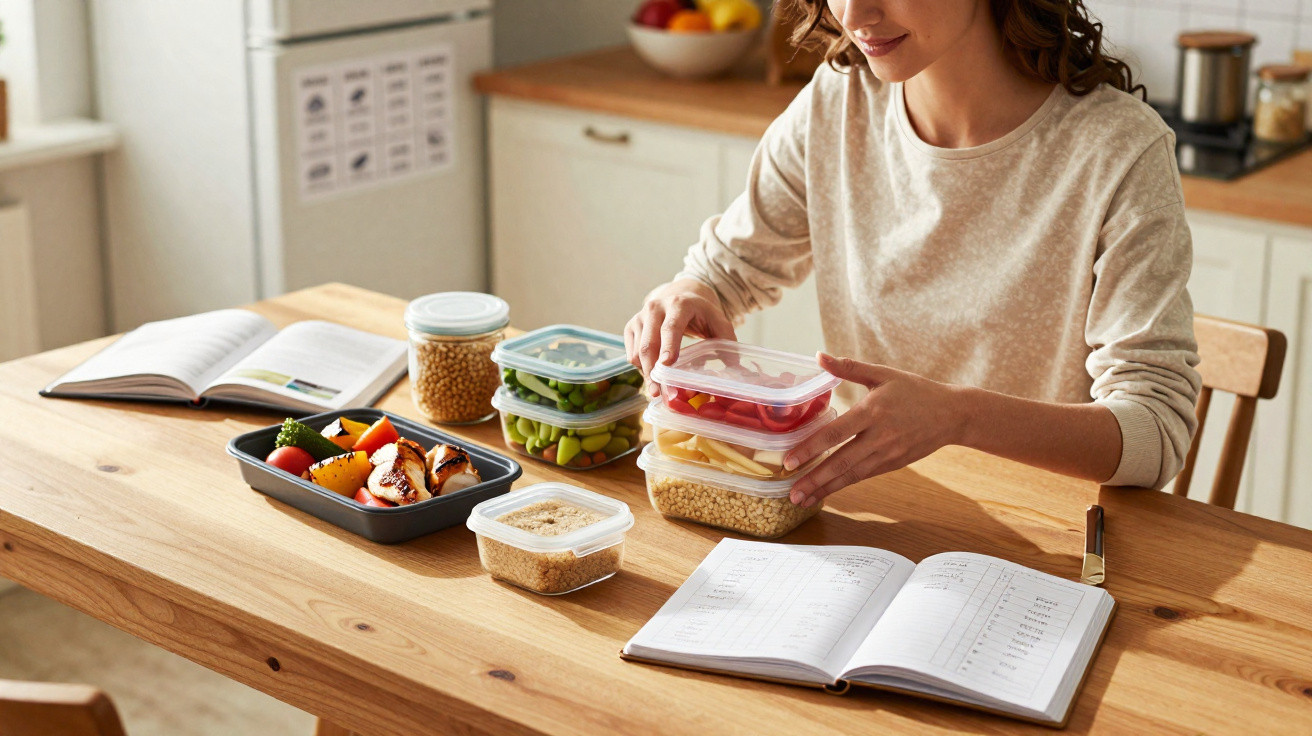
The central trick used by many nutritionists sounds so simple that it is easy to overlook: they do not recommend strict meal plans, but “meal formulas”. Rather than planning one specific recipe every day, you choose building blocks. For example: “1 protein + 1 vegetable + 1 filling carbohydrate + 1 flavour boost”. It is not a rigid rule, but a helpful framework.
An evening meal could be chickpeas (protein), roasted carrots (vegetable), couscous (something filling), feta and lemon (flavour boost). The following day it might be lentils, a frozen mixed-vegetable bag, wholegrain rice, toasted nuts and soy sauce. The formula stays the same, but the result changes. Instead of treating every meal as a project, you simply decide which formulas you will use repeatedly that week.
Many people who begin with this approach quickly notice that the barrier becomes lower. Suddenly, planning three to five days ahead feels achievable. Pick the formulas once, add the relevant ingredients to your shopping plans – done. Let us be honest: nobody diligently writes a minute-by-minute weekly plan every Sunday and then follows it perfectly.
The most common mistake is making things too complicated at the beginning. Five completely different meals, exotic ingredients and trips to three supermarkets. That is how motivation burns out faster than the oven can preheat. A better approach is to start with two, or at most three, formulas that genuinely suit your routine. For example: “quick pan meal”, “traybake” and “lunchbox to go”.
The second mistake is judging yourself for slip-ups. A long day, an unplanned pizza, and everything is supposedly “ruined”? No. One nutritionist told me: “The plan is a handrail, not a cage.” It is an image that sticks. Plans should support you 70 to 80 per cent of the time, not punish you during the other 20 per cent.
When you use meal formulas, you are also allowed to be simply lazy. In fact, that is built into the method. One of the most useful questions is: “What is my absolute minimum-effort solution when I genuinely cannot manage anything else?” There can be a formula for that too – using bread, frozen vegetables, eggs or pulses from a jar. Quick, imperfect and better than the fifth frozen pizza of the week.
“Do not plan perfect meals; plan realistic patterns,” says nutritionist Jana K., who has worked with employed people for more than ten years. “Your life is not a cookbook; it is a wild calendar. Food has to fit into it – not the other way round.”
To make this idea more tangible, here is a short list of meal formulas often used by advisers:
- The 15-minute pan meal: 1 protein (tofu, eggs, beans), 1 vegetable mix, 1 carbohydrate (rice, pasta, couscous), 1 sauce or seasoning paste.
- The traybake: 1 tray, 1 protein (chicken, chickpeas), 2–3 types of vegetables, oil + spices, optional cheese.
- The lunchbox: 1 base (quinoa, pasta, bulgur), 1 raw vegetable, 1 protein, 1 topping (seeds, feta, olives).
- The bread supper: wholemeal bread, 1 protein spread or topping, raw vegetable sticks, one small extra such as nuts or fruit.
- The emergency plate: frozen vegetables, eggs or tinned lentils, toast or crispbread, a little oil, salt and pepper.
What this small meal-formula trick does over time
At some point, you notice a change. You no longer stand helplessly in front of the fridge; instead, you see building blocks. There is leftover rice, a tin of chickpeas and vegetables that need using up. Your mind puts the formula together almost automatically. The question is no longer, “What on earth should I cook?”, but “Which version shall I make today?”
Over time, this creates something like a quiet basic confidence in your daily routine. Not a grand nutrition plan, nor a radical overnight transformation. More a gradual adjustment towards less stress and greater self-efficacy. And yes, that may sound a little grand for something as ordinary as food. Yet deciding what to eat three times a day while half-stressed leaves its mark.
Perhaps that is the sober truth behind all the nutrition guides: we do not need another recipe, but a different way of looking at our everyday chaos. The meal-formula tip is not a miracle cure. It is a tool you can tailor to your life – whether you have children or not, work shifts, work from home, live alone or have a large family.
The most interesting question remains: which two or three eating patterns would genuinely make your everyday life calmer if, from next week, you created them as a small invisible handrail?
| Key point | Detail | Benefit for the reader |
|---|---|---|
| Meal formulas instead of recipes | Define simple building blocks (protein, vegetables, filling carbohydrate, flavour boost) | Less decision stress and more flexibility in everyday life |
| Fewer decisions each week | Choose 2–3 recurring patterns rather than planning from scratch every day | Daily life becomes more predictable, and “What should I eat?” moments lose their pressure |
| Realistic rather than perfect planning | Build in emergency solutions and allow for slip-ups | No black-and-white thinking, with a greater chance of sticking with it long term |















Comments
No comments yet. Be the first to comment!
Leave a Comment