After gaining her culinary qualification from Le Cordon Bleu in 1951, Julia Child devoted the following decades to tasting, preparing and studying remarkable food. Although the California-born American chef did not discover a profound love of cookery until she was in her thirties, she ultimately became one of history’s best-known chefs and cookbook writers.
It is easy to assume that, after so many years spent cooking and eating extraordinary dishes, Julia Child would need to encounter something spectacular to be impressed. Yet it was not an elaborate banquet, a lavish cake or an imposing roast that moved her so deeply, but a rustic dessert created by another celebrity chef-one that her admirers still talk about.
Julia Child and Nancy Silverton’s remarkable dessert
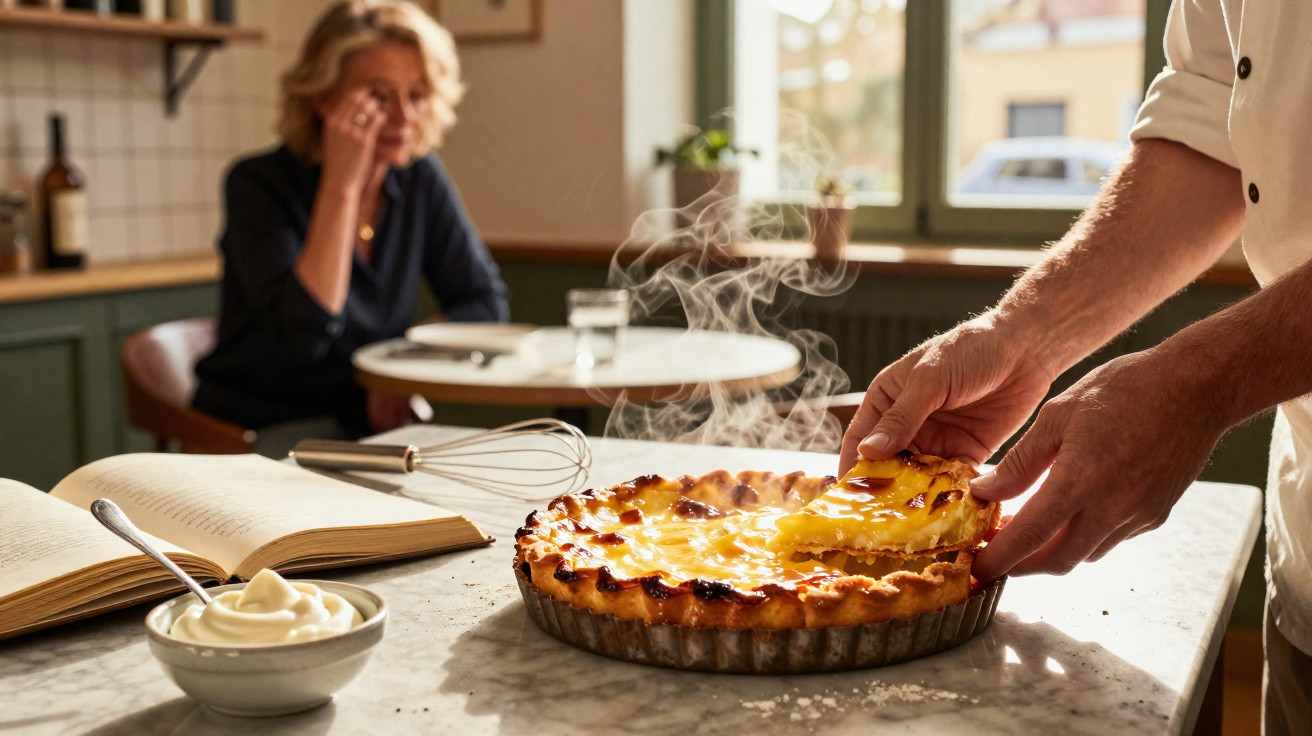
During a 1997 episode of Baking with Julia-the programme in which celebrated bakers and pastry chefs showed Child how to prepare some of their favourite recipes-restaurateur, chef and pastry specialist Nancy Silverton presented her with a tart. Child loved it so much that she said, “it’s a dessert to cry over,” and was visibly moved to tears on screen.
If that alone has not piqued your interest, each of this dessert’s soft, rich elements is delicious in its own right, making it one that any keen home cook should know.
A brioche tart with crème fraîche custard
Silverton’s now-iconic dessert is far from the standard tart one might anticipate. Its foundation is brioche, filled with a crème fraîche custard. The rich, buttery and tender enriched dough creates an airy “crust” that is considerably softer and more cushion-like than traditional pâte sucrée, the sweet French tart pastry.
To turn the yeasted brioche into a tart, Silverton rolls the dough into a round, then turns and crimps the edges as she works. This forms a raised border around the brioche, ready to contain the custard. She also sets the crimped, shaped dough in a round metal mould, giving the brioche sides extra support and stopping them from spreading outwards while the dough rises.
The tart’s filling is simple enough to prepare from memory. The La Brea Bakery founder beats together one egg and 240 ml of crème fraîche, which she makes herself by mixing double cream with a little buttermilk and leaving it at room temperature overnight. Next, Silverton presses dimples into the brioche base with her fingertips before pouring the uncomplicated custard into the middle.
This is not an excessively sweet dessert. No sugar is added to the custard, while the brioche dough includes only about 65 g of sugar. For extra sweetness and texture, Silverton brushes the tart edges with egg white, scatters them with coarse sparkling sugar, then bakes the whole tart.
Serving Nancy Silverton’s brioche tart
Silverton presents the completed dessert with wine-poached stone fruit and zabaglione, a luxurious creamy sauce of egg yolks, sugar and sweet wine. For a simpler version at home, however, fresh fruit and sweetened whipped cream would also suit it. Just before serving, dust every slice generously with icing sugar and add some toasted flaked almonds.
I would love to make this dessert myself-particularly because Child called it “the best dessert I ever ate”-but I do not own a stand mixer, so making a batch of brioche is unlikely to happen any time soon. If you are in the same position, there is no need to lose heart.
French cooking showcases brioche beautifully in several desserts, and a nearby French bakery or restaurant may offer something comparable. Watch for tarte tropézienne on menus: it consists of a large brioche bun, split in two and filled with light vanilla crème pâtissière. It will not be precisely the dish that Child tasted, but it may still be good enough to make you cry.












Comments
No comments yet. Be the first to comment!
Leave a Comment