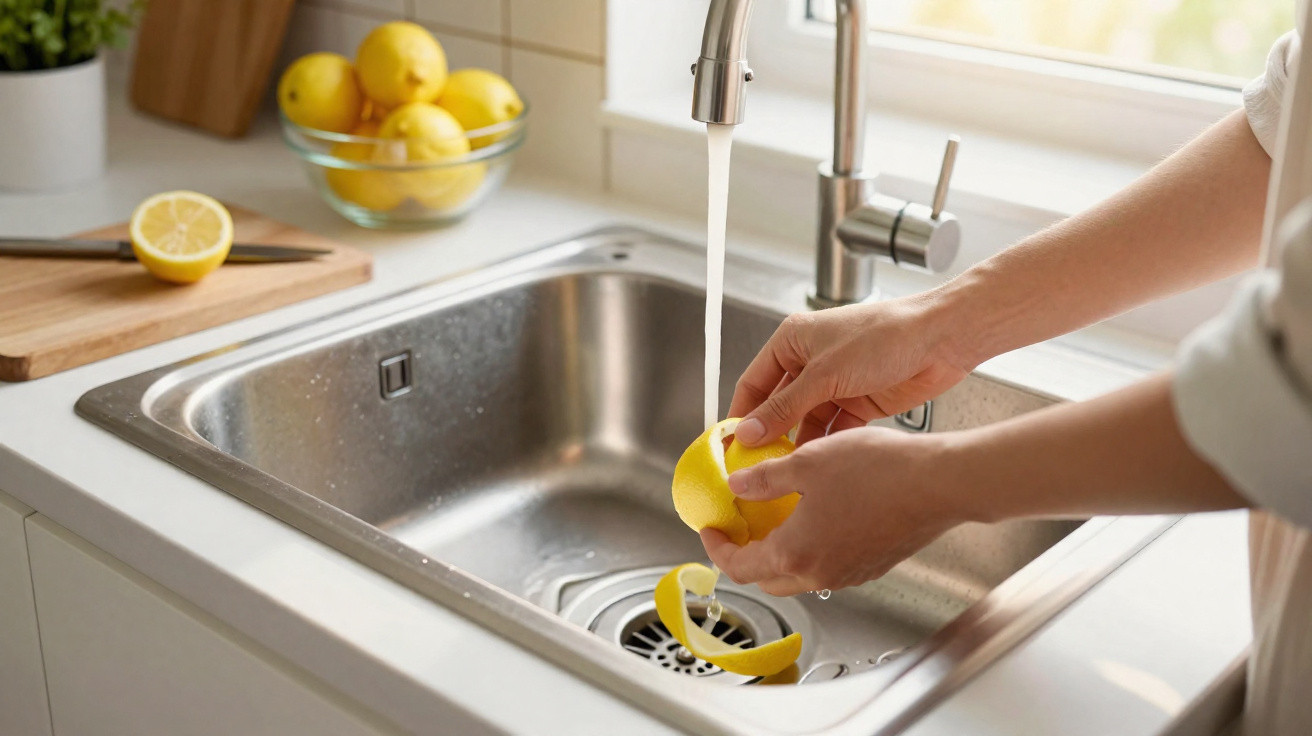
The first time I put a lemon peel through my garbage disposal, it was entirely down to laziness. Juice had made the chopping board sticky, my hands were damp and the bin was already overflowing. I therefore did the very thing every kitchen blog tells you to avoid: I dropped the peel directly into the sink and switched it on.
There were two seconds of grinding, followed by the usual deep rumble - and then a scent I had not anticipated.
Instead of its usual faint whiff of “old pasta water”, the sink suddenly smelled like the kitchen of a spotless hotel.
At first, I assumed I had stumbled on a pleasant trick for freshening the air.
In reality, something much more interesting was going on inside the unit.
The small kitchen habit that quietly transforms your sink
Most of us see a garbage disposal as a noisy little metal beast that swallows scraps. You flick the switch, run water over it and get on with your day. Usually, it only gets your attention when it begins smelling of last week’s meal.
That is generally the point at which people reach for bleach, vinegar or some aggressive foaming cleaner bought years ago and abandoned beneath the sink. It becomes an exercise in damage limitation.
Lemon peel changes the approach.
Imagine a Sunday evening after a generous meal. The chopping board is covered in lemon wedges left over from roast chicken or drinks. You could sweep them into the bin and use up another bag, or place a few peels in the disposal, run cold water and press the switch.
The blades catch the peel, you hear that crisp grinding sound and, seconds later, the entire sink area smells as though it has just been cleaned. The kitchen feels different. Washing up seems less daunting, and wiping down the worktop suddenly feels like much less of a chore.
It is a small household moment, but it makes a difference.
This is about more than improving the smell. Lemon peel contains natural oils - particularly d-limonene - which stick to the metal sides and rubber flaps inside the garbage disposal. Rather than simply disguising unpleasant odours, these oils help lift the greasy layer in which smells tend to linger.
So, sending lemon peel through the unit does more than scent the drain. It provides a mild, citrusy, oil-rich scrub that helps prevent old food from clinging so firmly. With less sticky residue, there are fewer unwanted smells hanging about.
The effect can last surprisingly well.
How to use lemon peel in your garbage disposal without damaging it
There is a proper way to use this lemon-peel method, and it is very straightforward. Begin by cutting the peel into small pieces, around the size of two coins placed on top of each other. Exact measurements are unnecessary, but avoid putting half a whole lemon into the disposal.
First, turn on a strong flow of cold water. Allow it to run for several seconds to prepare the pipes. Next, switch on the disposal and add the pieces one at a time. Do not add a large handful or empty the entire chopping board in one go. Feed them through calmly and steadily.
Keep the water running for 10–15 seconds once the grinding sound has finished.
This is the stage at which many people make mistakes. They put in large, thick peels or whole fruit, then fault the disposal when it jams. Others use warm water, which may soften greasy deposits and shift a blockage farther along the pipework.
Cold water keeps fats firmer, allowing them to grind more effectively and pass through instead of coating the pipes. Smaller peel pieces let the blades chop properly rather than struggle.
Let’s be honest: nobody really does this every single day.
There is no need to. For most households, two or three times a week is sufficient.
Sometimes the simplest kitchen rituals end up feeling like self-care. One home cook told me, “When the sink smells like lemon, the whole house feels less overwhelming. It’s like proof I did one thing right today.”
- Use small pieces of peel
Steer clear of thick chunks or whole lemons, which can put strain on the motor. - Run cold water before, during, and after
This helps the disposal grind more efficiently and carries debris through the pipes. - Limit it to a few times a week
You do not need a citrus avalanche; regular use matters more than volume. - Add ice cubes sometimes
They create a gentle scouring action that works well alongside the oils in the peel. - Skip seeds and big pits if you can
They will not ruin your life, but they do not do your blades any favours either.
Beyond the pleasant scent: what is really changing in your sink
Lemon peel’s unexpected advantage goes beyond the fresh fragrance rising from the drain. As time passes, the combination of natural acidity and citrus oil gradually alters the interior environment of your garbage disposal. Areas once sticky with layers of old food become somewhat smoother.
Grease does not adhere quite so readily. Small food particles are less likely to get trapped in the rubber splash guard. This means you are not continually battling unseen build-up; instead, you are discreetly stopping it before it develops.
We have all had that experience of entering the kitchen and wondering, “What on earth is that smell?”
Lemon peel makes that moment less frequent.
| Key point | Detail | Value for the reader |
|---|---|---|
| Natural deodorising | Lemon oils coat the disposal and neutralise unpleasant odours at their source | A fresher-smelling kitchen without chemical cleaners |
| Gentle cleaning effect | The peel’s texture and acidity help release greasy film and residue | Less build-up and fewer mysterious sink smells over time |
| Simple weekly ritual | Small pieces of peel, cold water, a few times a week | An easy, sustainable habit that works with real-life routines |













Comments
No comments yet. Be the first to comment!
Leave a Comment