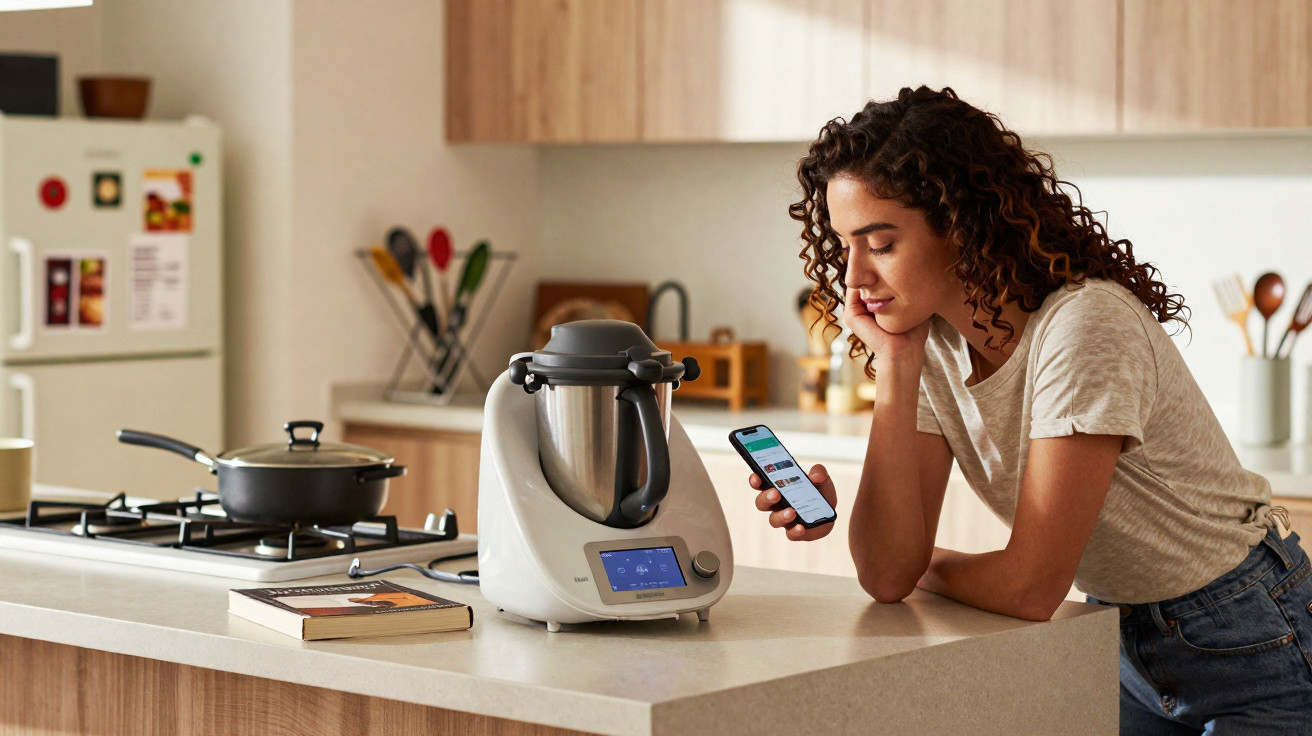
In thousands of immaculate kitchens, an expensive, high-tech food processor is quietly shifting from centre stage to second-hand listings.
For certain owners, the Thermomix initially seems like the ultimate dream appliance: stylish, connected and almost magical. Within a few months, however, it may begin to feel like a financial burden or an overly complex, noisy blender. On resale platforms and social media groups, increasing numbers of people are letting go of a machine they once queued for or spent months saving to buy.
The appeal fades after the first soups
On paper, the Thermomix is highly tempting. It can chop, steam, knead, emulsify and cook, often using just one bowl. Its promise is especially compelling for new parents and busy professionals: quicker meals, fewer pots and pans, and fewer takeaways.
Once the excitement of guided recipes wears off, though, the experience can change, particularly when the purchase price feels painful every time the appliance is taken from the cupboard.
Behind many resale ads lies a simple feeling: the machine does not match the everyday needs or habits of its owner.
The same concerns appear repeatedly in user reviews and online forums.
A price shock that lingers
Cost is the clearest and most immediate reason. Across Europe, a new Thermomix generally costs around €1,400, while UK and US distributor pricing is similarly premium. That is more expensive than most ovens and considerably pricier than rival multi-cookers.
When buying, many people defend the investment by expecting fewer meals out, less wasted food and near-industrial levels of daily use. In practice, they often discover that:
- the appliance is used a handful of times each week rather than every day;
- most homes continue to rely on a hob, oven and several pans;
- savings on takeaways are difficult to demonstrate or never actually happen.
Some purchasers spread the cost over 12 or 24 months. If the monthly repayments continue for an appliance that now only makes an occasional soup or cake mixture, selling it can seem like the sensible way to reduce the loss.
Cookidoo subscriptions and accessory costs
The upfront price is not the only expense. There is also the less obvious Cookidoo subscription, Vorwerk’s recipe platform. About €60 annually may not appear excessive in isolation, but alongside a premium appliance it can resemble an additional toll on an already costly motorway.
Many users expected lifetime access to an extensive recipe library as part of the purchase, not as an ongoing subscription.
Replacement components and optional tools add further costs: sealing rings that wear out, damaged blades, extra bowls for faster batch cooking, and accessory attachments. No single item is necessarily expensive, but the cost of “owning a Thermomix properly” can gradually rise.
Thermomix performance: when the promise falls short
Disappointment with the way the machine manages certain familiar meals is another straightforward reason owners resell it.
Stews, meat and the restrictions of one bowl
Thermomix fans value it for soups, sauces and pastry dough. Slow-cooked meat recipes, however, can often cause frustration. Gentle, lengthy dishes such as boeuf bourguignon or beef chilli depend on browning and particular textures that a smooth stainless-steel bowl finds difficult to recreate.
Rather than soft, melting pieces of meat, some users describe stringy or overcooked results and flavours without the depth achieved by an old-fashioned, heavy casserole on the hob. The appliance was simply not created to replace a cast-iron pot for every recipe.
When a £1,200 machine cannot better a £40 casserole dish for a family’s preferred Sunday meal, enthusiasm can quickly fade.
Noise, size and small-kitchen life
Cooking results are not the only issue: the Thermomix itself can feel intrusive. It is heavy and occupies a substantial amount of worktop space. In smaller city flats, every bit of that space matters. Keeping it in a cupboard may seem sensible, until repeatedly lifting it out becomes cumbersome and tiring.
Its noise, particularly during high-speed blending or chopping, also catches many first-time owners off guard. Talking, calming a baby or answering a call while it pulverises frozen fruit can be difficult. In homes accustomed to quieter kitchens, that mechanical roar feels like more than a small inconvenience.
Once a device becomes noisy, bulky and used only occasionally, it starts to feel less like a “must-have” and more like clutter.
Technology fatigue and the next-model effect
The Thermomix is more than a cooking appliance: it is a connected product with Wi-Fi, software updates and continuing speculation about new versions, including the anticipated TM7. Its technological side brings pressures of its own.
Concern about an “old” robot
News or rumours of a new model can strongly encourage resale. Current TM6 owners, for example, may expect their appliance to lose value rapidly once an upgraded version is formally announced.
Some choose to sell while second-hand prices are still appealing, then wait or save money for the next generation. The thinking mirrors smartphone upgrades: sell the current device before it is regarded as obsolete.
| Reason mentioned | Effect on resale decision |
|---|---|
| Upcoming new model (TM7 rumours) | Sell now to maximise value and fund upgrade |
| Software updates and tech fatigue | Some owners tire of constant changes and features |
| Fear of obsolescence | Push to get rid of “old tech” while demand is high |
For other people, the connected element is itself exhausting. They did not want a smart appliance in the kitchen; they wanted a powerful motor and sharp blades. Having to learn new functions after updates, or deal with the occasional bug, can create unwanted obstacles in everyday cooking.
Complexity against everyday routines
Thermomix marketing commonly presents it as a miracle appliance for time-pressed families. Select a programme, add the ingredients, leave it running and come back to a finished meal. In reality, the process is a little less hands-off.
The learning curve and mental effort
Guided recipes can be useful, yet they still require cooks to weigh ingredients accurately, complete steps in sequence, scrape the sides, swap tools and wash the bowl between stages. For anyone already stressed by cooking, the appliance may introduce another form of mental effort: watching the screen, avoiding burnt onions and making sure quantities have not been read incorrectly.
Some buyers expected their existing pans and utensils to become unnecessary. Instead, they end up using both approaches at once. Pasta cooks in a pan on the hob, vegetables sit in the steaming basket, and sauce is made in the Thermomix bowl: the promise of “one device to rule them all” meets the practical reality of multitasking in limited space.
When a device expected to simplify life adds extra steps, frustration grows fast, especially at this price.
From star appliance to costly dust collector
There is a behavioural factor too. Many owners experience an enthusiastic first stage of daily experimentation with bread, risottos and sorbets. A few weeks later, they tend to settle on three or four regular recipes. At that stage, a less expensive blender, a standard stand mixer and a saucepan might achieve much the same outcome.
After the novelty has gone, the Thermomix may quietly become an appliance reserved for special occasions. It is hard to financially defend a machine used once every fortnight. Listing it on a resale site can appear to restore both money and precious worktop space.
Cheaper, simpler competitors
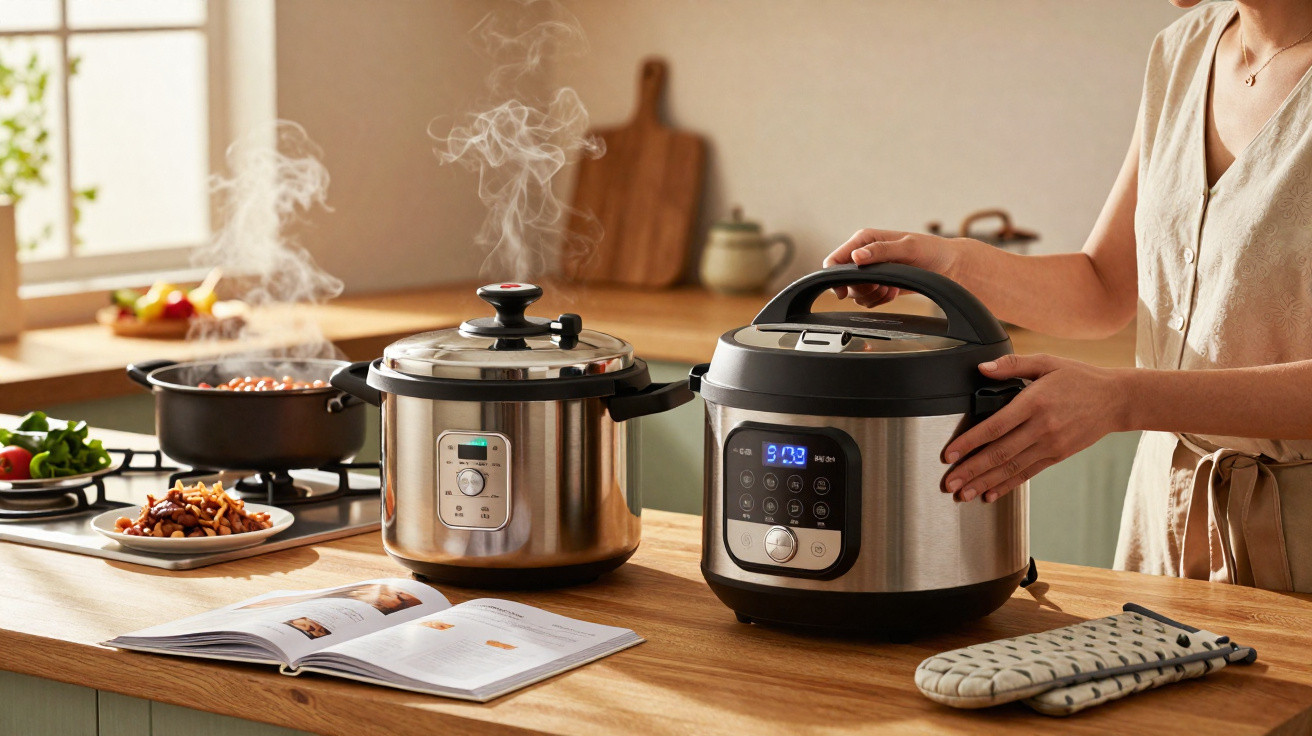
The Thermomix no longer has the multi-cooker market to itself. Moulinex, Kenwood, Magimix and several supermarket brands now sell cooking robots for half, or even a third, of the price.
For a sizeable group of users, these alternatives are “good enough”. They manage essential chopping, steaming and kneading tasks, even if they do not offer every smart feature or the same polished interface. After reading online comparisons, some Thermomix owners conclude they could release several hundred pounds by selling theirs and choosing a more modest machine.
Others revert to a mixed setup: a robust manual stand mixer, an individual blender and a basic slow cooker. This collection can cost less, be easier to repair and distribute reliance across different brands rather than one ecosystem.
What Thermomix resale reveals about expectations and lifestyle
The increase in Thermomix resale listings points to a wider change in attitudes towards kitchen technology and high-value purchases.
Tech promises and real-world cooking
The appliance suits certain households extremely well: people keen on batch cooking, those following strict diets, and families with one person who enjoys gadgets and recipe experimentation. For these users, it justifies its cost, often being used several times weekly.
Other cooks work more instinctively and measure less. They add a handful of one ingredient, a splash of another, taste as they go and rarely follow a recipe exactly. A screen demanding 327 grams of potatoes can feel less supportive than disruptive.
There is a cultural element as well. Those raised watching a parent stir sauces, listen to bubbling pots and assess doneness through smell and touch may not always feel comfortable handing control to a robot.
Situations in which selling is logical
A number of familiar situations recur in resale adverts and owner accounts:
- a couple who cooked extensively during lockdown but returned to commuting and now barely use the appliance;
- new parents who find the noise and cleaning more demanding than expected with a baby nearby;
- people who moved into a smaller flat and no longer have space or a sufficiently sturdy worktop for a heavy machine;
- owners under greater budget pressure who regard an almost-new Thermomix as an easily sold asset.
In every case, the choice is less about disliking the product than matching kitchen tools to a changing way of life.
Practical considerations: resale value, risks and alternatives
On the second-hand market, Thermomix machines generally retain their value fairly well when they are recent models, clean and sold with their original accessories. This makes resale appealing: owners may recover a significant part of what they paid, particularly if they sell before a new model arrives.
Timing matters: the closer a resale is to a model launch, the more the price can drop for older devices.
For potential purchasers, used appliances bring familiar risks: worn blades, weakening scales, undisclosed faults or no official warranty. Checking serial numbers, requesting proof of purchase and testing core functions before handing over money remain sensible measures.
Anyone deciding whether to keep or sell can try a simple calculation. Note how many times the Thermomix was used during the previous month, then divide its cost by that number of uses. If the result is effectively several pounds per use and doubts remain, that personal figure may encourage either a renewed commitment to using it or a guilt-free sale.
Ultimately, reselling a Thermomix does not automatically mean the purchase was a failure. It often shows that someone better understands the sort of cook they really are. Some return to the pleasure of one sharp knife and a heavy pan. Others move to a cheaper, simpler multicooker. A few, as TM7 rumours become louder, are quietly placing their TM6 back in its box for its next kitchen.












Comments
No comments yet. Be the first to comment!
Leave a Comment