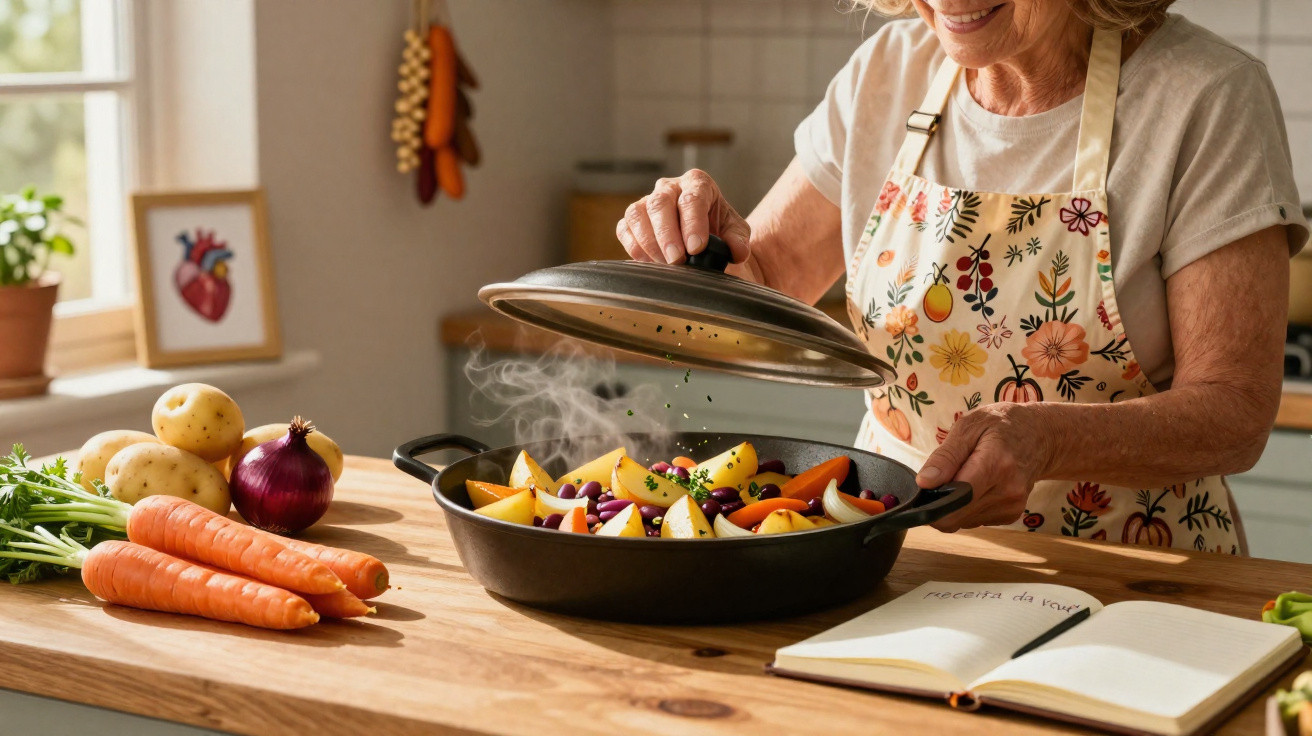
Concern about blood pressure, cholesterol and heart attacks is growing, so many people turn to fish-oil capsules, exotic berries and specialist powders. Yet the straightforward staples are often overlooked: potatoes, onions, carrots and legumes. Used well, these unassuming foods can turn an everyday plate into real protection for the heart and blood vessels.
Why everyday vegetables can ease the burden on the heart
Nutrition specialists have long highlighted heart-friendly eating patterns, including the Mediterranean diet. Their foundations are consistently similar: plenty of vegetables, fruit, legumes, nuts, wholegrains and quality vegetable oils. Studies indicate that eating more of these foods each day noticeably reduces the likelihood of heart attacks and strokes – on average, every additional portion of vegetables or fruit lowers the risk by several percentage points.
The balance between salt and potassium is particularly important. Many people consume far too much salt through bread, processed meats, cheese and ready meals. Vegetables rich in potassium can help counter this, as potassium contributes to blood-pressure regulation and affects fluid retention in the body.
“A diet higher in potassium and lower in salt can cut the risk of heart failure by around a quarter on average – without a tablet, simply through what is on the plate.”
Vegetables also provide fibre, antioxidants and plant compounds. These nutrients can help reduce inflammatory processes, improve blood-fat levels and protect the delicate lining of blood vessels. Crucially, they are supplied together rather than separately in a pill – and that combination is what gives whole foods their effect.
Potatoes: fattening food or an underrated protector of the heart?
Potatoes are often criticised as being “too starchy”, “fattening” or “not light”. A closer look paints a very different picture. Plain boiled potatoes supply plenty of potassium, very little sodium, complex carbohydrates, some fibre, vitamin C and comparatively few calories.
- around 80 kcal per 100 g (boiled without fat)
- high potassium content and virtually no sodium
- complex carbohydrates rather than rapidly absorbed sugars
- some fibre, especially in and just beneath the skin
Replacing part of a serving of rice or pasta with potatoes can significantly increase potassium intake and will usually provide more fibre for the same number of calories. This additional potassium is precisely what supports the heart and healthy blood pressure.
How potatoes are cooked determines whether they help or harm
The drawback is that potatoes are prepared in ways that can turn a heart-friendly food into a problem in many kitchens. Deep-frying in large amounts of fat, rich cream sauces, cheese toppings and pre-seasoned convenience products make this healthy root vegetable a source of excess salt and fat.
Heart-friendly cooking methods include:
- boiling in a small amount of water, ideally with the skin on
- steaming in a saucepan or steamer
- baking as a jacket potato with the skin on
- lightly frying in a little rapeseed or olive oil
These methods help retain minerals such as potassium while keeping the fat and salt content of the meal under control. Using potatoes as the base for vegetable soups, stews or warm salads is an easy way to create a heart-friendly dish.
“Potatoes only become a problem when they are swimming in fat, baked under cheese and drenched in salt – not because they are potatoes.”
Everyday ideas for serving potatoes
- Warm potato salad with a vinegar-and-oil dressing, red onions, parsley and cucumber instead of mayonnaise
- Potato and vegetable stew with carrots, leeks, celery and legumes
- Jacket potatoes served with herby yoghurt quark and a large plate of raw vegetables
- Fried potatoes made from pre-boiled potatoes, using a little rapeseed oil with onions and plenty of peppers instead of bacon lardons
Onions: a pungent bulb that is gentle on blood vessels
Onions contain very few calories but offer a broad range of compounds relevant to heart health: plant compounds such as quercetin, various antioxidants, fibre and potassium. Many of these substances affect blood-vessel function and may slow the formation of deposits in the arteries.
They also have a practical advantage: onions add plenty of flavour. Generous use – raw in salads or gently softened in a pan – often means much less salt is needed. This is a simple measure for anyone wanting to lower their blood pressure without giving up enjoyable food.
“Every onion added to the pot is an opportunity to leave the salt shaker untouched – and lower the pressure in the arteries.”
Best combinations with onions
Onions are particularly beneficial when they share the plate with other vegetables and legumes. A typical heart-friendly plate might be arranged like this:
- around half the plate: vegetables (for example onions, carrots, courgettes, broccoli and peppers)
- one quarter: potatoes, wholewheat pasta or other starchy side dishes
- one quarter: a protein source such as fish, legumes, tofu or lean meat
Anyone who already has heart failure, high blood pressure or kidney disease should always discuss their individual potassium intake with their doctor or a nutrition professional. Too much potassium can be problematic, particularly when kidney function is reduced.
How to make your diet more heart-friendly
Moving towards better heart protection is easier when the changes fit into everyday life. The aim is not perfection, but many small shifts in the right direction. Three to five portions of vegetables and fruit a day are considered a realistic target – in most cases, one handful counts as one portion.
| Food | Heart-related benefit | Everyday tip |
|---|---|---|
| Potatoes (boiled, with skin on) | plenty of potassium, few calories | Partly replace rice or pasta |
| Onions | add flavour, provide plant compounds | Soften as a base in almost every dish |
| Carrots | fibre, carotenoids | Add to stews or roasted vegetables, or grate and eat raw |
| Lentils and beans | plant protein, fibre, potassium | Serve as the main meal once or twice a week |
What people at risk of heart disease should keep in mind
People who already have high blood pressure, raised LDL cholesterol, diabetes or excess weight benefit especially from consistently eating plenty of vegetables. Some important points can easily be missed in daily life:
- Use ready-made products sparingly, as they often contain large amounts of hidden salt.
- Plan beans, lentils or chickpeas instead of processed sausage meat.
- Choose wholegrain bread and pasta as often as possible.
- Limit animal fats and use more vegetable oils, such as rapeseed or olive oil.
It is the interaction of these foods that makes the difference: potatoes supply potassium, onions provide flavour and plant compounds, carrots add fibre, and oil helps the body absorb fat-soluble vitamins. Combining these building blocks thoughtfully provides quiet but continuous protection for blood vessels in everyday meals.
What terms such as potassium, fibre and antioxidants mean
Many health guides mention potassium, antioxidants and fibre without explaining them in more detail. A brief overview makes the recommendations easier to understand.
- Potassium works alongside sodium to regulate fluid balance and influences blood pressure. It is abundant in potatoes, vegetables, fruit, legumes and nuts.
- Fibre keeps you full for longer, helps stabilise blood sugar and may help lower cholesterol levels. Good sources include vegetables, wholegrain foods, legumes and nuts.
- Antioxidants protect cells and blood vessels from so-called free radicals. They are found particularly in colourful vegetables and fruit, herbs and spices.
Cooking regularly makes use of all three groups almost automatically – with no need for dietary supplements. A homemade potato and vegetable stew, or a plate of lentil salad, jacket potatoes and fried vegetables, provides them all in one meal.
Over the long term, it is not one “wonder bulb” that matters, but the routine: plenty of vegetables, wisely prepared potatoes, generous amounts of onions and other flavourful vegetables. This creates a way of eating that is kind to the heart and blood vessels while recalling the flavours many people grew up with in their grandmother’s kitchen.













Comments
No comments yet. Be the first to comment!
Leave a Comment