The fridge door creaks open, the kitchen fills with light, and then… you stand staring at the shelves.
Yesterday’s leftovers, two forgotten yoghurts, vegetables wilting at the back of a drawer. You almost shut the door straight away, slightly embarrassed by this cold chaos you pretend not to notice.
That bottom drawer in particular – the one that only slides out halfway because an open bag of salad is jamming it – may be used as most people use it: somewhere to throw whatever is lying around. Vegetables, fruit, perhaps even cheese or a packet of ham, just to put it somewhere.
From a distance, it seems harmless. Yet food safety specialists say this small habit affects how long food lasts and can sometimes alter the risk of food poisoning. That familiar drawer has a specific purpose that many of us still do not understand.
The fridge drawer almost everyone gets wrong
Forget the label saying “salad crisper” or “vegetable drawer” for a moment. The lower drawer of your fridge, which closes with a quiet little click, is not simply a chilled storage box for odds and ends. Its humidity and temperature differ from those on the middle shelves.
Food safety experts have repeated this for years: that different microclimate matters enormously. A vegetable kept in the wrong place quickly dries out. A pack of raw meat, meanwhile, can become a genuine breeding ground for bacteria there. This apparently minor storage detail is often what separates a crisp salad from limp, slightly suspicious lettuce.
Most of us have experienced finding a liquefied courgette stuck to the plastic at the bottom of the drawer. You may think you have merely wasted a few pounds. What is less obvious is that poor organisation hides real scientific rules – rules professionals use every day in their kitchens.
In many homes, the “crisper drawer” has become a grey area. It contains an odd assortment: loose tomatoes, half a lemon, an opened packet of ham and, sometimes, even a can of beer because it happened to fit. This confusion comes from a simple assumption: if it is at the bottom, it is cold, so it must be better.
The figures suggest otherwise. According to several food safety agencies, some cases of food poisoning at home stem from food being stored incorrectly: meat kept too close to raw vegetables, leaking defrosting juices, or delicate foods left in areas that are too warm. The drawer is often central to this muddle because we have never really been taught how to use it.
Picture a particularly busy week. You do the food shop in a rush, open an already packed fridge, move whatever is in the way and slide the new bags into any available gap. At the time, it feels logical. Everything is chilled, so everything is fine, isn’t it? Experts say the opposite: cold is not distributed evenly, and those differences mark the boundary between food that keeps well and food that becomes risky.
What the fridge drawer is actually for
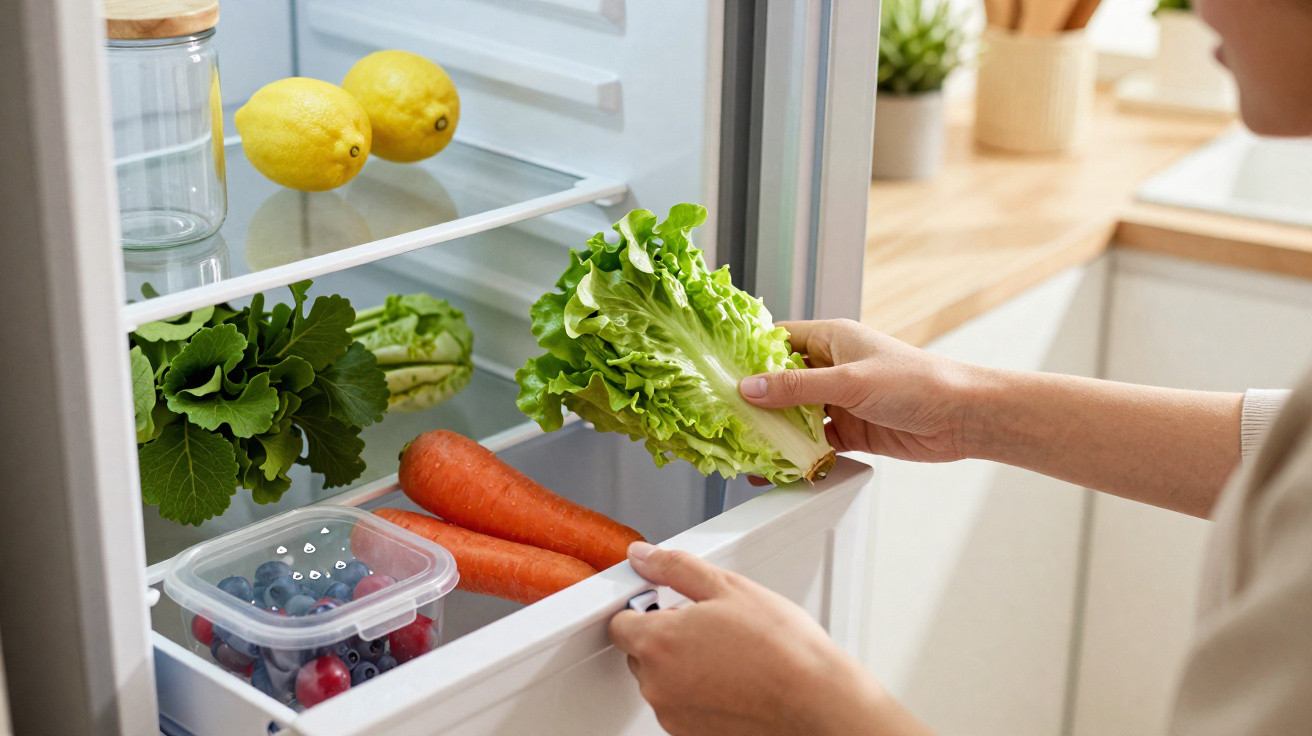
Fridge manufacturers and food safety specialists are clear: this drawer is intended for fresh fruit and vegetables, and nothing else. It maintains a higher humidity level than the rest of the fridge, helping produce stay crisp, hydrated and fresh for longer.
In practical terms, carrots, lettuce, spinach, cucumbers, fresh herbs, broccoli and peppers should be stored there. Not in the door, not at the top, and not wedged behind the milk. The drawer’s humidity creates a kind of miniature cold greenhouse. Raw meat, fish and cooked leftovers, by contrast, need a drier, more stable environment on the shelves.
Many modern fridges even have two drawers, sometimes with “high/low humidity” sliders. Here too, experts agree: use the “high humidity” drawer for most leafy vegetables, and the “low humidity” drawer for ethylene-producing fruit such as apples and pears. Let’s be honest: hardly anyone manages this every day. However, understanding the principle alone can help you avoid the biggest mistakes.
According to experts, the riskiest habit is using the drawer as a “meat zone” because it is low down and any leaking juices supposedly cannot run everywhere. On paper, it sounds sensible. In reality, you are enclosing a highly sensitive product in a humid space that is warmer than the rest of the fridge, potentially beside fruit and vegetables you will eat raw.
Another common mistake is allowing open salad bags or already slightly tired herbs to pile up until they disappear from view. The fuller the drawer, the worse the air circulation and the more moisture is trapped inside. The result is a small indoor swamp where bacteria and mould can thrive.
Food safety experts also stress one very straightforward point: the drawer should contain plant foods only. No opened yoghurts, soft cheeses or uncovered leftovers. Combining these foods can transfer odours, but more importantly, it can allow microbes to move from one food to another. All of this happens behind translucent plastic that makes everything look “clean because it is tidy”.
Many specialists put it almost bluntly:
“The crisper drawer is not a junk drawer. It’s a controlled humidity zone designed to keep your produce safe and alive longer. Treating it as a catch-all space is one of the most common home fridge mistakes.”
To organise this drawer without making it a major task, use this simple guide:
- Keep the drawer for whole, clean fruit and vegetables, ideally in breathable packaging.
- As far as possible, separate ethylene-producing fruit, such as apples, pears and ripe avocados, from delicate vegetables including lettuce, spinach and herbs.
- Never store meat, fish, cold meats or cooked leftovers there, even “just for the night”.
Reset your fridge habits without going mad
You do not need to reinvent everything. Start on a day when the fridge is slightly less full. Take everything out of the bottom drawer or drawers, throw away anything that is genuinely beyond saving, then quickly wipe the base with a sponge and soapy water. No miracle cleaning products are needed.
Then set one simple rule: this drawer equals fruit and vegetables, full stop. Put lettuce, spinach, herbs and sensitive vegetables towards the back, where the temperature is most stable. At the front, keep foods you use regularly, such as cherry tomatoes, carrots, cucumbers and peppers. The point is to see what you have; otherwise, you forget it and let it spoil.
You can even keep herbs in a small glass jar with a little water at the bottom and a lid resting over the top to extend their life. It may look a little Pinterest-like, but it genuinely works, even for busy people.
If you usually cram everything into the same drawer, give yourself a one-week trial. Keep a mental note of how much ends up in the bin. The aim is not to make you feel guilty, but to measure the real effect of your organisation. You will often be surprised: simply changing where food goes means less is wasted.
When you return from the shops, take an extra 60 seconds to put things away properly. Keep raw meat and fish on the lowest shelf, but outside the drawer, in a clean tray or container to prevent leaks. Store cooked leftovers on the middle shelves in sealed containers. Keep food that needs eating quickly within easy reach rather than hiding it behind everything else.
Experts state it plainly: how your fridge is organised is not only about appearance; it is also a barrier against cross-contamination between raw and ready-to-eat food. This is not limited to restaurant kitchens – it starts in family kitchens.
A few gentle reminders can help this new habit last:
- How often should I clean the fridge drawer? Give it a quick wipe with a sponge every 15 days, and clean it properly whenever you spot a spill or sticky mark.
- Can I mix fruits and vegetables together? Yes, but keep major ethylene producers separate from very delicate vegetables wherever possible.
- Is it safe to store meat in the drawer if it’s wrapped? Experts advise against it. The humidity and limited airflow do not work in your favour.
- Do all fridges have the same temperature in the drawer? No, it varies. A basic fridge thermometer will quickly show you what happens in your own fridge.
- What if I don’t eat many vegetables? You can still reserve the drawer for plant foods, even if it only holds a few pieces of fruit and a salad. Everything else is better kept on the shelves.
Changing how you use one drawer will not transform your life overnight. But this small, quiet adjustment often brings a real question to the surface: what are we willing to let go to waste in our fridges, our days and our routines?
When you open the drawer and see vegetables that are still crisp a week after shopping, the message is clear: you are taking back a little control. You waste less, eat fresher food and feel less stressed when faced with limp Wednesday-evening salad.
It can also start a conversation. Everyone around you has their own way of filling a fridge, their own “secret spot”, their own tips and firmly established bad habits. Talking about this drawer means talking about our relationship with daily life, food and the time that passes between buying and eating.
The next time you open the fridge, perhaps your eyes will go first to that bottom drawer. You will know it is not merely an ordinary drawer, but a small technical space where science, food safety and common sense meet. You can then decide consciously what to store there – or what not to forget there again.
| Key point | Detail | Why it matters to the reader |
|---|---|---|
| The drawer’s real role | A humidity-controlled zone designed for fruit and vegetables | Understand why certain foods wilt or rot too quickly |
| Common mistakes | Storing meat, leftovers, dairy products or mixing everything together | Reduce the risk of food poisoning and cross-contamination |
| New habits | Reserve the drawer for plant foods, clean it regularly and organise it by use | Less waste, fresher food and a fridge that is easier to navigate every day |









Comments
No comments yet. Be the first to comment!
Leave a Comment