We have all experienced it: you reach for a bowl of raspberries and find a bloom of grey fuzz instead. Money down the drain, breakfast plans ruined. The cause has been sitting unnoticed in the fridge, where moisture and microscopic spores have made themselves at home.
The kitchen carries a faint grassy scent, like a field after rainfall. By Tuesday, that familiar fuzz has gathered in the corners of the plastic punnet, persistent and rather self-satisfied.
I saw it happen repeatedly in a busy shared flat, where fruit vanished even faster than milk. Then a friend introduced me to a speedy vinegar rinse - not quite a recipe and barely even a routine - and things changed. The berries simply kept for longer.
Fresh berries need not be gone by Tuesday. You do not need a gadget or a special container. All it takes is a 60-second swirl in a bowl you already have. The solution is only a splash away.
Why berries appear to spoil overnight
Berries have delicate, porous skins and countless small crevices in which spores can settle. Picked when ripe, they are not designed to travel as well as apples. A warm journey home followed by a cold fridge creates condensation, and that fine moisture gives mould its chance to begin.
When you open a punnet, you notice it: cool air across your palm, followed by trapped humidity as soon as the lid is closed again. Droplets sit on the fruit like dew on a hedge. It seems harmless, but it is not. Moisture is the match; spores are the sparks.
In theory, the answer is straightforward: alter the conditions in which those spores settle. Vinegar contains acetic acid, which reduces the surface pH and disrupts troublesome microbes. It will not sterilise fruit - no domestic method can - but it slows things down before the problem takes hold. It is cheating in the nicest possible sense.
The vinegar rinse that really keeps berries fresh
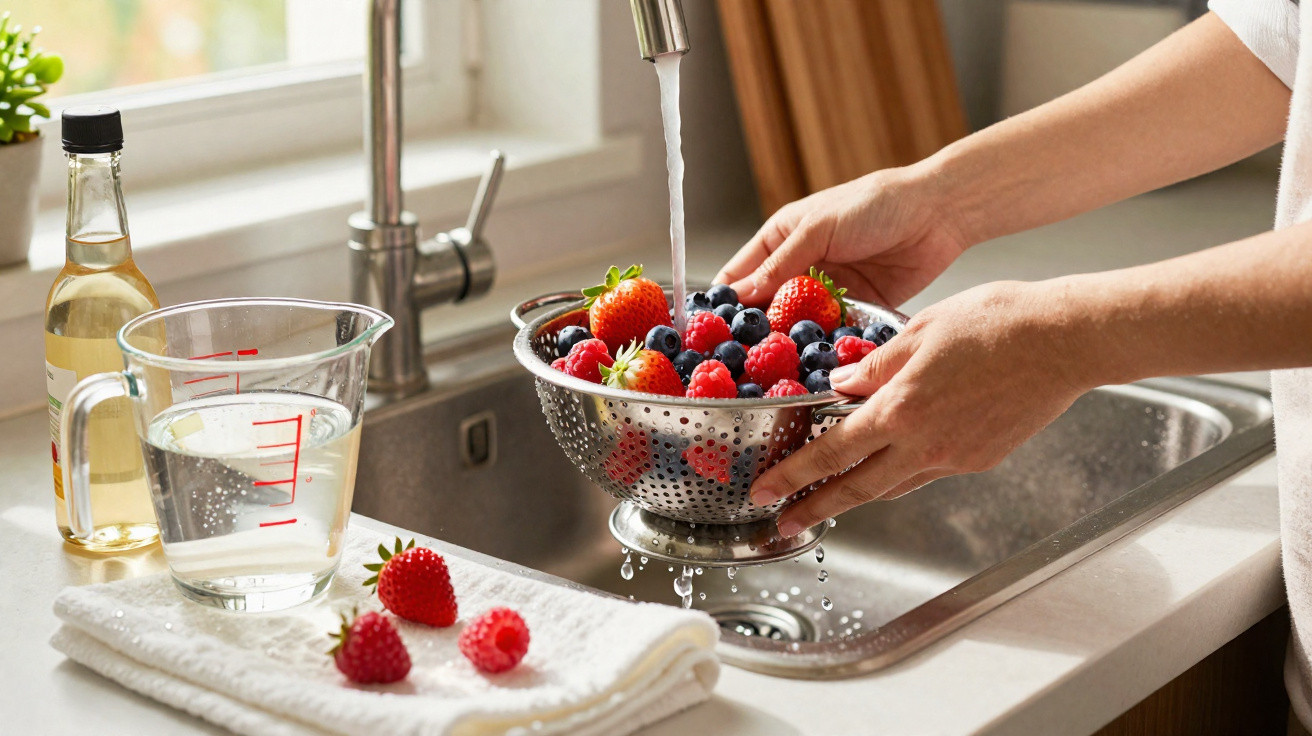
Use this method: add 1 part plain white vinegar and 3 parts cold water to a clean bowl. Put in the berries and gently swirl them for 60–90 seconds, without vigorous sloshing. Drain them, rinse them briefly under cold water to remove the vinegar aroma, then dry them thoroughly.
Lay the berries in a single layer on a clean tea towel or kitchen roll, then pat them dry until they no longer shine. Leave them to air-dry for 10–15 minutes. With strawberries and blueberries, you can use a salad spinner lined with a towel, provided you spin gently. Keep them in a paper-lined container with the lid slightly open, positioned in the main part of the fridge rather than its damp rear corner.
Treat it as both a wash and a reset. White vinegar and apple cider vinegar are both suitable, but avoid balsamic vinegar or any sweet variety. Do not soak the fruit for more than two minutes, and leave strawberry tops in place while rinsing so water cannot enter the inside. Drying is the deal-breaker.
“Vinegar’s low pH does the heavy lifting; drying seals the win,” a veteran fruit buyer told me as we sorted punnets at closing time.
- Effective ratio: 1 part vinegar to 3 parts water.
- Ideal timing: 60–90 seconds, followed by a quick cold-water rinse.
- Dry completely: start with towels, then allow a gentle air-dry.
- Store wisely: use a paper-lined container with a small opening for airflow.
- Leave strawberry stems on, and treat raspberries as carefully as glass.
Small improvements, fewer disappointing berries
There is an easy rhythm to it: bring home the fruit, rinse it, dry it and put it away. Do it once as a batch and less ends up in the bin, while your midweek self benefits. Realistically, no one manages it every day.
Certain berries bruise at the slightest mishandling. For raspberries, work in small batches and lift them with your fingertips as though handling lace. If you plan to freeze them, rinse and dry them first, then freeze them on a tray before transferring them to a bag. That means no solid clumps, only simple handfuls for yoghurt or porridge.
One practical point: the vinegar scent will not linger if you rinse lightly and dry the berries correctly. Children will not detect it, and neither will guests. If you are unsure, try a small handful first. You will taste sunshine, not salad dressing.
The understated pleasure of fruit that lasts
At first, the change is easy to miss. Then you open the fridge on Wednesday and the berries are still plump rather than forlorn. You can scatter them over a bowl of cereal without sorting through the disappointing ones. You no longer have to feel guilty while moving a mouldy raspberry to the side of the sink.
This is not a dramatic gesture; it is a modest commitment to a sweeter week. Perhaps it saves a few pounds, or perhaps it spares you the small disappointment of throwing away fruit. Pass the tip on to a neighbour, your mum or your WhatsApp group. Share photos of a Friday pavlova made with a Tuesday shop.
Small routines can make a kitchen feel more generous. The vinegar rinse is one of those: fast, unpretentious and effective. The next time you hear the soft hiss of a punnet opening, take it as a prompt. Rinse. Dry. Keep the fruit you brought home.
| Key point | Detail | Benefit for the reader |
|---|---|---|
| Vinegar-to-water ratio | 1 part white vinegar to 3 parts cold water, 60–90 seconds | A straightforward, repeatable formula that tackles mould without any fuss |
| Thorough drying | Pat dry on towels, air-dry briefly, and use a gentle spin for firm berries | Removes the moisture mould requires while protecting texture and firmness |
| Sensible storage | Paper-lined container, slightly open lid, main fridge area | Prolongs freshness by balancing airflow and humidity |












Comments
No comments yet. Be the first to comment!
Leave a Comment