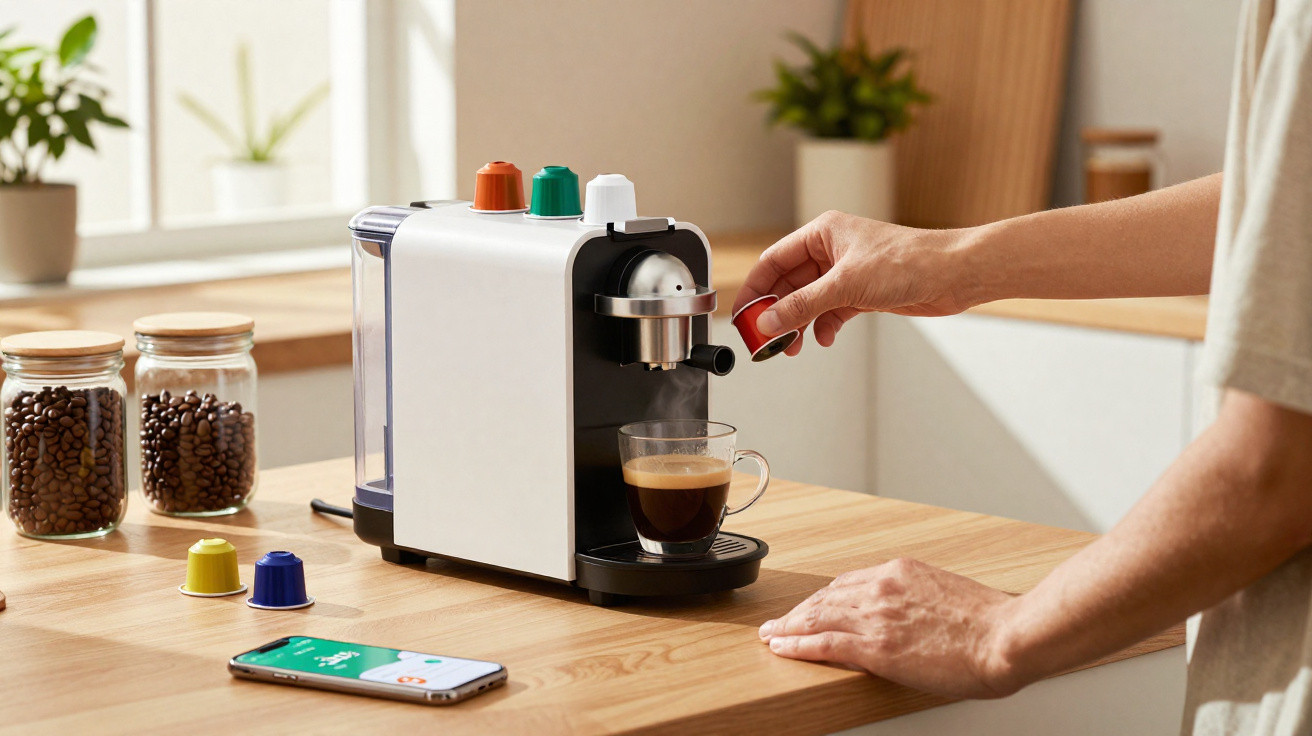
Every home tends to have a different kind of coffee drinker, whether that means an espresso traditionalist, someone devoted to pods or a person who only makes cappuccinos at the weekend.
Keeping all of them satisfied generally requires either a bigger budget than expected or several appliances taking up valuable worktop space. A compact 5-in-1 machine currently on flash sale aims to solve this issue, offering genuine versatility for less than €100.
A multi-capsule coffee machine for under €100
On Amazon France, the Princess 5-in-1 multi-capsule coffee machine is now priced at €94.50, down from its listed €137.29. This represents a reduction of roughly 31%, placing it among the better-equipped entry-level home espresso machines.
This compact Princess machine accepts ground coffee and four major pod formats, giving households genuine choice without multiplying appliances.
This is a hybrid coffee system, compatible with:
- Standard ground coffee
- Nespresso-compatible capsules
- Dolce Gusto pods
- Lavazza A Modo Mio capsules
- E.S.E. (Easy Serving Espresso) coffee pods
Princess includes dedicated adaptors to ensure every capsule format sits correctly in the brewing chamber. For people previously tied to one brand ecosystem, that is a meaningful change: one machine can prepare a favourite Italian espresso, a partner’s chocolate-flavoured Dolce Gusto drink and speciality beans bought from a local roaster.
Princess 5-in-1 coffee machine features for daily use
Small dimensions and uncomplicated controls
Measuring only 10.9 x 31.2 x 24.1 cm, the machine has a particularly slim profile. Its narrow width makes it a practical choice for compact kitchens, studio flats and office spaces with limited room.
Operation is deliberately simple and manual. Press the button for the required cup size, then hold it for longer to make a larger drink. This removes the need to navigate complex menus while still letting you adjust each serving, from a short, powerful espresso to a longer Americano-style coffee.
The small form factor and manual shot control mean this 5‑in‑1 unit can slip into a cramped kitchen without feeling like a compromise.
Heating power, pump and water capacity
The machine combines a 1450-watt heating system with an Italian-made pump intended to provide the high pressure needed for espresso and a rich crema. Although the promotional material does not specify a bar rating, pumps of this type commonly aim for the 15–19 bar range advertised for domestic machines.
Its removable water tank has a 0.8-litre capacity. This should cover several espressos or two larger mugs before it needs topping up. Importantly, the tank lifts off the machine, allowing it to be filled at the sink without moving the entire appliance.
Automatic switch-off and secure footing
Princess has added an automatic shut-off function, which turns the machine off after 15 minutes without use. For an appliance that may remain on the worktop and be used briefly throughout the day, this can help avoid needless energy consumption.
Non-slip feet keep the unit steady on the worktop. It is a modest but useful feature when fitting pods or knocking the portafilter into position.
User feedback: quiet, adaptable and a “compact price”
Amazon France reviews indicate that the machine is delivering on its promise. Buyers highlight its mix of compact size, affordability and flexibility. One customer describes it as the machine that at last meets “all my caffeinated wishes”, while being compact both physically and financially. Another says it is quiet and highly versatile, adding that they are happy with the purchase.
The balance between low noise and multi-system compatibility appears to be what convinces many buyers to switch.
For households accustomed to the loud vibration of certain pump espresso machines, noise can be an important consideration. This is especially true in open-plan flats and shared homes, where making coffee early in the morning can otherwise wake everybody up.
Why multi-capsule coffee machines are becoming more popular
Moving beyond a single-brand ecosystem
Conventional pod machines lock users into one capsule format, restricting the choice of brands, roast profiles and intensities. Multi-capsule systems such as this Princess model occupy a middle ground between open filter machines and proprietary pod systems.
They provide:
- The option to try different capsule collections without purchasing another machine
- A way to use ground coffee for fresher aromas or lower-cost cups
- Flexibility for visitors who bring their preferred pods
- Less exposure if a brand changes a recipe or stops making a particular flavour
Such adaptability may appeal particularly to families and shared flats, where one person wants a strong dark-roast espresso while another prefers milky drinks or flavoured capsules.
Per-cup costs and household budgeting
Being compatible with several formats also has budget benefits. The ability to alternate between ground coffee and different pods allows users to manage their monthly coffee spending without replacing the machine.
| Type | Typical cost per cup (France / EU) | Notes |
|---|---|---|
| Ground coffee | ~€0.10–€0.20 | Lowest-cost choice; needs more cleaning and measuring |
| E.S.E. pods | ~€0.20–€0.35 | Paper pods, offering handling closer to traditional espresso |
| Nespresso-style capsules | ~€0.35–€0.50 | Premium blends and considerable convenience |
| Dolce Gusto / A Modo Mio | ~€0.30–€0.45 | Broad drink selection, from coffee to chocolate |
With the machine itself reduced by 31%, it can quickly pay for itself compared with frequent coffee-shop purchases. At €2–€3 for a takeaway coffee, a home consuming only two or three cups per day could recover the cost within a few weeks.
Comparison with other flexible coffee machines
The article highlighting this offer also refers to another multi-capsule machine from Kotlie, normally priced at around €140 and currently discounted. This gives the Princess machine a relatively assertive price position: it costs under €100 while supporting five brewing formats, whereas many competing products are more expensive or accept fewer capsule types.
People choosing between the Princess and more costly machines may want to consider three central factors: long-term build quality, reliability of the internal pump and how easily adaptors can be changed between capsule formats. Reviews praise the Princess for quiet, straightforward operation, but its durability over an extended period can only be established through continued use.
Practical points before choosing a 5-in-1 machine
Anyone considering this type of multi-capsule system should think through several practical situations.
- If you mainly drink ground coffee: Check how simple the filter basket is to clean and whether its crema meets the standard you expect from a dedicated espresso machine.
- If you already have Nespresso or Dolce Gusto pods: A multi-capsule machine can provide a bridge, enabling you to use existing supplies while experimenting with other formats.
- If you live in a small flat: Measure available worktop depth as well as width. The Princess’s 31.2 cm depth includes the room required for cups at the front.
- If noise matters to you: Seek out reviews that specifically cover sound levels during start-up and extraction.
Ongoing care will also influence the experience. Descaling every few months, according to local water hardness, helps maintain stable flow rates and pressure. Rinsing the various capsule adaptors after each use limits residue and prevents flavours carrying over from one drink to another.
Environmental and flavour considerations
Multi-compatibility also brings environmental considerations. Standard aluminium and plastic pods create more waste than ground coffee, although certain brands now sell recyclable or compostable alternatives. Machines that work with both ground coffee and E.S.E. pods give users a way to limit packaging while retaining the ease of pre-portioned servings.
In taste terms, alternating between pods and freshly ground beans in one machine can help people identify what they truly prefer: a particular roast, an origin or simply the dependable result of a specific capsule brand. This understanding may encourage a shift towards better-quality coffee, even when the equipment itself remains relatively inexpensive.
For people seeking to reduce coffee-shop spending without giving up variety, a discounted 5-in-1 machine such as this Princess model illustrates how far compact appliances have progressed. Multiple formats, a small footprint and a sub-€100 price provide an achievable route to more flexible coffee routines at home.











Comments
No comments yet. Be the first to comment!
Leave a Comment