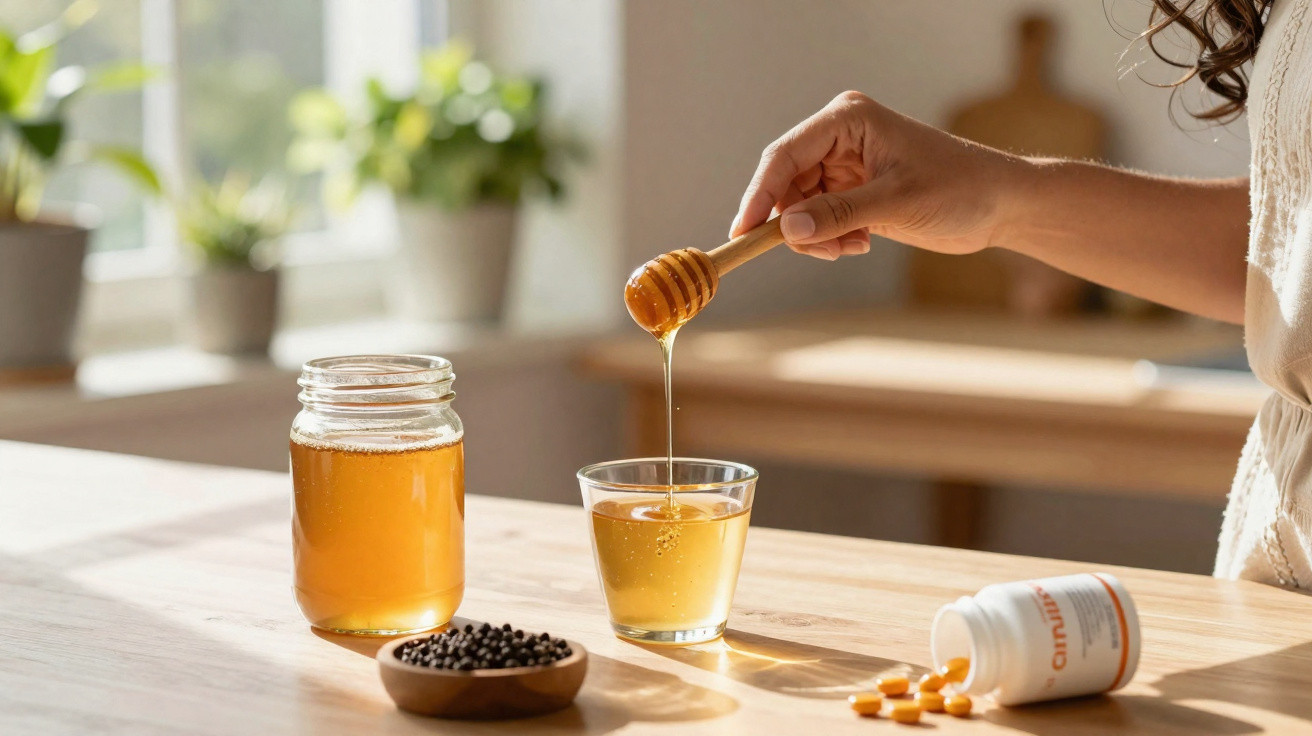
Two everyday jars sit on the kitchen shelf: honey and black pepper. A nutritionist once told me that combining the pair on a spoon may support the immune system in ways that a straightforward vitamin C tablet seldom can. It seems almost absurdly simple, which is exactly what makes the suggestion memorable.
I heard about it for the first time in a cold community centre, with winter coats drying beside radiators and sniffling parents queuing with water bottles. The nutritionist set a spoon on a napkin, spooned on thick honey and ground pepper over it as though seasoning a steak. The crowd laughed before moving closer. She explained that the flavour prepares the body for what follows: sugar-derived energy, polyphenol signals and a kick of heat from the pepper. The room fell silent.
Honey + black pepper vs your vitamin C pill: a nutritionist’s perspective
Throughout cold season, clients ask why they still feel depleted despite taking vitamin C. The nutritionist puts it plainly: vitamin C is one tool, whereas immunity relies on an entire toolkit. Honey provides antioxidants, antimicrobial enzymes and a soothing consistency; black pepper supplies piperine, a compound recognised for altering the absorption of other nutrients. Rather than making a fuss, they work in tandem.
Consider a bus driver I met who always chewed citrus tablets on his early shift. Before leaving home, he began taking a teaspoon of honey with a pinch of pepper, alongside a normal vegetable-containing lunch. He did still get one cold, but said it “never settled in my chest” and was gone within days. Research supports a more modest picture: vitamin C may reduce cold duration slightly among active people, while whole-food dietary patterns can affect how severely an illness takes hold in the first place.
The reasoning is this: honey offers polyphenols and prebiotic sugars that nourish beneficial gut microbes, which are part of immunity’s front line. Piperine in black pepper does not “boost” the body in a dramatic sense; it slows particular enzymes and may improve the bioavailability of plant compounds. As a result, more beneficial compounds can reach the bloodstream and tissues. Isolated ascorbic acid in tablet form may be useful, but it rarely provides the same synergy, texture or digestion-friendly cues that the body recognises.
How to prepare the honey and black pepper mix - and stick with it
Keep the method uncomplicated. Put one teaspoon of raw honey on a spoon or into a small cup, add two to three grinds of freshly ground pepper, and leave it for a few seconds to allow the aromas to develop. Eat it from the spoon or mix it into warm, rather than hot, water to protect honey’s delicate enzymes. Drink it slowly, paying attention to the mild warmth.
Regularity matters more than the time of day. Some people prefer it in mid-morning or during the late-afternoon lull, when cravings begin and concentration wanes. We have all experienced days that feel more demanding than they ought to. Have the mixture with fruit, or add lemon juice and grated ginger if you prefer a sharper flavour. Let’s be honest: nobody really does this every day. Instead, connect it with an established routine, such as putting the kettle on.
The usual mistakes are straightforward to avoid. Some use pre-ground pepper after its oils have faded, add honey to boiling water, or give honey to babies - do not do this: not for infants under 1. Anyone taking medication should speak with a clinician beforehand, as piperine may affect absorption.
“Vitamin C alone is a single note,” the nutritionist told me. “Honey with pepper is a whole chord your body can hear.”
- Choose raw, unfiltered honey where possible.
- Grind the pepper immediately before use; a small hand mill is worthwhile.
- Use warm rather than hot water to help retain honey’s enzymes.
- Avoid it if pepper triggers sensitivities or reflux flare-ups.
- Speak to your doctor if you use medicines that interact with piperine.
Looking at immunity more broadly
Immunity is not a fortress but a neighbourhood. Diet, sleep, stress, exercise and the microbiome all influence one another. A spoonful of honey and pepper is small, but it may affect several systems at once: the gut, the mouth and throat, and even mood through sensory enjoyment. It is inexpensive, useful and unexpectedly grounding.
I still think of the noise in that hall as everyone sampled the mixture: sniffles followed by smiles, then ballpoint pens scratching “pepper!” onto shopping lists. This is no miracle cure, only a routine that acknowledges the way the body functions. This is not medical advice. It is a small everyday message: I am paying attention to what my immune system truly needs. That is where change starts.
So what should you do with the vitamin C tablet in your drawer? Keep using it if it works for you, particularly when training hard or travelling. But consider the wider picture as well. A food-first approach supplies fibre, phytonutrients and context: a chorus rather than a solo performance. Honey with black pepper will not make anyone invincible, but it can add meaningful support alongside sleep, protein and colourful plant foods. Pass the idea on to somebody devoted to orange tablets, and see what happens.
| Key point | Detail | Why it matters to the reader |
|---|---|---|
| Synergy beats single nutrients | Honey’s polyphenols + pepper’s piperine may improve absorption and microbial balance | A practical explanation for why this blend may feel more “whole” than a vitamin alone |
| Method matters | Use raw honey, freshly ground pepper and warm water to preserve active compounds | Small adjustments can make the routine work properly |
| Safety and suitability | No honey for infants; check medications with piperine; be mindful of reflux | Reassurance to try it without unwelcome surprises |














Comments
No comments yet. Be the first to comment!
Leave a Comment