A sustainability specialist argues that the same cooking water can be both a source of flavour and a compact store of energy, provided you use it well. There is no complicated technique involved: all it takes is timing, heat and a touch of curiosity.
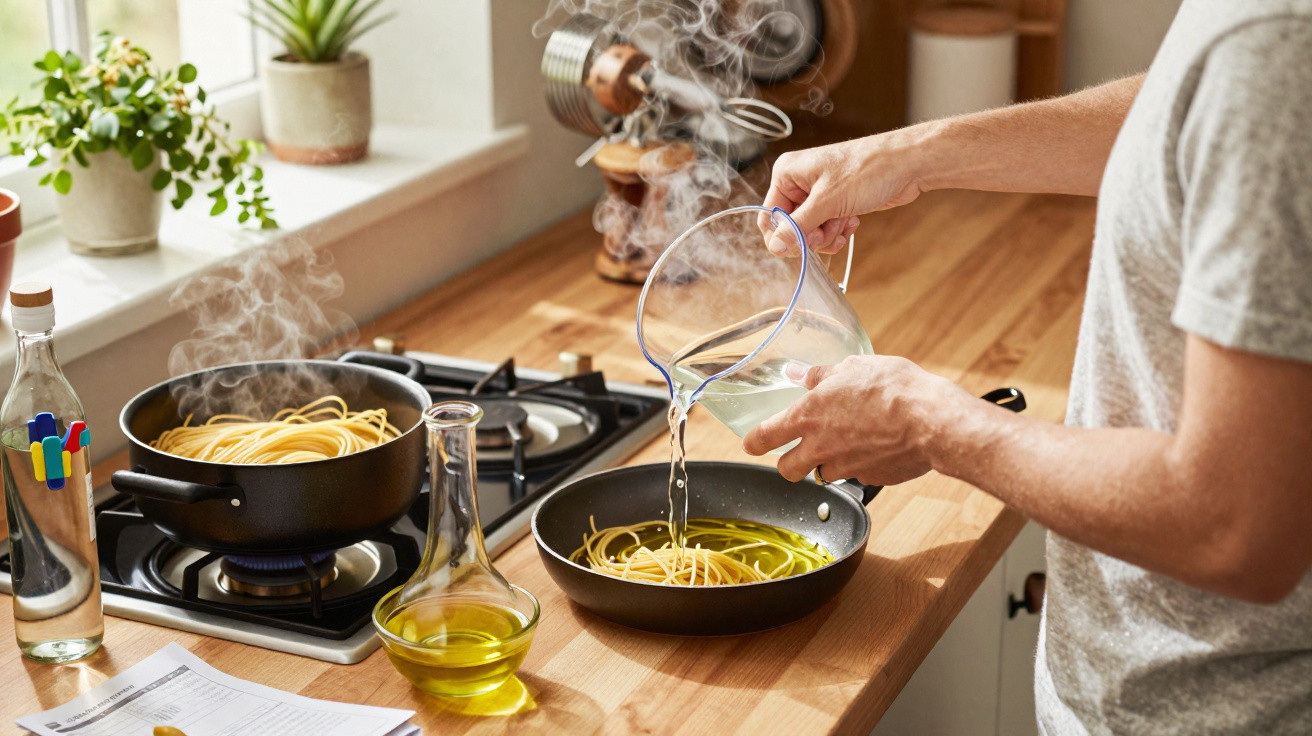
Condensation dotted the window as a pan hummed on the hob, its soft rumble giving the kitchen a sense of focus. Lena Ortiz, a sustainability consultant, set a colander over the sink and lifted out a tangle of blanched broccoli. Without turning on the tap, she tipped spaghetti into that very same boiling water. The broccoli was ready, the pasta took its place, and none of the heat had been wasted. Attracted by the aroma, a neighbour stopped by and watched as Ortiz laughed, “Hold on, I’m not done with this water yet.” She then took a ladleful and splashed it into a frying pan of tomatoes, where it sizzled and made the sauce gleam as though someone had flipped a switch. Ortiz called the pot a battery.
Why “second-use” water improves pasta and reduces your energy bill
The useful part begins when pasta water becomes cloudy. Fine starch particles come away from the pasta while the salt added earlier remains in solution, turning every ladleful into a valuable flavouring tool that both loosens sauces and helps them coat the pasta. Add a splash of this cloudy water to a basic tomato sauce and it can develop the silky, restaurant-style gloss of an emulsifier you had not realised was available. As you are not filling a fresh pan with cold water and heating it again, your hob retains the heat it has already used energy to create. That is where the energy saving comes from.
A rough calculation makes the point clearly. Bringing three litres of water from room temperature to the boil uses around 0.3 kWh for the water itself; allowing for losses from the hob, that figure can readily reach 0.6–0.8 kWh. Using the same water first for vegetables and then for pasta removes the need for another full heat-up and cuts several minutes from the time the burner is on. A postgraduate student in Turin used an inexpensive plug-in monitor and found that switching from a “new pot for everything” approach to one continuous cooking sequence reduced cooking time by 6–8 minutes and electricity use by roughly 15–20% per meal. It may not seem dramatic until you repeat it four evenings a week over a year.
Kitchen thermodynamics is essentially common sense in an apron. Heated water retains energy, a hot pan stores even more, and a lid stops that warmth escaping so quickly. Keeping one pan at a gentle boil lets you pass its stored heat from one ingredient to the next instead of beginning again each time. The starch has no meaningful effect on the boiling point, while salt changes it only slightly, so the real saving lies in continuity: you avoid heating a cold volume of water and lose less energy as steam. Consider the pan a cycle rather than a single-use burning of gas or electricity.
How to reuse cooking water in your kitchen
Use one generously sized pan, salt it once and make it large enough for two stages of cooking. Bring the water to a brisk boil, blanch greens or asparagus for a few minutes, lift them out, and put the pasta directly into the same pan. Leave the lid partly in place to help maintain the boil. While the pasta is cooking, start the sauce in a frying pan and add ladles of starchy water gradually, until it becomes glossy and coats the pasta well. Once the pasta is al dente, move it to the sauce, add another small splash of water, toss everything together and watch the dish emulsify. One burner delivers three benefits.
Salt and timing are the two details most likely to cause problems. Greens contribute very little flavour to the water beyond a faint trace of chlorophyll, so season confidently from the outset; if the sauce seems dull, it may need either more salt or another spoonful of pasta water. Reuse the water during the same cooking session, or later that day if it has been cooled promptly and refrigerated. Once it smells murky or turns grey, let it cool and use it to water plants instead. Everyone has faced a timer going off while the pan threatens to boil over like a volcano. Turn the heat down slightly and leave the lid ajar. Small changes are better than kitchen chaos.
Reuse the heat as well as the water.
“Heat is a resource,” Ortiz tells me, “so treat your pot like a battery. You charged it once-spend that charge across the whole meal, not in a single splash.”
- Cook in sequence: vegetables → pasta → finishing the sauce.
- Spoon cloudy “liquid gold” into sauces to give them gloss and grip.
- Keep the pan at a gentle boil with a lid to reduce heat loss.
- Cool and refrigerate any leftover water if you intend to use it within 24 hours; return it to a rolling boil before using it again.
It seems almost overly simple, and that is precisely why it succeeds.
A modest kitchen habit with a wider effect
There is a quiet satisfaction in watching one pan perform the work usually given to three. You are not transforming the way you cook dinner; you are simply directing heat that already exists towards food that is tastier and a little gentler on your meter. On one evening, it may be broccoli, spaghetti and a glossy tomato sauce; on another, potatoes, orecchiette and kale folded through with garlic, all prepared from one boil. Let’s be honest: nobody really does that every day. Even so, these modest gains build over time and alter how you view things once discarded: water, warmth and attention. The more closely you notice them, the more you save, and the better your pasta becomes. Share the idea, adapt it and make it your own.
| Key point | Detail | Benefit for the reader |
|---|---|---|
| Reusing hot water | Cook vegetables, then pasta, then finish the sauce using one boil | Quicker dinners and less energy used |
| Starch for sauce | Cloudy pasta water emulsifies sauces and helps them cling | Restaurant-style texture without extra cream |
| Straightforward safety | Use it on the same day or refrigerate for up to 24 hours, then boil vigorously | Better flavour without food-safety concerns |








Comments
No comments yet. Be the first to comment!
Leave a Comment