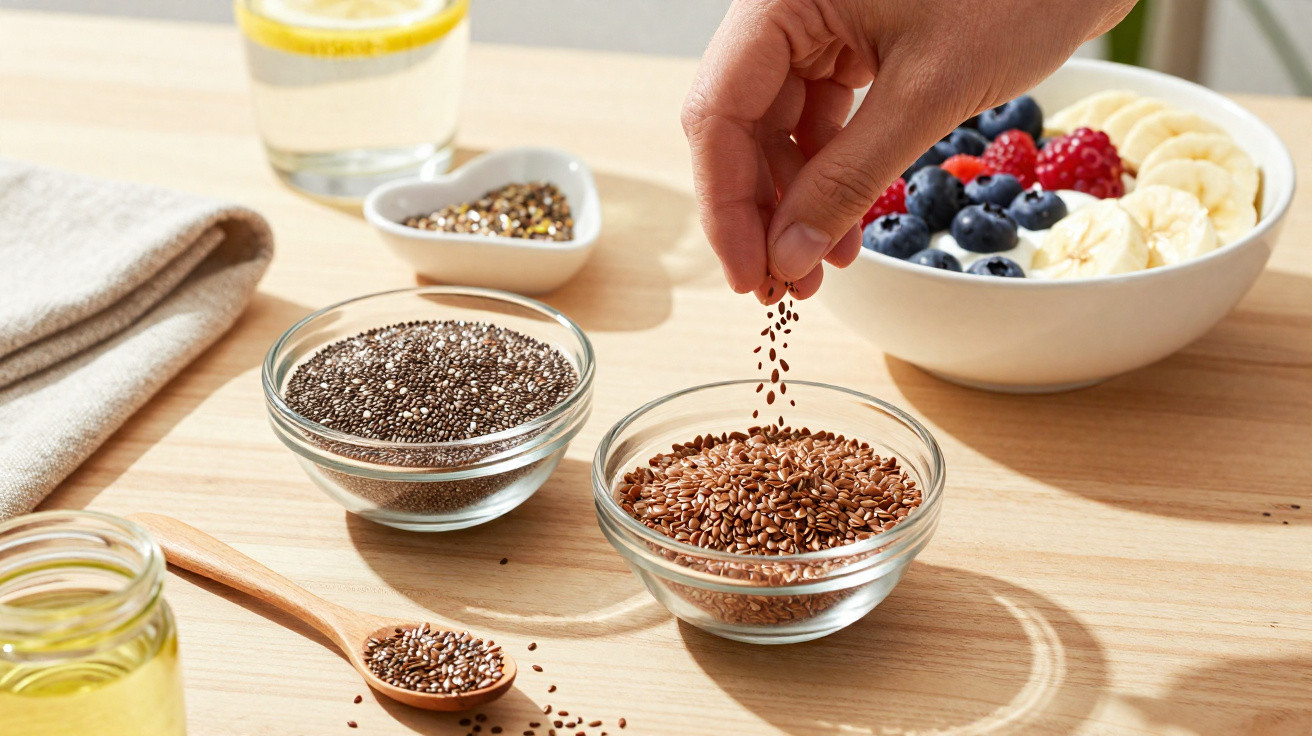
Many people stir them into porridge at breakfast, while others add them to smoothies or scatter them over bread: chia seeds and flaxseeds are considered small nutritional powerhouses. Both provide fibre, plant protein and valuable fatty acids. Yet they differ considerably – and depending on your goal, one or the other may fit better into your daily routine.
Where chia seeds and flaxseeds come from
Chia seeds: a tradition from Central America
Chia seeds come from the Salvia hispanica plant, which is native to Central America. The Aztecs and Maya were already using the seeds as an energy source during long journeys. Their distinctive feature is that they absorb many times their own weight in water, creating a gel-like mixture. This makes them especially useful for puddings, overnight oats or thickening smoothies.
Flaxseeds: a long-standing cultivated staple closer to home
Flaxseeds grow on the Linum usitatissimum plant, which has been cultivated in the Middle East and Europe for thousands of years – originally mainly for its fibres and oil. Central Europe is now among the important growing regions as well. Flaxseeds are particularly known for their high content of plant-based omega-3 fatty acids and their digestive benefits, thanks to their plentiful fibre.
“Chia is particularly associated with minerals and convenience, while flaxseeds stand for local origins and high omega-3 levels.”
Nutritional values compared: chia seeds versus flaxseeds
Both seeds provide high-quality nutrients, but their strengths lie in different areas. Typical values per 100 grams make this particularly clear.
| Nutrient (per 100 g) | Flaxseeds | Chia seeds |
|---|---|---|
| Calories | 534 kcal | 486 kcal |
| Protein | 18.3 g | 16.5 g |
| Fat | 42.2 g | 30.7 g |
| Carbohydrates | 28.9 g | 42.1 g |
| Fibre | 27.3 g | 34.4 g |
| Omega-3 fatty acids | 22.8 g | 17.8 g |
| Calcium | 255 mg | 631 mg |
| Iron | 5.7 mg | 7.7 mg |
What does this mean in everyday life?
- Fibre: Both varieties supply plenty of fibre, which can support digestion and help prevent constipation. Chia has a slight advantage here.
- Omega-3: Flaxseeds contain more plant-based omega-3 fatty acids. These unsaturated fats support the heart and blood vessels and can reduce inflammatory processes.
- Minerals: Chia performs particularly well for calcium and iron. This can support bone strength and the immune system, particularly in a mainly plant-based diet.
“Those primarily looking to support their heart tend to choose flaxseeds, while chia is a good option for anyone seeking minerals and simple preparation.”
How chia seeds and flaxseeds affect the body
1. Better digestion and a calmer stomach
Thanks to their high fibre content, both seeds swell in the bowel. This increases stool volume and makes it softer. Flaxseeds mainly provide insoluble fibre, which acts rather like a brush by mechanically stimulating the bowel. Chia contains more soluble fibre. This forms its characteristic gel, which can make stools easier to pass and soothe the intestinal lining.
People with sluggish digestion, a tendency towards constipation or bloating often benefit considerably from including a small daily amount of these seeds – provided they drink enough water alongside them.
2. Support for the heart and circulation
Flaxseeds provide a particularly high amount of omega-3 fatty acids, specifically alpha-linolenic acid. The body converts part of this into active forms that can curb inflammation and influence fat metabolism. Studies suggest that flaxseeds may help lower levels of less favourable LDL cholesterol and modestly reduce blood pressure.
Chia seeds also contain omega-3, although in lower amounts. Together with their fibre and antioxidants, they may still help ease the strain on blood vessels and reduce long-term cardiovascular risk.
3. Weight management and fewer cravings
People who mix these small seeds into yoghurt, muesli or soup often notice that they remain full for longer. This is because the fibre and gel formation fill the stomach and slow down gastric emptying. Blood sugar rises more gradually, while cravings tend to be less intense.
Of course, chia seeds and flaxseeds do not take away the work involved in losing weight. However, they can help reduce snacking between meals and encourage more mindful eating overall.
4. Plant proteins for muscles and cells
Both seeds contain worthwhile amounts of plant protein. For people who eat little or no meat, they are an easy addition when aiming to meet protein needs. Protein contributes to tissue repair, helps maintain and build muscle, and is needed for enzymes and hormones.
How to include flaxseeds sensibly in your meals
Why ground flaxseeds offer more benefits
The body struggles to break down the tough outer shell of whole flaxseeds. As a result, they often pass through almost undigested. To make the most of their nutrients, it is therefore best to grind flaxseeds or buy them milled. Ideally, grind them fresh in a small coffee grinder so that the delicate fatty acids are not exposed to air for too long.
Practical ways to use them every day:
- Smoothies and yoghurt: Stir one tablespoon of ground flaxseeds into fruit yoghurt or a smoothie for extra fibre and omega-3.
- Bread and baking: Part of the flour in bread, bread rolls or muffins can easily be replaced with flaxseeds. This makes baked goods moister and more nutritious.
- Egg substitute for baking: Mix one tablespoon of ground flaxseeds with three tablespoons of water and allow it to swell briefly – this mixture replaces one egg in many recipes for pancakes, waffles or sponge mixtures.
Using chia seeds cleverly
Whole or soaked – both work well
Chia seeds can also be used effectively by the body when eaten whole. They swell dramatically when they come into contact with liquid, creating a gel. Many people make use of exactly this effect in the kitchen.
- Chia pudding: Combine two tablespoons of chia with milk or a plant-based drink, sweeten slightly, then refrigerate for several hours or overnight – the result is a creamy pudding that can be varied with fruit, nuts or cocoa.
- Topping for salads and bowls: Sprinkle one to two teaspoons over salads, bowls or soups. This adds texture and increases the fibre content of the meal.
- Drinks with texture: Add one tablespoon of chia to a glass of water with lemon juice and leave it to swell briefly – a refreshing, lightly filling alternative to diluted fruit juice drinks.
How much makes sense – and what are the limits?
These seeds are concentrated foods. Having too much at once may put more strain on the bowel than it relieves. For adults, up to two tablespoons of chia a day is regarded as a useful guideline. For flaxseeds, experts often recommend one to two tablespoons daily, accompanied by plenty of fluid.
If you have a sensitive digestive system, it is worth starting with one teaspoon and gradually increasing the amount. Anyone taking long-term medication or living with chronic bowel conditions should seek medical advice if in doubt before adding large quantities of fibre to their diet.
Practical combinations and complementary effects
It becomes particularly interesting when both varieties are included in the same meal. Flaxseeds offer substantial omega-3, while chia contributes plenty of calcium and iron. Combined with fruit, nuts and oats, they can create a breakfast that keeps you full for a long time, supports the heart and at the same time nourishes bones and muscles.
Another often overlooked point is that the high fibre content also affects blood sugar. For example, adding chia seeds and flaxseeds to porridge may soften blood sugar spikes after the meal. This is especially relevant for people with insulin resistance or type 2 diabetes, but should always be discussed with a healthcare professional.
A simple rule of thumb can help in daily life: add a small spoonful of chia seeds or flaxseeds once or twice a day to a habit you already have – at breakfast, with lunch or as part of an afternoon snack. Over time, this creates routines that turn two unassuming seeds into genuine dietary helpers.
















Comments
No comments yet. Be the first to comment!
Leave a Comment