Garlic, lemon, raw chicken and soil-covered carrots all end up on it, leaving behind a subtle film that a quick rinse never completely removes. Many people turn to aggressive sprays, only to worry that residue will end up on the evening salad. Between concern and exhaustion lies an uncomplicated solution we have overlooked. We have all noticed a board still carrying the scent of yesterday’s onions, even after washing-up liquid. A grandmother’s time-tested method, sitting in plain sight, restores it to neutral without a cupboard full of chemicals.
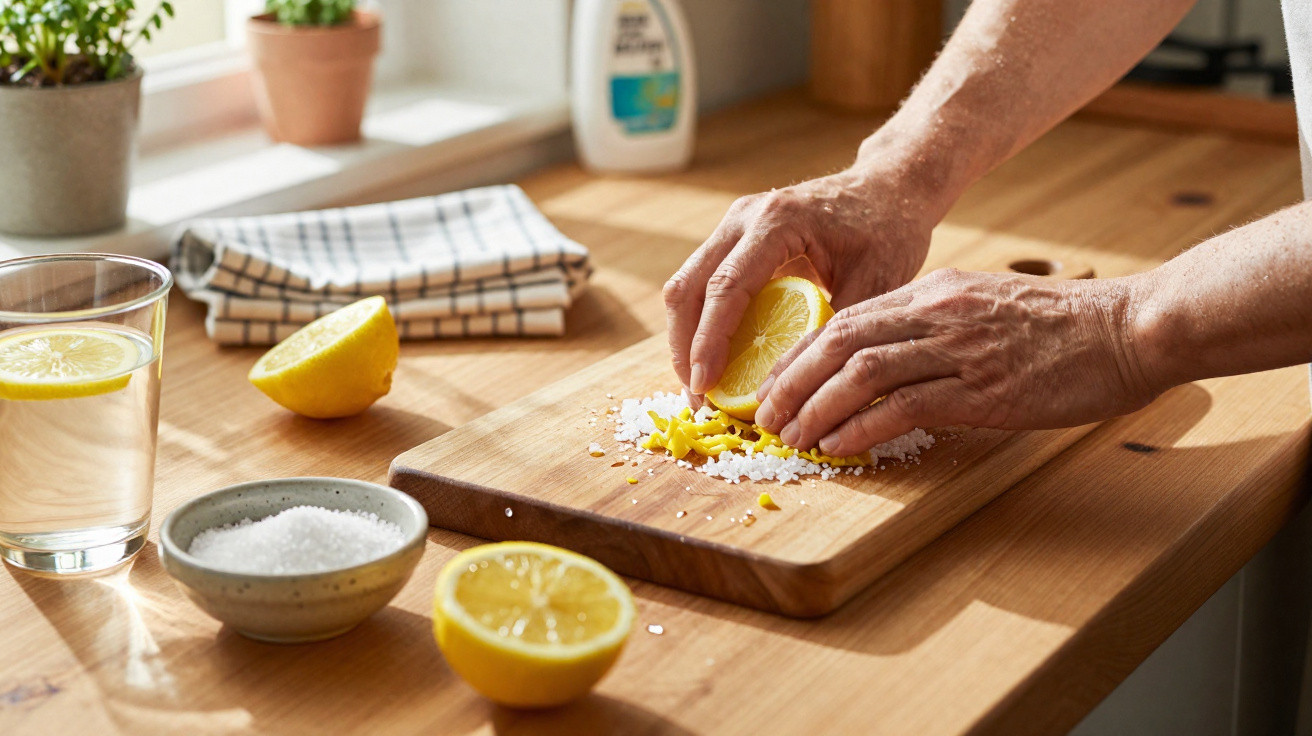
My grandmother’s kitchen was warm and bustling, and she moved through it as though every corner belonged to her. Using a small grater, she zested a lemon, took a pinch of salt and sprinkled both across a worn wooden board older than I was. The sharp, fresh citrus scent rose into the room as the salt crackled gently beneath her hands. With the exposed lemon rind, she worked the mixture into the wood grain slowly, as if pressing an old tale back into the board. The wood looked brighter. Its onion smell gave way to something like sunshine. Her secret had been waiting in the fruit bowl.
Why lemon zest and salt still outperform a bottle
A well-used chopping board tells the story of a week’s cooking: knife marks, light discolouration and the lingering trace of garlic. Those traces can harbour microbes, held within moisture and oils. Lemon zest and salt alter those conditions. Salt draws out moisture while scouring the surface, while citrus oils in the zest break down leftover fat and smells. If you add a small squeeze of lemon juice, its quick acidity lowers the pH where it is needed. The board may appear unchanged, but its surface chemistry is not.
A simple home experiment over seven evening meals made the difference difficult to dismiss. On the first day, I cut salmon and spring onions, and the board smelled distinctly fishy. A scrub with lemon zest and salt removed that edge within minutes rather than hours. Later in the week, I compared two halves of the same board: one cleaned with washing-up liquid alone, and the other treated with the old method after washing. The zest-and-salt side dried more quickly and did not hold on to the faint onion scent that normally remains. It is not laboratory evidence, but it is the sort of outcome your hands and nose notice when you are making supper at 6:43 p.m.
There is straightforward science behind it. Salt is abrasive and hygroscopic, meaning it draws moisture from the top layer where bacteria tend to remain. Citric acid in lemon juice reduces the pH of the immediate environment, placing stress on common kitchen bacteria. At the same time, essential oils from the zest work as tiny solvent droplets, helping to loosen greasy residue. Scrubbing provides the physical force needed to shift biofilm from knife cuts. Is this a replacement for hospital-grade sanitiser? No. It improves the odds, refreshes odours and supports the practices that genuinely help keep boards safer: cleaning promptly and drying thoroughly.
Lemon zest and salt: a step-by-step method for chopping boards
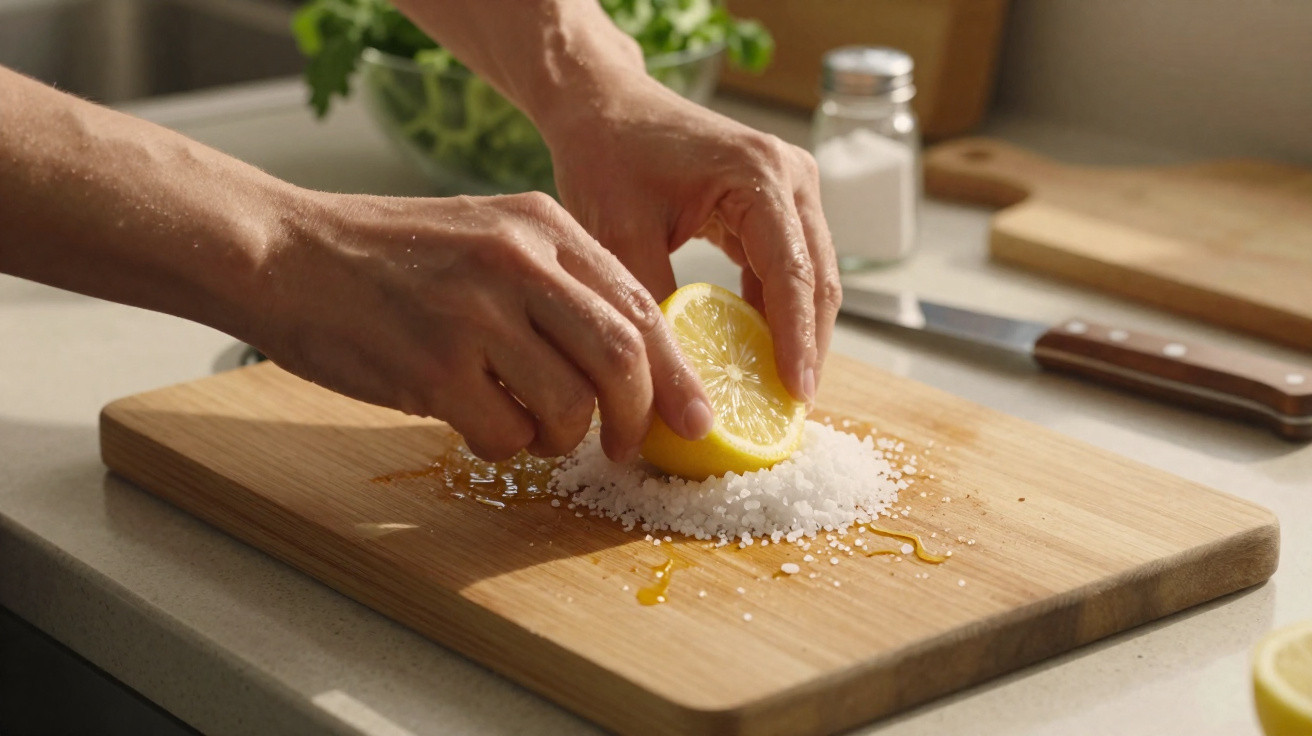
Begin with a board that has been cleared of crumbs and washed with hot, soapy water. Spread a light, even layer of coarse salt, such as kosher or sea salt, over the cutting surface. Zest a fresh lemon directly over the salt until there is a light scattering across the board; this provides the aromatic boost. Leave it for 2–3 minutes, allowing the salt and zest to draw at surface moisture. Next, rub in circular motions with the cut side of the zested lemon, releasing a little juice as you work. Leave the mixture for another 5 minutes. Rinse with warm water, pat the board dry and stand it on its edge to air-dry.
Use this treatment more regularly on wooden boards, which benefit from both the scrubbing action and deodorising oils. It is suitable for plastic boards too, although they also benefit from an occasional dishwasher cycle after preparing raw poultry. Do not soak the board: the benefit comes from contact rather than pooling liquid. Avoid table salt, as it is too fine to provide enough scrubbing action. If the board is heavily cracked or feels furry, sand it lightly and oil it after cleaning. Realistically, nobody does that daily. Oiling once a month is a sensible routine, using mineral oil or a board cream.
This is where inherited common sense fits neatly into a modern kitchen. Lemon and salt are useful without leaving perfumed traces or unknown ingredients on your tomatoes. For boards used with raw chicken or minced meat, consider a stronger follow-up for plastic: a diluted bleach rinse or a hot dishwasher cycle. Wooden boards remain especially useful for everyday fruit and vegetables, bread, herbs and cooked food.
“If it doesn’t smell like anything, it’s clean enough to cook on,” my grandmother would say, sliding the next onion across the grain.
- Use lemon zest for its fragrance and oils, then add a squeeze of juice for acidity.
- Pick coarse salt for traction; it acts as gentle sandpaper.
- Allow 5–8 minutes of total contact time before the final rinse.
- Dry the board upright so air can reach both sides; moisture is the real enemy.
- Some habits are worth bringing back.
How this traditional method changes your kitchen
Instead of another chore, you gain a small ritual. The board receives a reset that smells like a fresh beginning, so the next peach or sprig of dill does not take on the previous evening’s garlic. A pass with lemon and salt lowers the surface microbial load and lifts oils, preventing flavours from building up. It also encourages you to see the board as a kitchen tool deserving a minute of attention, rather than a flat plate by chance. That change can be felt in cleaner-tasting food and a more peaceful-feeling kitchen. The method is simple, and its benefits keep returning.
| Key point | Detail | Benefit for the reader |
|---|---|---|
| Natural disinfecting boost | Citric acid lowers pH; salt dehydrates and scrubs | A cleaner surface without harsh chemical residue |
| Odour reset | Zest oils dissolve lingering garlic/onion compounds | Neutral-tasting fruit, herbs and bread for the next chopping session |
| Board longevity | Gentle abrasion + routine drying, with occasional oiling | A smoother surface, fewer stains and improved hygiene over time |











Comments
No comments yet. Be the first to comment!
Leave a Comment