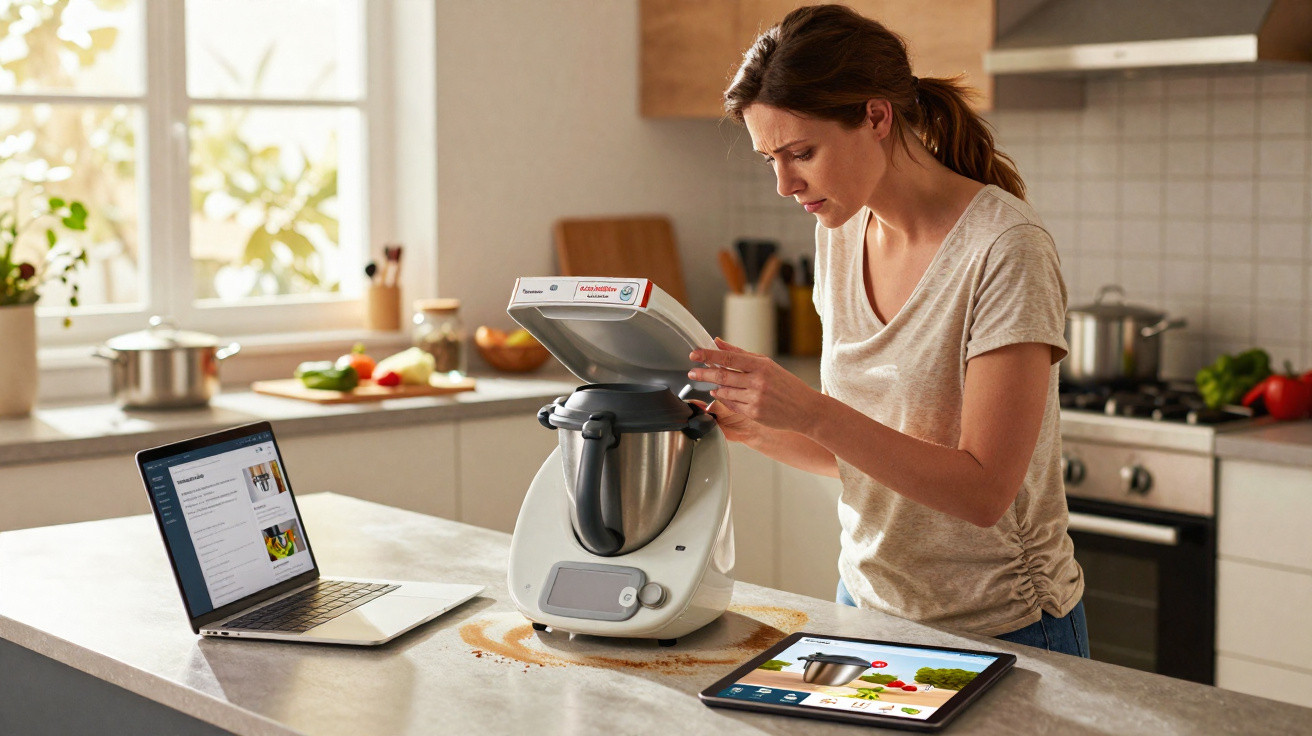
Many people dream of owning a Thermomix; some rave about it, while others list it on online classifieds again after only a few months.
Hardly any kitchen appliance divides opinion as sharply as the Thermomix: it is a status symbol and a miracle machine, but can also become a permanent strain on the budget. Behind the glossy advertising promises are genuine everyday frustrations, from the subscription model to the question of whether a €1,400 robot really cooks better than Grandma’s cast-iron pot.
The Thermomix myth – and the reality afterwards
For more than 50 years, Vorwerk has sold the idea that one appliance can cook, weigh, stir, knead, steam and, along the way, rescue everyday life. Many buyers save for months or pay for their Thermomix in instalments. Its delivery can feel rather like a small technology-themed Christmas.
Countless success stories circulate online: home-baked bread, healthy soups, baby food and meal preparation completed in record time. Yet, once the initial excitement fades, everyday life proves more sobering for some households. The Thermomix may take pride of place on the worktop, but not everyone uses it every day.
For some owners, the dream of an all-rounder turns into one question: does the way I use it really justify this price?
Price and subscription: when convenience becomes expensive
Money remains a key reason for selling again. With a purchase price of around €1,400, the Thermomix is among the most expensive mass-market kitchen appliances. Many customers spread that amount over 12, 24 or even more monthly instalments.
Cookidoo: a premium appliance with an added subscription
Anyone wanting the full convenience will soon turn to Cookidoo, Vorwerk’s official recipe platform. The subscription costs around €60 a year. At first glance, the database provides thousands of recipes with step-by-step guidance.
- A high one-off cost for the appliance
- Ongoing costs for the Cookidoo subscription
- Additional spending on accessories and replacement parts
- Electricity costs with frequent use
Many purchasers initially assume that, after such a substantial investment, access to recipes will at least be included. The additional subscription fee therefore repeatedly causes frustration, particularly when the appliance ends up being used only occasionally.
When a kitchen appliance reaches the price point and subscription structure of a smartphone, owners are quicker to ask: do I really use this enough?
Cooking results: excellent for soups, less convincing for braises
Another source of disappointment is that cooking results do not always meet expectations. The Thermomix can technically do a great deal, but it cannot replace every traditional cooking method.
When the beef roast suffers
Owners often report very good results with soups, purées, dips, hummus and yeasted dough. It becomes more problematic with meat dishes that would normally cook slowly in a casserole. Long-fibred meat can quickly break apart in the rotating bowl, while the sauce becomes smooth but less aromatic than one made in a cast-iron casserole over a low heat.
Anyone who bought the Thermomix mainly for precisely these “Sunday dishes” may then feel misled and return to a pot and frying pan. At that point, some start asking: what do I need the appliance for at all?
Space, weight and noise: the overlooked everyday obstacles
A Thermomix is rarely something that can simply sit attractively in a cupboard. It is heavy, bulky and ideally needs to remain within easy reach at all times. In small city flats with limited worktop space, that can soon become an issue.
When the Thermomix takes over the kitchen table
If the appliance has to be moved back and forth constantly, people are less likely to switch it on “just for a moment”. Then there is the noise level: when chopping hard ingredients or blending intensively, many models become loud enough to make phone calls or conversations in the kitchen virtually impossible.
A kitchen appliance that is so loud that you have to clear the kitchen every time will rarely become a genuine everyday helper.
Fear of the TM7: technology fans sell early
Vorwerk’s product strategy is also a driver of the second-hand market. Speculation about the next model, the TM7, is currently circulating. Although no firm details are available, many users expect new features, better connectivity or smarter controls.
Those who see themselves as technology enthusiasts do not want to “be left behind with the old model”. They therefore sell their TM5 or TM6 while it can still achieve a relatively high second-hand price, intending to invest in the newer model later.
| Reason | Consequence |
|---|---|
| Rumours about the TM7 | Functional appliances are sold prematurely |
| Fear of depreciation | A quick listing on second-hand platforms |
| “Fear of missing out” on new features | Pressure to upgrade, even where the need is questionable |
This makes the Thermomix more like a smartphone in its market logic: selling early helps secure a better residual value. That stimulates the second-hand market while also reinforcing the feeling of owning an appliance that is only “current” for a short time.
Everyday complexity: for some, the all-rounder becomes a dust collector
Many buyers associate the Thermomix with the hope of radical simplification: less thinking, less manual work and more time for children, work or leisure. The reality is more nuanced.
A wide range of programmes as a barrier
The appliance comes with numerous modes, temperatures, speeds and recipes. For people with little cooking experience, that can initially be helpful. For some users, however, it eventually becomes too much: searching through the display, choosing a recipe, weighing ingredients, preparing them and cleaning up.
Each use is followed by a fairly thorough cleaning routine: removing the blades, cleaning the sealing ring and rinsing the inside carefully. When someone simply wants “something to eat” in the evening, they may reach for a frying pan instead – it is quicker to wash up.
When the organisational effort surrounding a recipe feels greater than the cooking itself, a kitchen appliance loses its appeal.
Why the second-hand Thermomix market is so active
All these factors – price, subscription, space requirements, noise, cooking results, complexity and pressure from new models – create a remarkably dynamic second-hand market. Platforms are full of listings, often described as “hardly used” or “used only a few times”.
For some people, reselling is a way to correct a poor purchase and recover cash. For others, it offers an entry into the Thermomix world at half the price. As a result, thousands of appliances circulate without the brand losing visibility.
What buyers should realistically consider before buying
Simulate an everyday self-test
Anyone considering a Thermomix, whether new or second-hand, should honestly think through how they actually cook. Useful questions include:
- How often do I genuinely cook a hot meal each week?
- Do I make time for recipes, or do I need “ten minutes, then food”?
- Do I have enough permanent worktop space for the appliance to stay out?
- Am I strongly bothered by noise, for example when working from home or when children are asleep?
- Am I willing to pay for an additional subscription?
Answering these questions honestly reduces the risk of having to sell the appliance again after a few months.
Alternatives and combinations
Many former Thermomix owners move to less expensive multicookers, conventional food processors or a combination of a blender and braising pan. These arrangements often cost significantly less while better meeting individual needs.
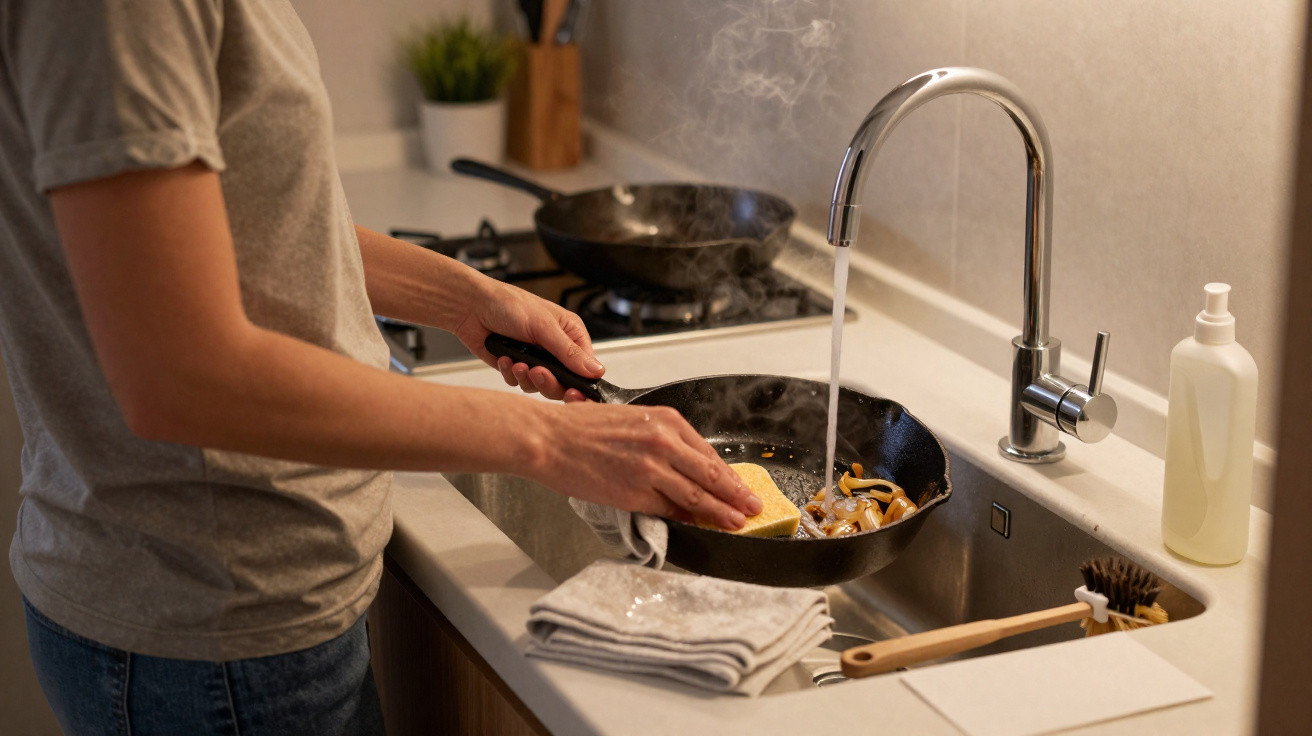
One possible scenario is that, rather than putting €1,400 into a single appliance, households invest in several specialist helpers: for example, an induction hob with a timer, a powerful blender and a heavy cast-iron frying pan. Together, these items can offer similar convenience, but with greater flexibility and often better cooking results for delicate dishes.
Risks and opportunities when reselling
Anyone selling their Thermomix reduces the financial loss, but must also consider several risks: remaining warranty, the condition of the blade and proof of authenticity. Counterfeits are rare, but they do occur in the high-priced segment.
Conversely, the lively second-hand market offers opportunities for buyers on a limited budget. They can benefit from appliances that remain technically in excellent condition but failed to meet the everyday expectations of their previous owners. Those who understand their own requirements and do not need a new model can make genuine savings here without major compromises in convenience.












Comments
No comments yet. Be the first to comment!
Leave a Comment