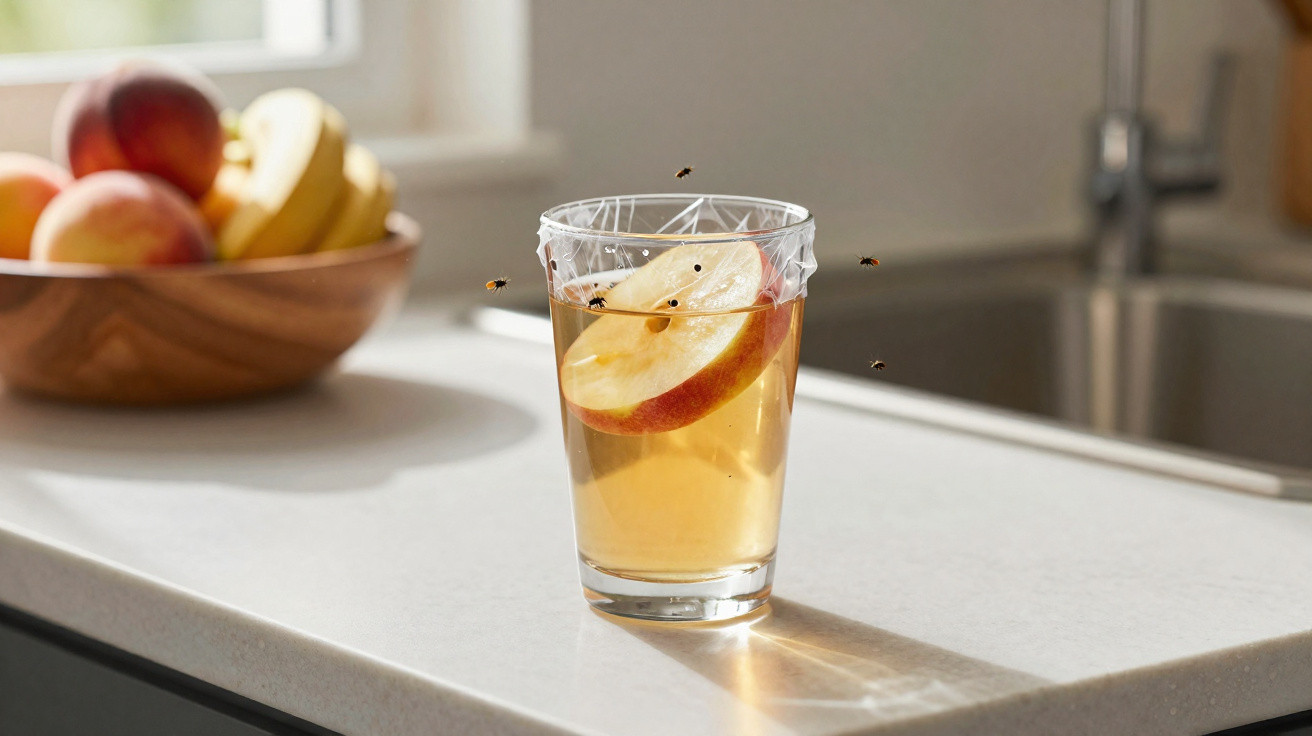
They swarm around your fruit bowl, take over the sink and appear to breed overnight.
But a straightforward kitchen arrangement can discreetly get rid of them.
Each summer, tiny fruit flies can transform a peaceful kitchen into a buzzing nuisance. Leave a few peelings behind, a sponge damp, and they can suddenly gather in swarms. A remarkably simple trap made from familiar household items promises to turn that infestation around quickly.
Why fruit flies suddenly take over your kitchen
Commonly referred to as “gnats” in everyday conversation, fruit flies are attracted by fermentation. Any food beginning to decay, whether overripe bananas or a sticky juice glass, effectively signals to them from afar. They detect it rapidly and settle in.
They are particularly drawn to:
- Fruit bowls kept at room temperature
- Compost caddies and kitchen bins
- Damp dishcloths and sponges
- Sink drains containing food debris
- Recycling bags holding unrinsed bottles or cans
One female can deposit hundreds of eggs on a very small piece of peel. These eggs can hatch in roughly a day. At first, you may only notice two or three flies; 48 hours later, it can feel as though they have appeared from nowhere.
Fruit flies do not just appear randomly: they follow fermenting smells, humidity and neglect. Control those three, and you regain your kitchen.
Although they seldom spread disease in homes, they can spoil fruit, interrupt meals and make a room feel unclean, even if you have only just tidied it.
The simple glass trap that turns the tide
For this particular pest, one trap is especially effective because it uses the very things that lure fruit flies. The technique widely shared on social media requires only three items: fruit, apple cider vinegar and a sheet of paper.
Step 1: Make bait they cannot resist
Take a medium-sized glass or jar. Put in several apple slices, or simply use the peelings left over from a snack. Add a spoonful of apple cider vinegar afterwards. The combination of sweet fruit and gentle acidity recreates the aroma of decomposing, fermenting food that fruit flies find irresistible.
The liquid does not have to be deep; it only needs to produce a noticeable scent. Lightly crush the apple with a fork if you want to intensify the smell. Some people also use a drop of washing-up liquid to lower the surface tension, making escape more difficult after flies land on the liquid.
Step 2: Form a one-way entrance
Then roll an ordinary A4 sheet into a cone. Keep the opening at its base small, but large enough for a fruit fly to enter. Secure the side with tape to retain the shape, and set the cone inside the glass with its point facing downwards, ensuring it does not touch the liquid.
The paper cone acts like a funnel: flies slip in with ease, but the shape and light direction confuse them when they try to get out.
Drawn by the smell, the flies travel down through the cone, fall into the glass and remain around the bait. They seldom manage to locate the tiny exit opening again.
Step 3: Place the trap like a professional
The trap is most effective when positioned where fruit flies are already congregating. Suitable locations include:
- Directly beside the fruit bowl
- Close to the sink or draining board
- Next to the kitchen bin or compost caddy
- Near a window where flies tend to hover
Keep it in place for a minimum of 24 hours. In a busy kitchen, the glass may begin to collect flies within a few hours, particularly towards the end of a warm day.
A cheap, low-waste answer to an everyday problem
This approach has become popular largely because it is inexpensive and relies on simple ingredients. There are no aerosols, synthetic repellents or complicated devices involved: only fruit waste, a little cider vinegar and a piece of paper.
| Method | Cost | Chemical use | Household effort |
|---|---|---|---|
| Glass & cone trap | Very low | None | Quick setup, reusable |
| Commercial sprays | Medium to high | High | Repeated applications |
| Electric zappers | High | None, but energy use | Permanent fixture, cleaning |
As the trap is made with items already available in the kitchen, it can be renewed whenever necessary. Change the apple pieces every few days, top up the vinegar when its smell weakens, and ensure the cone remains dry so it can continue directing insects effectively.
A reusable trap that runs on leftovers fits neatly with a more low-waste, low-chemical home routine.
Clearing the kitchen: prevention that actually works
The cone trap catches adult flies, but the main issue lies in the places where they lay their eggs. Unless those areas are dealt with, the infestation will return regardless of how many traps you use.
Remove their breeding grounds
A handful of simple routines can greatly reduce their population:
- Wash fruit immediately after bringing it home, then dry it thoroughly.
- Keep ripe fruit in the fridge during hot weather.
- Empty and rinse the kitchen bin and compost caddy more frequently over summer.
- Clean the sink and drain thoroughly, including rubber seals and the area beneath the plug.
- Allow sponges and cloths to air-dry instead of leaving them in the sink.
These measures clear away the coating of juice, wine or sugary residue on which the insects depend. Combining these habits with one or two traps targets both stages of the problem: adult flies in the air and larvae feeding in their food source.
How quickly will you notice a difference?
In most households, numbers decrease within three to five days. The initial group of adults is caught by the trap. Eggs laid beforehand may still hatch, but the newly emerged flies will encounter the same glass. After the cycle has been interrupted, regular daily cleaning stops future invasions from building to the same extent.
When fruit flies point to a bigger hygiene issue
A rapid rise in fruit fly numbers can occasionally expose overlooked areas of kitchen upkeep. A leaking bin liner, a forgotten juice bottle in a cupboard or a sticky area behind the fridge can each become a concealed breeding site.
When cleaning, people often discover they seldom check:
- The areas behind and beneath large appliances
- The interior of recycling bags or crates
- Spaces below worktop edges and splashbacks
- The underside of chopping boards used for fruit
Once these areas have been cleaned and dried, fruit flies lose their principal long-term footholds. The simple glass trap can then catch any remaining stragglers.
Beyond the kitchen: where this trap still helps
The same method can be useful elsewhere in the house. Bathrooms with uncovered bins, utility rooms containing pet food and home bars with open bottles may all draw tiny flies. A smaller jar containing the same fruit-and-vinegar mixture, placed unobtrusively behind objects, can steadily reduce their numbers.
Those who brew kombucha, maintain sourdough starters or produce homemade vinegar encounter this issue more frequently. Fermenting projects are highly appealing to fruit flies. Some home brewers now place rows of small traps on shelves and replace the bait with every brewing cycle.
The technique also offers an easy way to demonstrate basic pest control to children. They can assist with rolling the cone, observe how many flies enter it and learn why food scraps attract insects. This small experiment may encourage better daily habits, from rinsing plates immediately to properly shutting the bin lid.








Comments
No comments yet. Be the first to comment!
Leave a Comment