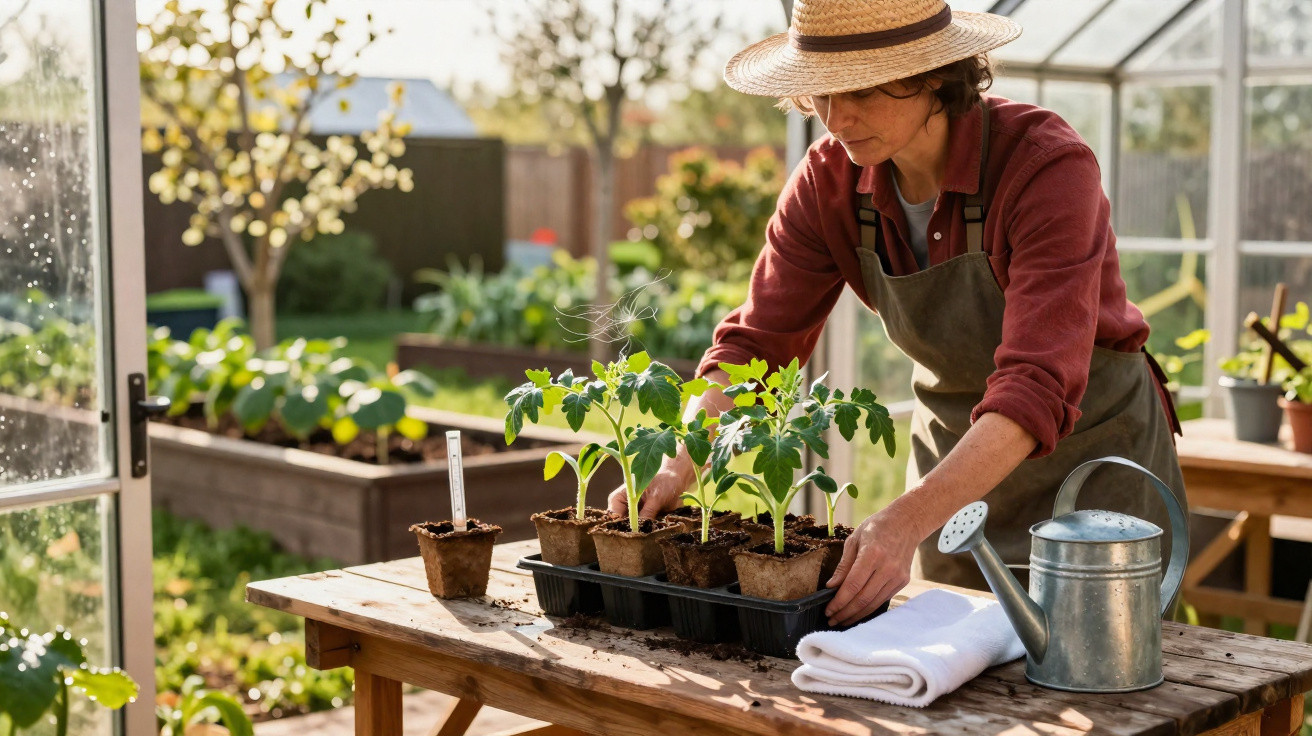
Many amateur gardeners are poised to get started in spring, buying young plants from the garden centre and planting them straight into the bed with great anticipation. A few weeks later, disappointment often follows: limp stems, scorched leaves and stunted plants. The gap between these results and the lush beds managed by professionals is rarely down to the variety – but rather one straightforward preparation step carried out consistently.
Why tomato plants suddenly collapse in the bed
The temperature shock after a comfortable windowsill
Young tomato plants are generally raised in warm conditions: on a windowsill, in a conservatory or in a well-protected greenhouse. Temperatures there are often close to 20 °C, with little fluctuation and no overnight frost. This is what the plants become accustomed to.
If they are moved straight outdoors on a sunny spring day, the evening brings a very different reality: nights of 5 to 6 °C, chilly wind and damp air. Such a sudden transition causes severe temperature shock. Growth stops, stress weakens the entire plant and diseases can take hold easily.
The biggest mistake is planting tomatoes from the living room directly into the open ground without preparation.
Stems stay too soft when they have never felt a breeze
The second issue is often immediately visible: long, thin, watery stems. Raising tomatoes in the living room unintentionally shields them from the very conditions that make them strong outdoors – especially wind.
Without movement, the plant produces very few tough fibres in its stem. When it is then placed on the balcony or in a bed and meets its first strong gust, it may bend over or snap just above the soil. This is precisely what professional vegetable growers aim to avoid with a set ritual repeated every year.
The professional technique: hardening off tomatoes gradually
Brief daily outdoor sessions: a training plan for young plants
The key step is called hardening off. This means gradually acclimatising tomato plants to genuine outdoor conditions. The approach is simple: rather than choosing “all or nothing”, follow a kind of training schedule.
- Days 1–3: Put tomatoes outside for 1–2 hours at midday, in a sheltered spot away from strong direct sun.
- Days 4–6: Extend this to 3–4 hours; a light breeze is beneficial.
- From day 7: Leave them outside for increasingly long periods, bringing them back into warmth only in the evening.
These short but regular exposures encourage the plant to produce more lignin – firm plant fibres. Within just a few days, the stem becomes noticeably sturdier and the entire plant grows more compactly. The lanky indoor plant develops into a stocky, resilient young plant.
Hardened-off tomatoes can be recognised by thick, firm stems and darker, stronger foliage.
Introduce real sunlight gently or the foliage will scorch
Many people underestimate the sun rather than the temperature. Light passing through glass is soft, filtered and considerably weaker. Outside, the plant is exposed to intense direct radiation. Placing sensitive tomatoes in full midday sun on a clear day can literally scorch their leaves.
The proper approach is to keep them in bright shade or beneath lightweight horticultural fleece for the first few days. Then allow a few minutes of direct sun at a time, increasing this slightly each day. After a week, plants will usually tolerate full midday sunshine far better.
The other spring danger: late frost in the fruit garden
Inspect fruit blossom every morning
Anyone growing a few tomatoes often has fruit trees in the garden as well. While the vegetable plants are being trained outdoors, apple, cherry and plum trees begin to flower. This brief period is extremely vulnerable. A single frosty night can wipe out a large proportion of the crop.
For this reason, experienced gardeners inspect blossoms closely early each morning. If they look glassy, brownish or mushy, frost has already caused damage. The response should then be swift: arrange protection for the following nights.
Spot late frost early and protect the trees
Clear skies, still air and forecast temperatures only just above zero are warning signs of risky nights. If in doubt, place a thermometer close to ground level. When temperatures fall sharply, protective covers, horticultural fleece or old bed sheets can be used to wrap the trees during the darkest hours.
Inside the flower, a black or dark-brown centre shows that the blossom has been lost. Watching for these signs improves awareness of future cold spells and helps gardeners act sooner next time.
How gardeners manage the critical spring transition
Straightforward protection for cold nights
Hardening off makes perfect sense in theory, but it can soon become tiresome in daily practice: pots out, pots in, day after day. Those wishing to make the process easier can create a temporary shelter for their young plants.
This might be a simple timber frame with a transparent cover, a small cold frame or an improvised box covered with plastic sheeting. Keep it open during the day so the young plants can adapt to wind and changing temperatures. Close it in the evening to retain the day’s residual warmth and keep frost at bay.
An improvised cold frame avoids constant carrying and protects tomatoes during their most sensitive stage.
Consistency over two weeks pays off
Anyone taking the process seriously should allow around ten to fifteen days for hardening off. During this period, plants go out into the light by day and return to their protected space or beneath cover in the evening. Final planting should only take place once overnight frosts are no longer forecast and the soil has warmed noticeably.
The traditional mid-May period known as the Ice Saints is used by many people as a rough guide. In any given region, however, the real frost risk may occur a little earlier or later. Checking the local weather pattern and trusting your own judgement are often more reliable than calendar dates.
How to recognise the perfect planting time for tomatoes
Combine signals from the plant, soil and weather
Experienced gardeners do not rely on one indication alone. Instead, they look at all of the following at once:
- Plant appearance: compact, vigorous tomatoes with firm stems.
- Soil temperature: the earth no longer feels clammy and cold, but pleasantly warm to the hand.
- Weather trend: no more nights forecast around freezing point.
When these points align, the time is likely right: dig the planting hole, work in compost and plant tomatoes deeply so that they can produce additional roots.
Start the season with confidence
Preparing tomatoes in this way makes planting out far less stressful. The plants have already encountered wind, temperature changes and real sunshine. They enter the season with strong stems, more stress-resistant foliage and an effective root system.
Rather than dealing with bent shoots and burnt leaves, you can focus on the enjoyable jobs: pinching out side shoots, watering regularly, feeding occasionally and, ultimately, harvesting baskets full of flavourful fruit.
Practical additions for a lush tomato season
Common terms explained briefly
The term “hardening off” does not refer solely to getting plants used to cold. It covers the whole package: temperature, light, wind and humidity. All of these factors are more intense outside than indoors, and together they encourage the plant to become more resilient.
“Lignin” is the name for the hard components in plant cells that provide stability. The more of it is deposited in the stem, the less likely the plant is to buckle in wind or under the weight of its fruit.
Further measures that strengthen the effect
To make tomatoes even more robust, a few small details can be considered during the hardening-off stage:
- Water only from below, keeping leaves dry and giving fungal diseases fewer opportunities.
- Occasionally brush the plants lightly with your hand – this also encourages sturdier stems.
- Do not feed heavily straight away; fertilise moderately so they do not grow soft and overly vigorous.
Together, these steps create a clear advantage: tomatoes that do not merely survive, but bear strongly throughout the summer. Anyone who follows this small pre-season ritual properly once will naturally plan for it again the following year.















Comments
No comments yet. Be the first to comment!
Leave a Comment