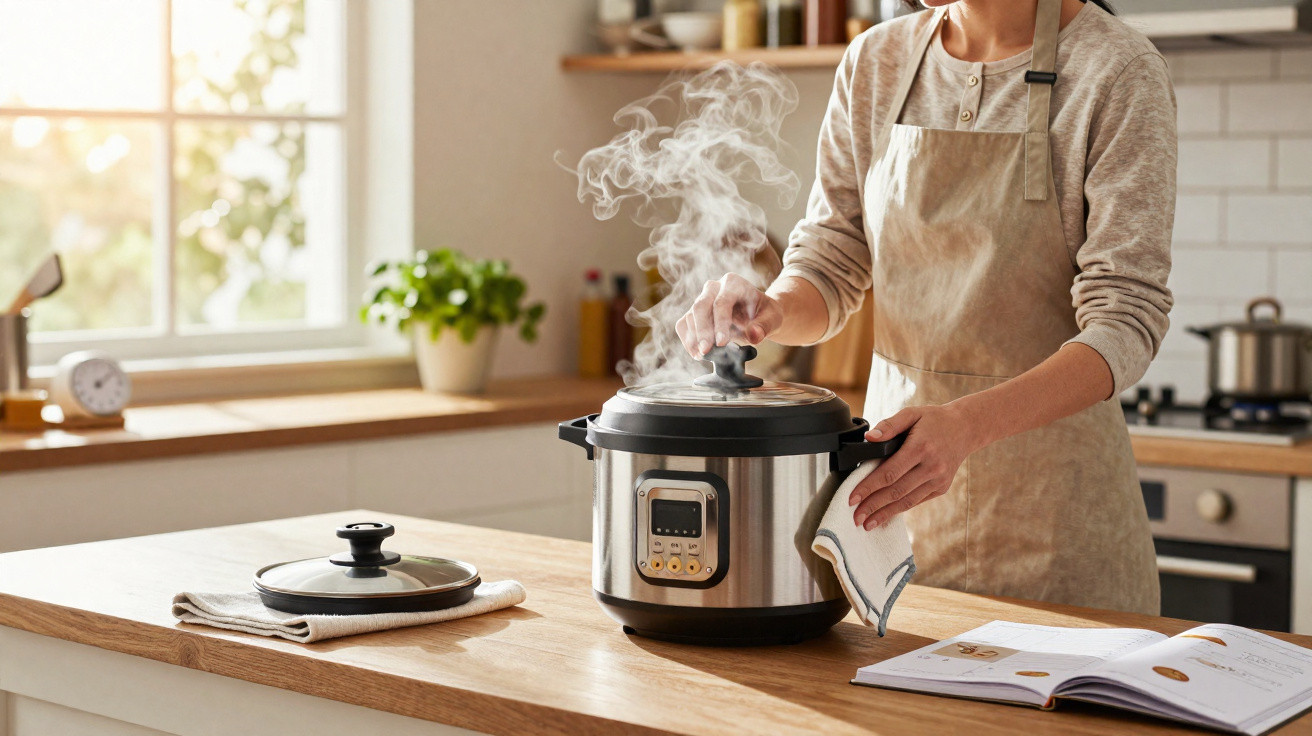
Using a pressure cooker calls for considerable care in the day-to-day lives of British households. This kitchen appliance speeds up food preparation remarkably, yet essential electrical safety measures and correct handling are needed to prevent serious kitchen accidents.
How should you inspect a pressure cooker’s safety components?
Before beginning any food preparation, carefully check the appliance’s key parts. The main valve must be free from dirt and blockages, both inside and outside, so that concentrated steam can escape unobstructed.
The sealing ring fitted inside the protective lid is another vital component to inspect. It must never show signs of drying out or deep cracks, as it needs to remain fully intact for the appliance to maintain internal pressure.
Below are the main structural features that require close attention before cooking:
- Pressure valve: It must be clean and completely clear of internal or external blockages.
- Sealing ring: It must not be dried out or cracked, ensuring that the lid seals properly.
- Maximum fill level: The combined quantity of food and liquid must never exceed two thirds of the total capacity.
- Automatic safety devices: These stop the appliance operating when a serious fault is detected.
- Concentrated steam: It needs sufficient clear space to expand safely while food is cooking.
What are the benefits of choosing an electric model for cooking?
Many people feel safer using modern electric models to prepare everyday meals. This preference is linked to the more visible protective mechanisms these appliances offer, which reduce common accident risks caused by serious human error.
An intelligent electric appliance automatically stops itself from operating if the lid is not fitted correctly in place. This advanced technology prevents the boiling process from starting and offers excellent control for anyone concerned about overheating in the home kitchen.
To understand in detail how to handle this appliance with complete confidence, watch the practical instructions available on Ciacarne Alimentos’ YouTube channel:
What is the correct limit for food and liquid in the pressure cooker?
A particularly common and highly dangerous household mistake is overfilling the pot with different ingredients. Food expands significantly during vigorous boiling, while the steam produced needs a clear internal area in which to circulate with maximum safety.
Pay Attention to the Limit
The Two-Thirds Rule
Never go beyond the two-thirds maximum-fill marking of your electric pressure cooker, as this can cause serious blockages in the valve.
Ingredients expand and require free space so that steam can circulate and be released completely safely.
For this essential reason, manufacturers provide clear internal markings showing the maximum permitted volume. Strictly observing the two-thirds limit prevents pieces of food from blocking the steam outlet and ensures correct operation.
Always follow these basic guidelines when arranging ingredients in the pot:
- Check the indicator lines marked inside the cooker carefully before adding water.
- Keep the upper area clear to allow grains and meat to expand naturally during cooking.
- Do not place unsuitable objects or accessories inside, as they may block the internal pressure-release channels.
How can pressure be released safely after cooking?
Once the cooking time has ended, the appliance will still retain a substantial amount of very hot steam. Two recommended methods can be used to release all of this pressure, and choosing the right one makes a major difference in preventing serious burns to human skin.
The safest method is to wait patiently for all pressure to escape naturally. This usually takes around fifteen minutes after the appliance has been switched off, removing the risk of dangerous splashes of boiling water over the external surface.
If you choose to release the pressure manually, take these essential steps:
- Always use a long fork or another long utensil to keep a safe distance from the valve.
- Turn the selector slowly to release the steam flow without creating sudden, forceful jets.
- Avoid this method when cooking foods with plenty of liquid, preventing excessive mess throughout the kitchen.
When is it safe to open the lid without danger?
Never try to force open the protective lid while any steam is still coming from the valve. Resistance from the lock clearly shows that the interior still contains dangerous thermal force, which could cause a serious household accident.
Only turn the lid to serve the meal once the steam has stopped completely. Alongside safe handling, monitoring the operating time helps control appliance electricity use and prevents unwelcome surprises in monthly consumption.













Comments
No comments yet. Be the first to comment!
Leave a Comment