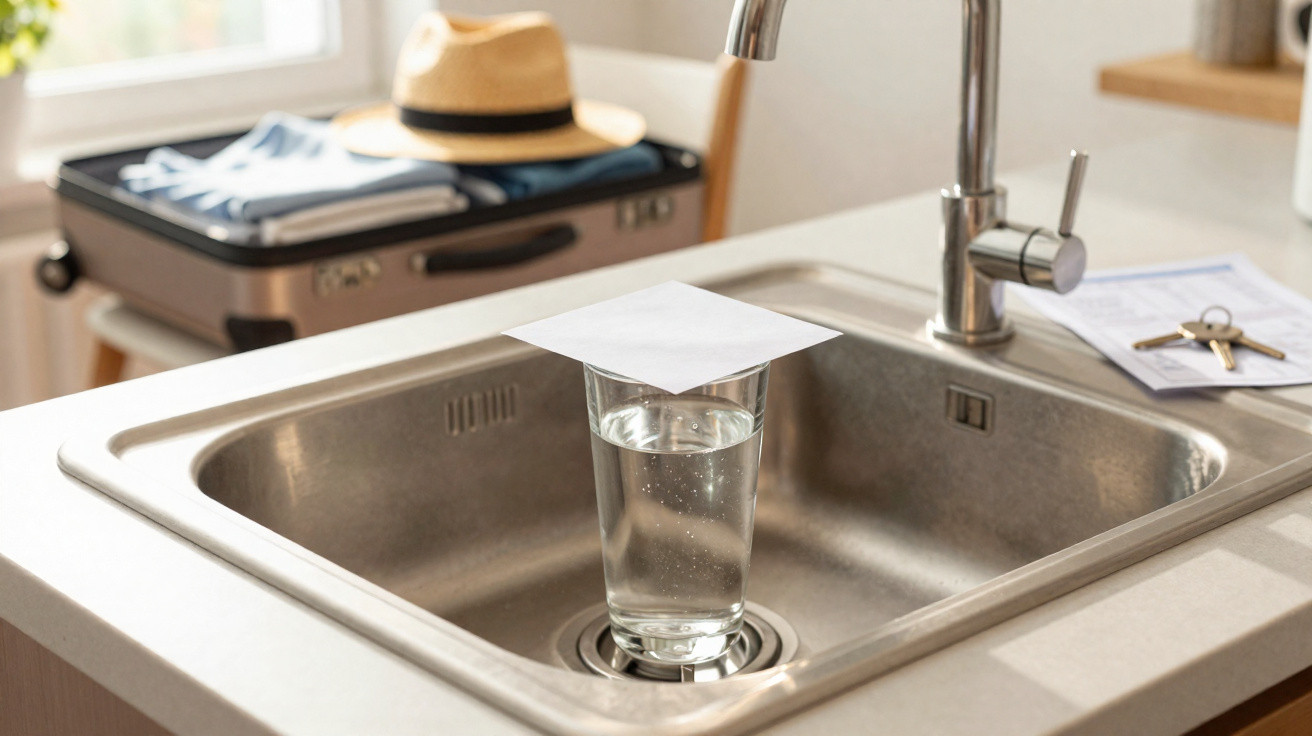
The kitchen was already partly in shadow when she paused at the sink. Cases stood by the door, boarding passes were waiting in her inbox, and there was that faintly guilty thrill of abandoning the house for a week. She had completed her usual pre-holiday routine: emptied the bins, watered the plants and shut the windows. Then she picked up a glass, filled it with water, ripped off a small piece of paper and positioned them carefully in the sink.
It seemed almost absurd, rather like leaving a midnight snack out for a ghost.
But the modest act felt oddly solemn. It was as though she had made a private agreement with the house: “If something goes wrong, you’ll tell me.”
After giving it one final glance, she took a quick photograph on her phone and went out.
A few days later, that picture would become unexpectedly important.
Why a glass of water in the sink could matter more than you realise
Initially, it can sound a little superstitious: put a glass of water and a scrap of paper in the sink, then leave home feeling less worried. Yet this small practice has quietly gained traction on social media, forums and travel groups. People are posting photographs of their kitchen sinks as readily as holiday sunset snaps.
The principle is straightforward: it is a low-tech method of finding out whether anything has gone wrong in your home while you have been away.
In a world of smart cameras and video doorbells, there is something reassuringly simple about a drinking glass and a piece of paper still having a role to play.
One traveller shared an experience that stayed with many readers. When she returned from holiday, she noticed a slight damp smell near the entrance. There was nothing obvious or dramatic, and everything appeared normal. However, the paper in the sink had vanished and the glass had been tipped over.
A worn pipe beneath the sink had developed a minor leak, sending just enough water on to the worktop to create a trickle. That water had shifted the glass, soaked the paper and left an unmistakable trace.
She checked inside the cupboard soon enough. The wood was damp but had not begun to rot. Her repairs came to a few hundred pounds rather than several thousand.
That prompted people to wonder whether a glass of water could genuinely act as a silent warning system.
The reasoning is almost childlike, perhaps which is why it is so memorable. You arrange a delicate scene: a glass, usually containing water, and a piece of paper positioned so even the smallest disruption creates an obvious difference. Vibrations, overflowing water or unexpected movement can all leave evidence.
If a blockage or gradual leak causes the sink to overflow, rising water may reach the glass or paper and alter the arrangement. A significant vibration, or a door being slammed hard enough to shake the worktop, could also cause the glass to shift or tip slightly.
You’re not trying to stop a disaster with this trick. You are simply looking for a clue: a sign that something unseen has happened while you were away.
And finding clues at the right moment can prevent considerable expense and stress.
The glass and paper in the sink trick: step by step
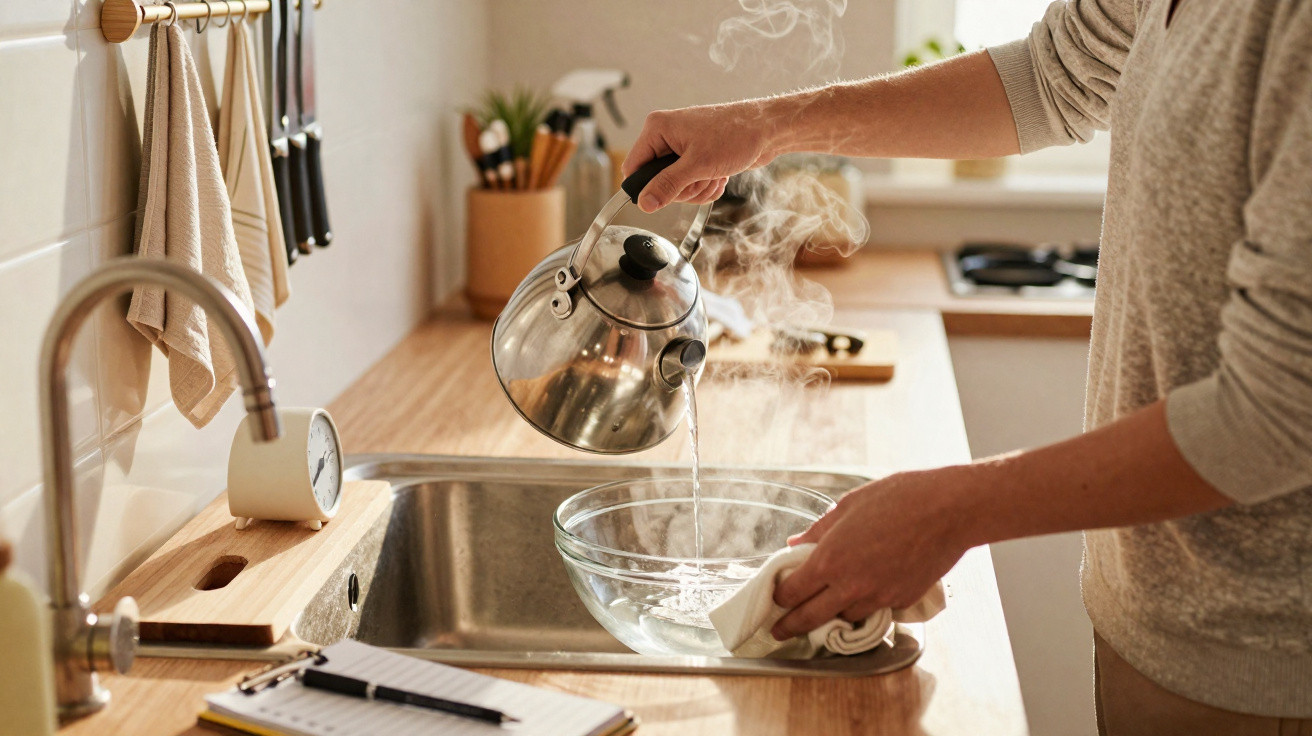
The process is almost embarrassingly easy. Before going on holiday, clear the sink completely, leaving no dirty crockery or stray cutlery behind. Put an ordinary drinking glass in a stable corner of the sink. Fill it to around halfway or three-quarters full, giving it some weight without overfilling it.
Then take a small piece of paper, or a sheet of kitchen roll, and place it on the sink edge so that it slightly overlaps either the rim of the glass or the sink itself. The idea is for any splash, leak or movement to wet the paper or displace it.
Before leaving, take a quiet second to look at the arrangement, almost as if you were storing a mental photograph.
Many people also pair the trick with a quick photograph. They take a picture of the sink immediately before shutting the front door and save it on their phone. It is not merely something to post online: the image records exactly how the area was left.
If a neighbour needs to enter the home to check something, or you return and feel that something is “off”, you have an easy comparison. Has the paper been moved? Has the glass slid a few centimetres? Are there water marks around its base that were not there before?
Let’s be honest: nobody methodically inspects every corner of the kitchen after coming home from holiday. A small visual reference point can help you spot changes your mind would otherwise overlook.
It is like stationing a tiny detective in your sink.
There are, however, a few common errors with this method. Some people take it too far, transforming the sink into a science experiment with several glasses, plates and complicated paper arrangements. That undermines the whole idea. You need one distinct, simple indicator, not a cluttered visual puzzle.
Others put the glass on the worktop rather than in the sink. It might look tidier, but the sink is generally where early signs of a leak or overflow will show up. The sink is the stage, while the glass and paper are the actors.
As one home insurance expert told us:
“Small visual markers won’t stop damage, but they transform ‘I had no idea’ into ‘I caught it early’. And that difference is often what turns a crisis into an inconvenience.”
For a practical reminder before you go, use this checklist:
- Empty the sink fully, including sponges and cutlery.
- Put one glass, half-filled with water, in a secure corner of the sink.
- Position a piece of paper so that it lightly touches the glass or the sink rim.
- Photograph the arrangement on your phone.
- When you return, compare the setup with your photograph before using the kitchen.
Beyond the sink: what this small ritual really changes
What is striking about this little trick is how emotional it can be. In theory, it is simply a glass and a scrap of paper sitting in a metal basin. In practice, it is a quiet way of saying: “I care about this place I’m leaving behind.”
At a deeper level, it speaks to the uncertain worry many people feel as they lock the door and set off for the airport. Did I turn the tap off properly? Is the dishwasher definitely switched off? Will the pipes behave while I am drinking cocktails by the sea?
Most of us have experienced that moment when the holiday has barely begun but our mind is already replaying an image of the kitchen tap.
This gesture does not offer magical protection; it provides information. When you arrive back tired from travelling, carrying bags of washing and looking dishevelled, you may not have the energy for a complete house inspection. But one look at the sink can give you an immediate indication: “Has something been happening here or not?”
If the paper remains intact and the glass is untouched, you can carry on with greater peace of mind. If either has changed, you know where to investigate first: beneath the sink, behind the washing machine or around the dishwasher door.
It is an uncomplicated way to reclaim a little control in a situation - leaving home - that can always feel slightly beyond your control.
People also quietly mention another benefit. Small though it is, the ritual encourages you to be more present. Putting the glass in the sink means you are no longer rushing out with your keys in hand. You stop, and you look at your home anew.
That pause often sparks other helpful reminders: “I should switch off that extension lead.” “Perhaps I’ll move this plant out of direct sunlight while we’re away.” “That drip beneath the sink really needs a plumber when we get back.”
Some social media users say they now recreate the same scene whenever they are away for more than two days. It has become a marker for both their departures and their returns.
A modest, slightly quirky ritual that quietly says: I am going away, but I will return - and I want to find this home exactly as I left it.
| Key point | Detail | Benefit for the reader |
|---|---|---|
| Glass and paper ritual | A glass of water and a piece of paper are placed in the sink before leaving | Provides a simple visual signal if there is a leak or unusual movement |
| Reference photograph | Take a photograph of the arrangement immediately before leaving the house | Makes it possible to compare the setup precisely on return and identify changes |
| First check on return | Look at the sink before doing anything else in the kitchen | Helps spot a possible issue quickly and limit any damage |









Comments
No comments yet. Be the first to comment!
Leave a Comment