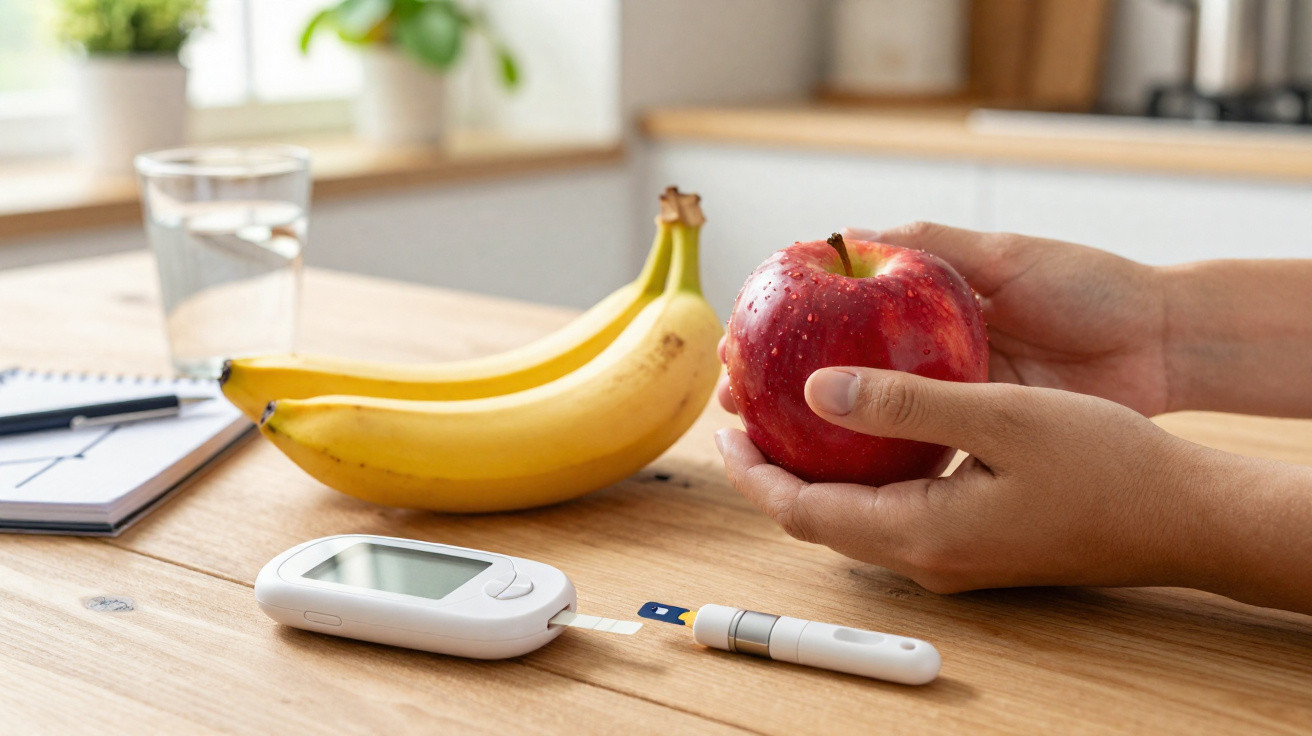
Whether you prefer the crisp bite of an apple or the creamy texture of a banana, both snacks can initially seem healthy and harmless. However, anyone dealing with blood sugar spikes soon discovers that different fruits do not have the same effect. Nutrition experts have therefore compared how apples and bananas affect blood sugar and fullness, revealing several surprising details.
How fruit affects blood sugar
To understand which fruit may be the better choice, it helps to consider two key measures: the glycaemic index and fibre. Together, they influence how quickly sugar passes from the gut into the bloodstream.
“Apples generally cause blood sugar to rise more slowly than bananas, mainly because of their soluble fibre.”
The glycaemic index indicates how rapidly a food raises blood sugar. A typical apple has a score of around 38, placing it in the lower range. A banana, at roughly 52, sits in the medium range. Neither fruit is a “sugar shock”, but the apple has a slight advantage here.
The main reason is that apples provide more soluble fibre, particularly pectin. These substances form a fine mesh-like structure in the gut, slowing the digestion of carbohydrates so that sugar enters the blood more gradually. This results in flatter blood sugar curves.
Apples in detail: the fibre champion in the fruit bowl
On average, a medium apple contains around 25 g of carbohydrates, including roughly 19 g of sugar and 4 g of fibre. Eating the peel delivers the greatest benefit, as it contains a substantial proportion of the fibre and plant compounds.
- approximately 25 g of carbohydrates
- approximately 19 g of natural sugar
- approximately 4 g of fibre (with peel)
- glycaemic index of around 38
Nutrition advisers point out that this combination means apples usually cause a slower and steadier blood sugar increase than bananas. People prone to cravings may benefit twice over: fullness often lasts a little longer because the sugar does not arrive all at once.
Apples also contain polyphenols and other plant compounds that can have long-term benefits for blood vessels and metabolism. For people with prediabetes or type 2 diabetes, regularly eating an apple can be a useful part of an overall balanced diet.
Bananas: sugar bomb or reliable energy source?
Bananas have a slightly different nutritional profile. An average medium banana provides around 27 g of carbohydrates, about 14 g of sugar and roughly 3 g of fibre. The difference compared with an apple may appear small, but it can matter in everyday practice.
| Feature | Apple | Banana (medium, ripe) |
|---|---|---|
| Carbohydrates | approximately 25 g | approximately 27 g |
| Sugar | approximately 19 g | approximately 14 g |
| Fibre | approximately 4 g | approximately 3 g |
| Glycaemic index | ~38 (low) | ~52 (medium) |
Ripeness and size are particularly important: the larger and riper the banana, the higher the “sugar dose” per snack. Nutrition professionals stress that a large, very ripe banana can raise blood sugar much more sharply and quickly than a smaller one that is still slightly green.
“Green bananas contain more resistant starch – this form of starch behaves more like fibre and causes blood sugar to rise more slowly.”
As bananas ripen, their proportion of complex starch breaks down. This produces simple sugars, which the body absorbs more quickly. The glycaemic index rises as a result. Anyone who needs to monitor their blood sugar is much better off choosing a smaller banana that is not overripe.
Bananas also supply valuable plant compounds. Some studies suggest that both bananas and apples may reduce the long-term risk of metabolic diseases, provided they replace sweets rather than being eaten in addition to them.
Which fruit is gentler on blood sugar?
Looking solely at the raw figures, apples perform slightly better: they offer more fibre, a lower glycaemic index and usually a steadier blood sugar curve. In daily life, they often come out ahead, especially for people with prediabetes or already elevated blood sugar levels.
That does not automatically make bananas “bad”. They provide energy quickly and can work well before exercise or when you are especially hungry between meals. The key is choosing carefully:
- choose a smaller banana rather than a very large one
- opt for yellow with a few green areas rather than heavily brown-speckled
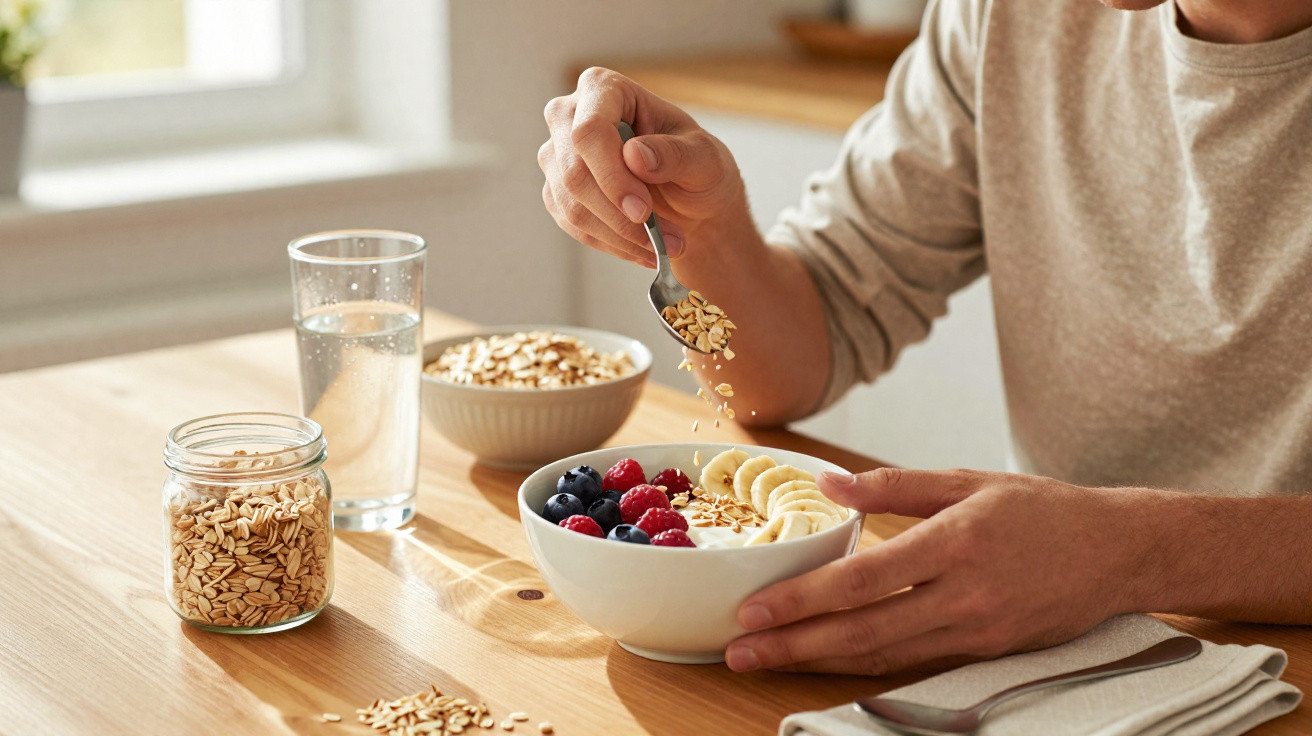
- pair bananas with protein or fat, such as plain yoghurt or a handful of nuts
For those aiming to keep blood sugar as stable as possible throughout the day, an apple – ideally eaten with its peel – is often the better option.
How to eat apples and bananas in a blood-sugar-friendly way
What matters is not only which fruit is in the bowl, but also how it is eaten. Experts strongly advise against snacking on larger amounts of carbohydrates entirely on their own. They call these “naked carbohydrates” – sugar with nothing to slow it down.
“The ideal combination is fruit, protein and fat: it is filling, slows sugar absorption and reduces blood sugar spikes.”
Practical snack ideas for steady levels
- apple slices with a tablespoon of nut butter, such as almond or peanut butter
- a small banana with plain yoghurt and a few nuts
- a piece of fruit alongside a piece of cheese
- fruit after a main meal rather than on its own in the afternoon
Going for a 10 to 15-minute walk after eating provides further support. Muscle cells then draw more glucose from the blood without the pancreas needing to release large amounts of insulin. A short walk around the block can measurably smooth blood sugar levels.
What people with diabetes or prediabetes should consider
For affected individuals, the total amount of carbohydrates consumed across the day is what ultimately matters. One apple or banana rarely exceeds the limit; problems arise when juices, sweets, white-flour products and too little movement are added at the same time.
Useful strategies include:
- measure portions: one apple or one small banana is enough for each snack
- chew fruit rather than drink it: smoothies and juices raise blood sugar significantly faster
- rotate varieties: instead of always choosing the same fruit, include berries, citrus fruits or kiwi
- test blood sugar: assess individual responses to different fruits
Many people using a glucose sensor notice that their own response depends on sleep, stress, the time of day and exercise. Some tolerate a banana extremely well after sport, but experience a sharp increase when eating one in front of the television in the evening.
What terms such as the glycaemic index really mean
The glycaemic index describes only the speed at which blood sugar rises, not the total carbohydrate amount. Two foods with the same index can contain completely different amounts of carbohydrates. This is why the “glycaemic load” is also relevant in daily life: it accounts for how much carbohydrate is actually eaten.
For example, a small banana with a moderate index may ultimately have less impact than a very large slice of cake with a similar index but significantly more carbohydrates. Anyone planning their diet should therefore always consider portions and frequency, rather than focusing only on table values.
A practical everyday guide to choosing fruit
When you are unsure what to select from the fruit bowl or supermarket shelf, one simple rule of thumb can help:
- For the most stable possible blood sugar levels, such as during a working day: choose an apple.
- For quick but not extreme energy, for example before training: choose a small banana that is not overripe.
- In both cases: combine it with protein or fat and take a short walk.
Both apples and bananas have a place in a healthy diet, even for people with diabetes. By choosing sensible portions, pairing them with other foods and moving regularly, you can enjoy fruit without fearing severe blood sugar spikes.
















Comments
No comments yet. Be the first to comment!
Leave a Comment