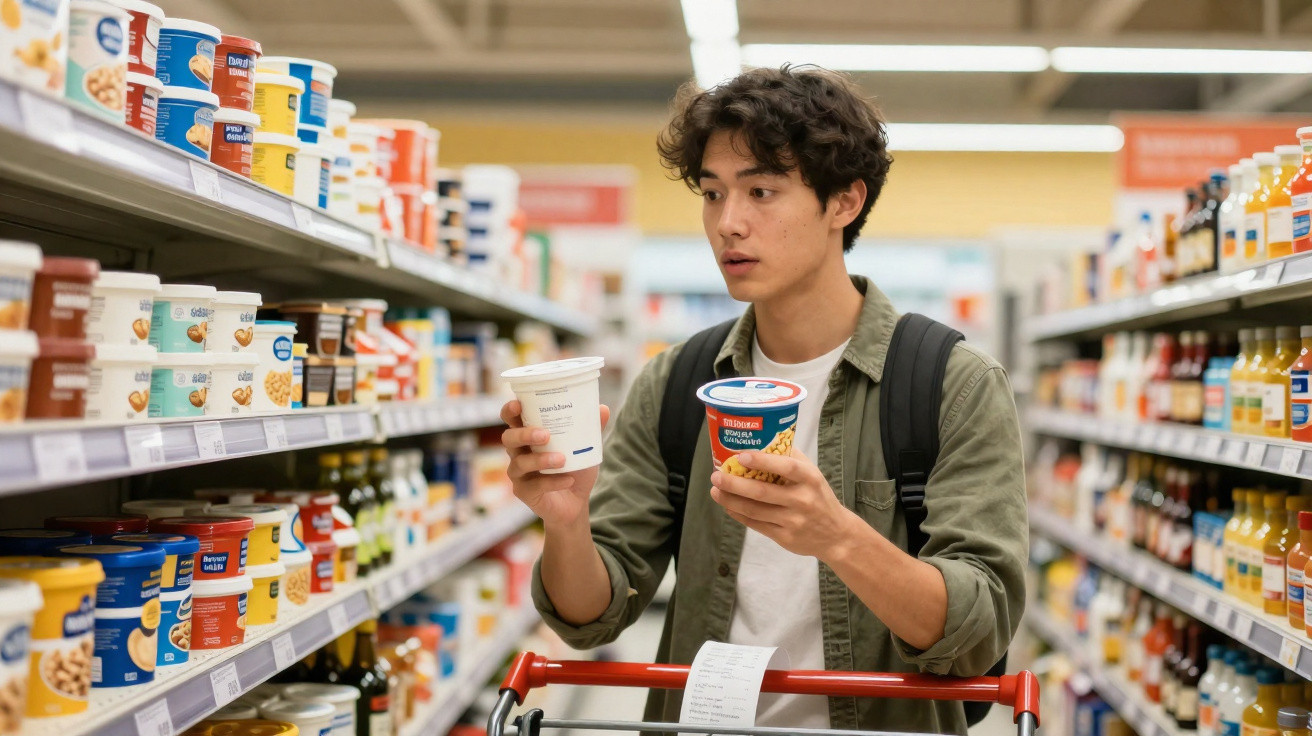
The first time somebody suggested that my pricey branded coffee and the supermarket’s plain tub of “house blend” might be roasted at the very same factory, I laughed.
Then I read the labels more carefully: the same region, the same roast level and uncannily close flavour notes. Ever since, whenever I wheel a trolley past a supermarket wall of logos, I have had the nagging sense that I am at a fancy-dress party rather than doing the shopping.
We have all experienced it: budget mayonnaise or supermarket cola that tastes… suspiciously fine. Perhaps even better than fine. You turn the jar around, searching for evidence as though you are in a low-stakes detective film. Between voucher websites, TikTok “dupe” videos and discreet comments from food-manufacturing workers, an odd reality has emerged: much generic food is produced in exactly the same places as its costly counterparts. Once you notice it, it is impossible to ignore.
When the branded yoghurt secret emerged
Years ago, a friend took a summer job at a dairy factory. There was nothing glamorous about it: clanging steel, beeping forklifts and that mild warm-milk scent that never quite comes out of your clothes. The factory bottled milk, packed yoghurts and filled cream tubs. Ordinary work. During a night-break chat, with his phone in hand, he mentioned something that has stayed lodged in my mind ever since.
He said: “We run the big brand line in the morning, store brand in the afternoon. Same vats. Different labels.” He laughed as if it were the least remarkable thing imaginable. For him, it was simply a production timetable. For me, it was like learning that my favourite band used backing tracks: not quite deception, but certainly not the image I had when I paid my money.
That tale from the factory is far from unusual. Across food Reddit discussions, ageing blog comments and quiet conversations with former production-line workers, you hear versions of the same admission. Kirkland, Great Value, Tesco Finest, Aldi’s everything - all travelling on the same conveyor belts as premium names that we insist we can “taste”. Labels and cartons change, and recipes may be adjusted slightly, but the dull grey walls surrounding them remain identical.
Why brands share factories so quietly
Behind the bright signs, the supermarket is largely governed by maths. Factories cost millions, machinery is expensive to purchase, and leaving that machinery unused costs even more. Once a manufacturer has equipment running smoothly, the financial logic is to keep it working from early morning until the night shift heads home, high-vis vests over their shoulders.
One factory could be making branded soup tins for a multinational at 9am, before changing over to a supermarket’s budget range by lunchtime. In some cases, the same business owns both product lines. In others, a contract manufacturer owns no brands whatsoever; it produces whatever it is paid to produce. It is rather like a hotel kitchen preparing both an elaborate wedding feast and a late-night room-service club sandwich.
For supermarkets, the arrangement is invaluable. They can offer “own” products without constructing factories or employing huge teams of food scientists. For major brands, factory-sharing or outsourced manufacturing helps them grow quickly, trial new products and avoid mundane concerns such as maintaining machinery and arranging health inspections. The logo on a box may belong to a global corporation, while the stainless-steel tanks behind it are discreetly hired by whoever requires them that week.
The same factory does not always mean the same recipe
This is where the story becomes rather less magical. A supermarket cereal and its glossy branded equivalent being made beneath the same roof does not make them identical twins. They are often more like cousins with the same nose but different hairstyles. Recipes are intellectual property, protected by NDAs and locked filing cabinets. Brands spend substantial sums preserving “their” precise flavour.
Two cereal mixes may therefore pass through the same metal drum while containing slightly different sugar quantities, vitamin blends and quality requirements. Perhaps the premium brand includes a costlier vanilla extract. Perhaps the store brand eases a standard in one area, accepting a broader range of flake sizes or cosmetic imperfections. Put them next to one another with a microscope and a food scientist, and the distinctions would be there.
Yet here is the irritating element: after all that recipe protection, many people cannot identify one from the other in blind taste tests. Sometimes, they even favour the cheaper product. Your taste buds have no interest in prestige pricing; they respond to sweetness, saltiness, crunch and creaminess. They also respond to habit. That leaves a mildly awkward question: how much of brand loyalty lives in your mouth… and how much lives in your head?
Packaging: the costume party that persuades us
Walk along the cereal aisle while focusing solely on shapes and colours, rather than words. The premium box appears dressed for a yoga retreat: muted shades, minimalist typefaces and a serene bowl photographed in flawless light. The budget alternative resembles a Sunday leaflet, with loud colours, dense text and a price displayed so prominently that it seems to shout. The wheat and sugar may be the same, as may the vague promise of “whole grain goodness”, but the atmosphere could not be more different.
There is a reason for this. Marketing departments are not foolish. They understand that the moment you pick up a cheaper product, a small voice may say, “Be careful, this might be rubbish.” The expensive item is therefore dressed in self-assurance: heavy card, embossed lettering and imagery that belongs in a lifestyle magazine. Store brands often remain deliberately simple. Their message is, “I’m here to save you money, not impress your friends.”
When those boxes move through the factory, however, workers are not admiring the artwork. They see product codes, batch numbers and machine settings: noise, steam and repeated movements. The emotional theatre begins only when we encounter the item again beneath harsh shop lighting, wondering whether saving £1.50 will somehow make us feel secretly poor.
The understated strength of “private label”
Why supermarkets value their own brands
Supermarket “own brands”, also known as private labels, were once the shop’s slightly embarrassing relatives: the products bought when rent was due and payday felt implausibly distant. They came with white labels, black lettering and a hint of post-war rationing. Then attitudes shifted. Shoppers became more conscious of prices, more inquisitive and, frankly, more tired of paying full whack for brand names.
Retailers took notice. They saw that selling their own brands removed a layer of expense: no enormous marketing budgets, television celebrities or billboard campaigns. They could therefore charge less while earning more profit on each item than they did from famous logos. That is the ironic reality: a bargain pack of supermarket pasta may make the retailer more money than the premium Italian brand sitting beside it.
Some supermarket chains pushed this further by creating complete own-brand tiers: a basic option, a standard range and a “finest” or “luxury” range. It is the same private-label principle in different outfits. Behind the scenes, many are made by the same small group of manufacturers, each of which knows how to meet a particular price point. Alter a few ingredients, tighten or loosen a quality specification, and an entire supposedly distinct product family suddenly exists.
Brands you enjoy… without realising it
There is another turn in this story that seldom reaches the front of the packet. Major brands sometimes make store-brand versions themselves. They may have unused plant capacity and be willing to sell a simplified recipe for less, provided their name appears nowhere on it. Making a lower profit is preferable to allowing a competitor to occupy that gap.
You may therefore boycott a well-known brand on principle while discreetly buying its anonymous factory output under a supermarket label. It is a little unsettling, like discovering that the “independent” café you adore belongs to the same group as the chain you claim never to visit. The sign differs, but the same supply-chain lorry is outside, unloading in the drizzle.
Why the fancy label still commands a higher price
Let us be honest: hardly anyone stands in the freezer aisle calculating the price per gram of every product. Perhaps you tried it once after watching a money-saving programme, became bored and returned to picking up the brand you always buy. Shopping is hurried and emotional, with children asking for snacks and phone alerts sounding. You do not always want to feel like an accountant.
Brands understand this perfectly. They sell reassurance alongside food. A familiar logo becomes a shortcut: you assume the peanut butter will not suddenly taste odd and that the washing powder will not ruin your clothes. That confidence is built through years of advertising, colourful end-of-aisle displays and, yes, sometimes genuinely superior formulas or stricter testing.
There is also a quiet snobbery that we are reluctant to acknowledge. A branded product on the kitchen worktop does not merely announce “I bought mayonnaise.” It suggests, “I can afford not to think about mayonnaise.” Even when generic brands are equally good, they make us face the possibility that we may have overspent for years. That is not an easy discussion to have with yourself beside the tinned tomatoes.
When generic products really are gems
Every home has its private converts: the discount cola that nobody wants to admit tastes fine, or the supermarket pesto you insist is better than the jar decorated with a charming Italian village. These are the occasions when it becomes clear that factory origin matters more than the marketing tale.
The basic products often perform best: flour, sugar, rice, tinned beans and cleaning goods. They are commodities, and there is only so much that can be altered before they are essentially the same thing. If one plant packs sugar for three separate labels, the crystals do not rearrange themselves according to the sticker put on the bag. In effect, you are choosing between typefaces.
Finding those wins brings a quiet satisfaction. You begin to feel as if you have looked behind the curtain, joining a small group who know that the enormous bottle of store-brand washing-up liquid comes from the same foamy factory as the “triple-power ultra-shine” version that costs twice as much. You save a few quid, while also preserving a small amount of dignity: you are no longer completely at the logo’s mercy.
The illusion breaks when you work within the system
Speak to somebody who has spent years in food manufacturing or logistics, and they see a different supermarket. Brand names are not what they recall first; they remember line numbers, supplier codes and the particular clank a machine makes when it jams. The romance of “heritage” and “tradition” gives way to spreadsheets and delivery timetables.
One former factory technician described how strange it was to watch exactly the same chocolate bars leave one machine in “premium” wrappers, then later in store-brand wrappers carrying a lower price on the box. The chocolate recipe was unchanged. The cocoa did not suddenly become less ethical at 3pm. Only the party taking the margin at the checkout differed.
After learning that, it is difficult not to feel a flash of irritation when an advert presents a biscuit as a lifestyle choice. It’s just a biscuit, mate. It came off a belt like all the others.
What are we actually paying for?
When you pay extra for a premium brand, you are generally purchasing a package: some genuine quality differences, a degree of consistent flavour, a marketing narrative and social reassurance. You are buying more than the product that travelled down the line; you are buying its idea. At times that is reasonable. At other times, it is merely habit with better graphic design.
Generic store brands enter the equation as quiet disruptors. They remind us that beneath the colours and slogans sits a surprisingly limited number of factories producing astonishing volumes of identical or near-identical goods. They pose a question that is uncomfortable and freeing in equal measure: how much of your shopping basket is about function, and how much is about feelings?
The next time you are standing before the shelves, pause briefly. Imagine the humming factory hundreds of miles away, steam rising and hairnetted workers stacking pallets of products that become “cheap” or “premium” only once their labels are applied. Then choose whichever you prefer, without guilt either way. Just remember that, behind those different faces, many share the same heartbeat.










Comments
No comments yet. Be the first to comment!
Leave a Comment