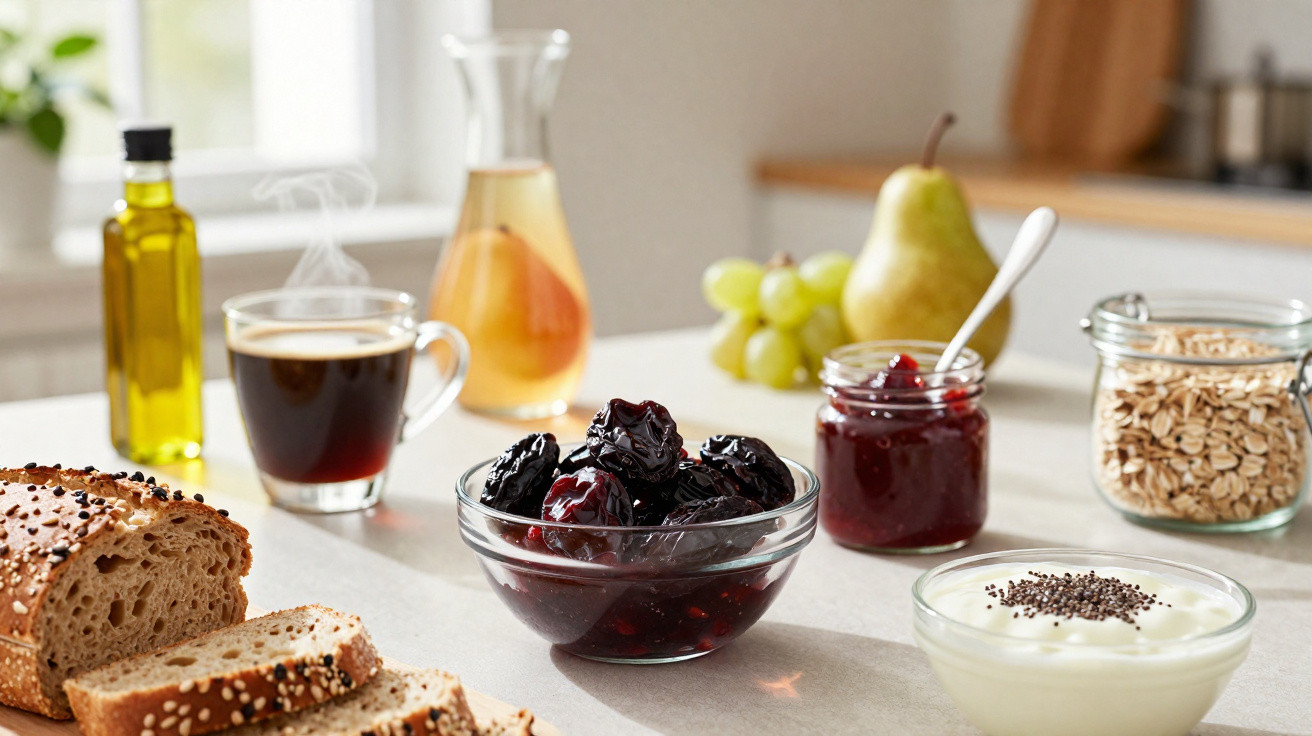
Doctors are seeing more people caught between uncomfortable constipation and an increasing dependence on over-the-counter laxatives. In many instances, however, carefully chosen foods can restore bowel function in a gentler way.
Understanding constipation before changing your diet
In clinical terms, constipation generally means having fewer than three bowel movements per week, commonly alongside hard stools, straining and the feeling that the bowel has not fully emptied. However, it involves more than simply not going to the toilet often enough.
Clinicians recognise two principal forms. Transit constipation occurs when stools travel too slowly through the colon. Terminal constipation, also known as “outlet” constipation, refers more to trouble expelling stool from the rectum, even after it has reached the final stage.
Knowing whether your problem is “slow motion” or “blocked exit” can help you pick the right type of natural laxative.
A low-fibre diet, insufficient drinking, prolonged sitting, travelling, abrupt changes in routine and certain medicines can all contribute. In response, many people repeatedly use stimulant laxatives. These medicines can be useful for short-term relief, but regular use may irritate the intestinal lining and contribute to what doctors call “lazy bowel”, in which the colon gradually becomes less responsive.
Why natural laxative foods matter
Some foods work almost like gentle, naturally integrated treatments. They can increase stool bulk, bring water into the bowel or mildly encourage intestinal contractions, without the harsh rebound that may follow certain tablets.
Used regularly, these foods support a smoother, more predictable transit rather than forcing the intestine into overdrive for one dramatic result.
Their effects generally come from three main actions:
- Fibre effect – insoluble fibre increases bulk and helps contents move along, while soluble fibre creates a gel that softens stools.
- Osmotic effect – naturally occurring sugars or sugar alcohols draw water into the bowel, making its contents softer.
- Motor effect – some compounds gently enhance the gut’s natural rhythmic contractions.
1. Prunes, the classic transit booster
Prunes, especially the well-known Agen prune, are among the most thoroughly researched natural laxatives. They provide a substantial amount of fibre, but fibre is not their only useful feature.
Alongside fibre, prunes contain sorbitol, a sugar alcohol that attracts water into the bowel, as well as compounds that encourage the intestine to contract. Together, these effects help explain why a handful of prunes may work better than certain fibre supplements.
Two to three prunes a day are often enough to maintain a soft, regular stool in people with mild constipation.
Soaking prunes overnight in a glass of water can make them easier to tolerate. Some people drink the soaking water and eat the fruit first thing in the morning. They can also be blended into smoothies, stirred into yoghurt or used in stews to add a sweet-savoury note. Anyone with a sensitive gut should begin with one prune, increase the amount gradually and drink plenty of fluids.
2. Apple and rhubarb compote for gentle relief
Stewed fruit has long been used as a family remedy, and there is sound physiological reasoning behind it. Apples and pears contain pectin, a soluble fibre that forms a soft gel in the intestine. This gel holds onto water, builds stool volume and helps stools pass more easily.
Rhubarb works somewhat differently. Its naturally occurring anthraquinones can stimulate the bowel more strongly, accounting for its status as a potent kitchen remedy. The stalks should be cooked and consumed in sensible amounts, particularly by people who are susceptible to abdominal cramps.
A small bowl of apple–rhubarb compote at breakfast can act as a mild regulator, particularly for older adults and children.
Cooking makes the fruit fibres softer and more suitable for sensitive intestines. Combining tart rhubarb with sweeter apples that are rich in pectin creates a balanced effect: enough firmness to encourage movement, but gentle enough to remain comfortable.
3. Coffee’s surprising gut kick
Many people feel the need to visit the toilet soon after their first coffee of the day. Caffeine is not the sole reason. Coffee promotes the release of gastrin, a hormone that encourages contractions in the lower colon and accelerates movement through the digestive system.
Both caffeinated and decaffeinated coffee seem capable of producing this response, indicating that other coffee components are involved. Responses differ greatly: a single mug prompts a bowel movement for some people, while it has virtually no effect for others.
One cup of coffee after breakfast can help “train” the bowel by creating a predictable daily window for evacuation.
Anyone with reflux, anxiety or heart rhythm problems should consider how coffee fits with their wider health needs. Decaffeinated coffee or a milder hot drink may be a better choice in these circumstances.
4. Fruit juices, from pear to grapefruit
When consumed with their pulp, certain fruit juices can work as gentle osmotic laxatives. Pear, prune and grape juice are particularly notable because they contain sorbitol naturally, helping the colon retain water and soften stools.
Grapefruit juice has an additional feature. Naringin, a compound it contains, supports bile production, which may help lubricate the digestive tract and activate the reflex connecting a meal with a bowel movement.
One small glass of pulpy fruit juice in the morning can support hydration and add a nudge to the intestinal rhythm.
Grapefruit should nevertheless be approached carefully. It can affect how the body processes several widely used medicines, including certain blood pressure treatments and statins. People taking long-term medication should speak with a health professional before drinking it regularly. Pear juice may be a milder alternative for people with sensitive stomachs.
5. Healthy fats as intestinal “lubricant”
Extremely low-fat eating patterns can be unhelpful for bowel function. Suitable fats help stools move more smoothly along the intestinal wall and encourage bile release, helping digestive contents continue to flow.
Olive oil is especially noteworthy. Taking a tablespoon of extra-virgin olive oil on an empty stomach, occasionally combined with a little lemon juice, is a widely used traditional approach. Avocados, nuts and seeds also provide both fibre and lubricating fats.
Regular, moderate intakes of good-quality fats can ease the passage of stool and reduce straining.
Moderation is essential. Very large quantities of fat can delay stomach emptying and lead to nausea. For most adults, digestive benefits can already come from a small handful of nuts, half an avocado or two tablespoons of olive oil spread over the day.
6. Whole grains as long-term “scaffolding”
Wholemeal bread, brown rice, oats, barley and other unrefined grains retain their bran layer, which is high in insoluble fibre. This fibre passes through the digestive tract largely unchanged, absorbing water and increasing the bulk of stools.
The increased volume stretches the intestinal wall, activating nerve endings and initiating peristalsis: the wave-like contractions that move contents onwards.
| Food | Main fibre type | Typical effect |
|---|---|---|
| Oats | Mixed, rich in soluble fibre | Softens stool, gentle on sensitive guts |
| Wheat bran | Mostly insoluble | Increases volume, acts relatively quickly |
| Brown rice | Insoluble | Supports regularity when used daily |
Moving from refined to whole grains is best done gradually. Switching overnight from white bread to a large bowl of bran can result in bloating and cramps. Replacing half your refined grain products with wholegrain alternatives over several weeks allows the microbiome time to adapt.
7. Fermented dairy and probiotics
Yoghurt and fermented milk products contain live bacteria that may help rebalance the gut environment. Clinical studies link several probiotic strains, including certain bifidobacteria and lactobacilli, with improvements in stool frequency and consistency.
A daily pot of plain yoghurt often helps people whose constipation is linked to a sluggish or disrupted microbiome.
Products on supermarket shelves do not all offer the same benefits. Plain, unsweetened yoghurt with clearly identified live cultures is more likely to be useful than heavily sweetened, “dessert-style” varieties. For people avoiding dairy, fermented alternatives such as kefir-style plant drinks or sauerkraut may provide comparable microbial benefits.
8. Seeds and small powerhouses
Flaxseeds and chia seeds provide fibre, mucilage and beneficial fats. When they meet water, they create a gel that hydrates and lubricates stools at the same time. This can be particularly useful for people whose stools are dry and pellet-like.
Ground flaxseed is normally absorbed more effectively than whole flaxseeds, which often pass through the body unchanged. Chia seeds can be soaked in water, plant milk or yoghurt to make a soft pudding that functions as both breakfast and remedy.
One to two tablespoons of soaked seeds a day can shift a stubbornly dry transit towards softer, easier stools.
Adequate fluid intake remains vital. These seeds need to be consumed with plenty of liquid, otherwise they may have the opposite result.
Putting it together: daily combinations that work
Instead of focusing on one supposedly miraculous food, most people benefit from a simple daily routine that combines several gentle effects. For instance:
- Breakfast: coffee or herbal tea, plus a bowl of oats with yoghurt, prunes and ground flaxseed.
- Lunch: a mixed salad dressed with olive oil, a serving of whole grains and cooked vegetables.
- Afternoon: a small glass of pear or prune juice if a bowel movement has not yet happened.
- Dinner: a vegetable-rich dish followed by a serving of apple or rhubarb compote.
This kind of routine supports transit at several times during the day, usually without causing intense urgency. Most people require at least one or two weeks of consistent changes before assessing the outcome.
When natural laxatives need caution
Even food-based approaches can create problems in some situations. Very high fibre consumption is unsuitable for people with strictures, recent abdominal surgery or active inflammatory bowel disease. Grapefruit can be dangerous alongside certain medicines, while frequent use of rhubarb and other strongly stimulating plants may cause cramps.
Warning signs including blood in the stool, unexplained weight loss, severe pain or a sudden alteration in bowel habits after the age of 50 always warrant medical assessment, whatever the diet.
Key terms and what they really mean
The term “laxative” often suggests an emergency measure. In nutritional terms, though, it describes a range of different actions:
- Bulking agents: high-fibre foods that make stools larger, such as whole grains and seeds.
- Osmotic agents: substances that draw water into the bowel, including sorbitol found in prunes and pears.
- Stimulant agents: compounds that directly increase contractions, such as rhubarb’s anthraquinones and some herbal teas.
Most natural options outlined here fall at the milder end of this range. When used consistently alongside movement and adequate hydration, they can often help break the laxative–constipation cycle and promote a more comfortable, dependable bowel rhythm.

















Comments
No comments yet. Be the first to comment!
Leave a Comment