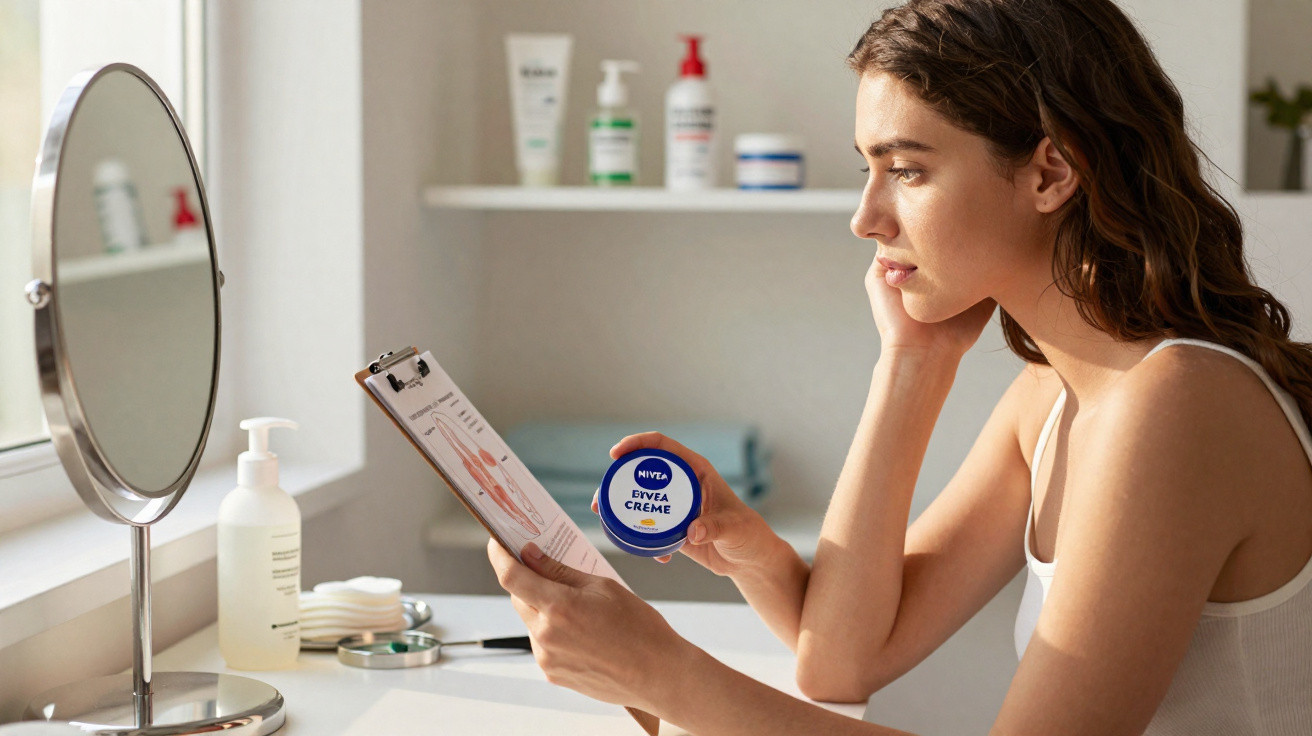
Nivea Crème: striped lid, instantly recognisable fragrance. To some, it is a treasured staple; to others, it is a greasy dinosaur with no place in 2026.
On TikTok, videos attract millions of views by claiming this cream can erase wrinkles, dryness and insecurities. In dermatologists’ consulting rooms, there is a weary response: “It’s just slightly fancy petroleum jelly.” These are two worlds that barely speak to each other - and, in a way, both hold some truth.
Between these polarised views lies the reality of our skin, our budgets and our routines - along with a question that is rather more irritating than expected.
Why dermatologists roll their eyes while fans fill their carts
At a bright London clinic, dermatologist Sarah K. brings up the classic Nivea Crème ingredient list on her screen and gives a quiet laugh. “This is the skincare equivalent of white bread,” she says. “Comforting, cheap, but not exactly a superfood.” Her main criticism is that the formula is intensely occlusive, with plenty of mineral oil and petrolatum but few contemporary active ingredients.
In her view, it is overhyped petroleum jelly with perfume and marketing. It does seal moisture into the skin, certainly, but it does not truly “treat” very much. There is no vitamin C, retinol, niacinamide or peptides - simply a very traditional emollient base with a familiar scent. “Great as a barrier, not a miracle,” she says, tapping the tin. Then her next patient enters, holding that same blue tin like a lucky charm.
A few streets away in a busy chemist, 58-year-old Maria has no interest in ingredient lists. Every Christmas, she buys three large tins of Nivea Crème, one for each of her daughters. She has used it since she was 15: first in Portugal and now in the UK. During the 2023 heating crisis, she covered her face with it every night because the dry indoor air was ruining her skin. “Everything else made me sting,” she explains. “This one never betrays me.”
Thousands of similar accounts appear online under hashtags such as #NiveaMagic and #NiveaForLife. Some people insist their grandmother’s “glass skin” came from this cream alone. A 2024 TikTok trend even compared it with La Mer, promoting “dupes” for €5. There were no clinical trials, only selfies and nostalgia. Still, these stories connect in a way that polished dermatological language often fails to: through lived experience.
Once the viral hype is removed, the science is relatively simple. Classic Nivea Crème is a rich occlusive moisturiser made with mineral oil, petrolatum, glycerin and waxes. Rather than adding much water to the skin, it holds on to the moisture already there. That can be invaluable for severely dry or compromised skin, or in cold climates, but it is less suitable for oily or acne-prone faces.
The description of it as “overhyped petroleum jelly” reflects the divide between its marketing and what it actually does. It may be promoted as a multi-purpose wonder product, but in practical terms it is closer to a fragranced, richer version of Vaseline with added emollients. It contains no anti-ageing actives or brightening ingredients. Yet skincare is not solely about the latest technology: comfort and ritual matter too, and that is where the blue tin continues to win.
How to use Nivea Crème without wrecking your skin
Dermatologists are not necessarily telling Nivea Crème fans to bin it. Instead, they advise using it for what it genuinely is: a protective barrier, rather than an everyday 10-in-1 solution. The simple tip shared by many experts is to apply it on top of something hydrating, rather than directly onto dry, bare skin.
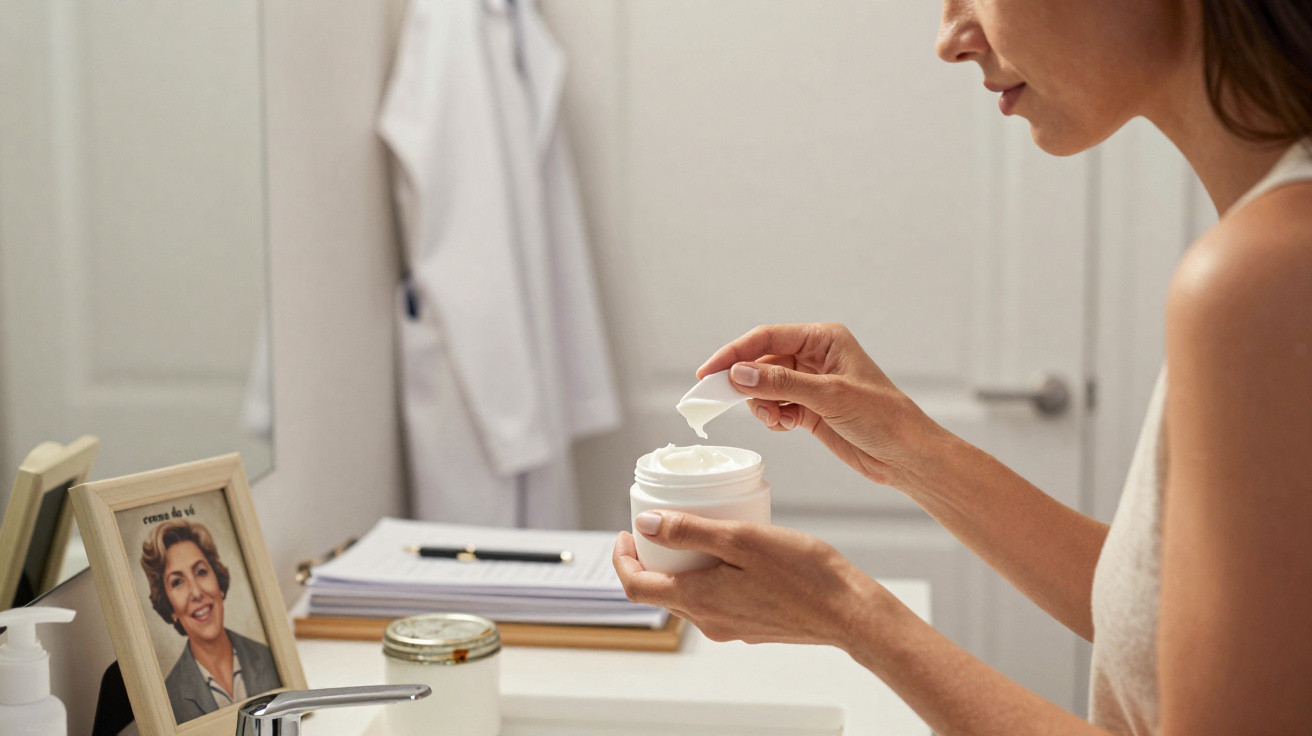
Begin with a gentle cleanse, followed by a light water-based serum or moisturiser containing humectants such as glycerin or hyaluronic acid. While your skin remains slightly damp, pat a pea-sized amount of Nivea onto the driest areas: the cheeks, around the nose and perhaps beneath the eyes if you tolerate fragrance well. Allow it to rest on the skin like a protective blanket instead of massaging it in as you would an ordinary cream.
This is often where people run into trouble. They spread a thick coating of Nivea over a bare face that has been over-exfoliated, then wake to clogged pores and fresh breakouts. Or they wear it in hot, humid weather and wonder why their T-zone resembles a frying pan by midday. Let’s be honest: hardly anyone uses it with restraint every day; we tend to apply too much just “to be safe”.
Dermatologists recommend a more deliberate approach. Apply it only to dry areas. Use it as a night mask on days with harsh weather, or after a retinoid to help limit irritation. If you are prone to acne, avoid your forehead, nose and chin, and monitor your skin’s response for two to three weeks. The loyal users who praise its “magic” have often learnt these limits instinctively over time.
For some people, its emotional appeal is every bit as powerful as its practical role. There is the scent, the pop of the lid, and the memory of a parent rubbing it into chapped hands before school on a winter morning. One long-time user told me:
“When I put on Nivea, it’s not just cream. It’s my mum, my aunties, the women in my family telling me I’m going to be okay. You can’t measure that in a lab.”
That sense of nostalgia helps explain why many people accept some greasiness or the odd breakout in exchange. Even so, experts stress several non-negotiables for anyone incorporating Nivea Crème into a modern routine:
- Do not rely on it as your only facial product if you want anti-ageing or brightening results.
- Avoid using it on active acne, very oily areas and in very hot, humid conditions.
- Patch test it if you are sensitive to fragrance or have a history of eczema.
The quiet middle ground between “miracle” and “useless”
Between blunt dermatology takes and tearful TikTok testimonials sits a more understated middle ground that rarely goes viral. Nivea Crème is neither snake oil nor skincare sorcery. It is a reliable, old-fashioned product that performs exceptionally well in certain situations and poorly in others.
In cold flats with radiators hissing through the night, on winter building sites, and for people managing two jobs with no budget for serums, the blue tin serves a genuine purpose. It is inexpensive, easy to find and forgiving when your skincare routine is inconsistent. It is also among the few products that older relatives recognise and trust, making it a cultural bridge for families divided between “clean girl” aesthetics and simple “soap and water” routines.
The real question is not “Is Nivea Crème good or bad?” It is more like: “What do you expect from your skincare, and what are you prepared to trade?” If you want cutting-edge actives and non-comedogenic formulas, it is unlikely to be your hero product. If your priority is instant comfort, a thick defence against the wind, or a familiar fragrance that settles you before bed, it makes far more sense. The clash between dermatologists and devotees simply reveals how differently we define “magic”.
| Key point | Details | Why it matters to readers |
|---|---|---|
| What Nivea Crème actually is | A classic occlusive moisturiser based on mineral oil, petrolatum, waxes and fragrance, with no modern anti-ageing actives. | It helps you view it as a basic barrier cream rather than a one-step miracle or anti-wrinkle treatment. |
| Best way to use it | Apply a thin layer over a hydrating serum or lotion, concentrating on dry areas and using it mainly at night or in cold weather. | This lowers the likelihood of clogged pores and maximises the comfort it can provide for very dry or irritated skin. |
| Who should be cautious | Those with acne-prone, very oily or highly sensitive, fragrance-reactive skin, particularly in hot or humid climates. | It can stop you copying viral trends that may worsen breakouts, redness or shine. |













Comments
No comments yet. Be the first to comment!
Leave a Comment