
It was not because he had just completed a marathon. He was shuffling in tight circles by the gate, staring at his smartwatch. “Come on, come on,” he said under his breath, twisting his wrist and willing the display to move from 9,874 to 10,000.
On the other side of the path, a woman in a worn green coat walked with an even, unhurried rhythm. No mobile in hand and no digital target looming over her. She was simply walking for 30 peaceful minutes, placing one foot in front of the other, breathing easily and settling into her own pace.
Two people walking in very different ways: one pursuing a figure, the other establishing a routine.
Only one is likely to be giving their body the greater benefit.
Why 30 steady minutes beat chasing 10,000 steps
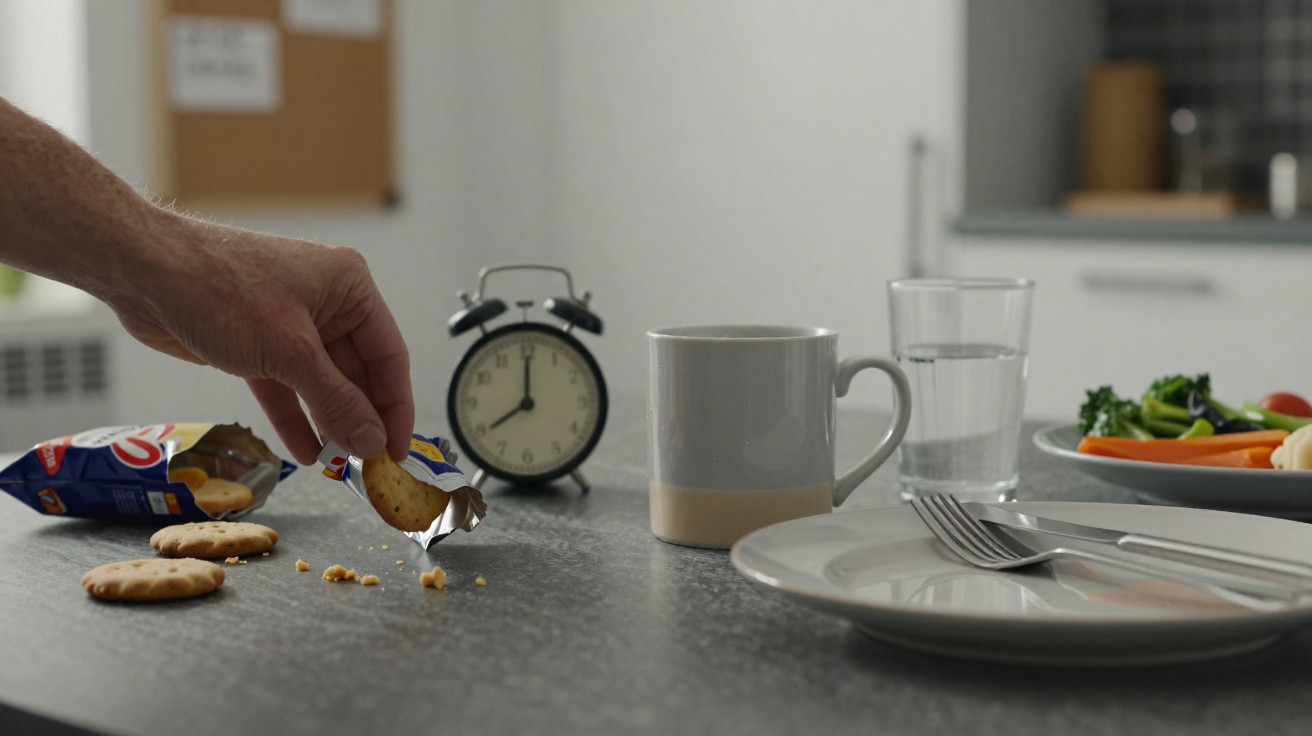
The fixation began with one neat figure: 10,000 steps. It is tidy, straightforward and appealing on a screen. It seems like a task to complete between work emails and the school run. At 11:45 pm, people march around their kitchens in pyjamas simply to close a ring.
But your heart is not interested in your step-count chart. What matters is how those steps feel. Are you becoming a little breathless? Are your legs putting in slightly more work than normal? A continuous 30-minute walk at a moderate pace can quietly deliver health gains that scattered bursts of movement throughout the day often fail to provide.
It is easy to manipulate a number on your wrist. Your body is much less easily deceived.
Researchers are increasingly challenging the step-count myth. In a major University of Sydney study, people who walked briskly for at least 30 minutes each day showed lower risks of heart disease and premature death than people recording higher totals at a slower, stop-start pace.
Other evidence points in the same direction. A 2022 analysis found that the benefits to health level off beyond a certain step total, while intensity continues to make a difference. Walking quickly enough that you can talk but cannot sing – that mildly uncomfortable, slightly breathless range – appears to produce better outcomes for blood pressure, blood sugar and mental health.
On a difficult day, 5,000 deliberate steps taken in one continuous half-hour can often be more valuable than 11,000 fragmented steps collected while moving between the sofa and the fridge. Your heart does not record “effort” in a spreadsheet, but it reacts strongly to that sustained 30-minute effort.
That is what makes this half-hour so transformative. During an uninterrupted walk, your body progresses through stages. Initially, you warm up: joints begin to loosen and breathing remains comfortable. Continue walking, and your heart rate enters the moderate range, where your cardiovascular system is being trained rather than merely kept ticking over.
Your blood vessels widen, muscles require more oxygen and the body starts to use energy more efficiently. Hormones change as well: stress markers gradually decrease while mood-boosting chemicals rise. These responses benefit from continuity. When you stop every few minutes and begin again, you repeatedly pull your system back towards neutral.
Reaching 10,000 steps over 16 hours may make you feel busy, but physiologically it is like a song that is stopped before every chorus. Thirty unbroken minutes give your body time to reach the most beneficial part.
How to make your 30-minute walk really count
Treat it as a small appointment with yourself: walk for 30 minutes on most days at a pace that feels intentional. It should not be a gentle stroll, nor should it be a sprint. Aim for the middle ground, where your arms swing naturally and your stride becomes a little longer.
There is an easy way to judge it: you should still be able to talk, although speaking in full sentences should require a little effort. If you can comfortably sing the chorus of your favourite song, you are not working hard enough. If you cannot speak at all, ease the pace. Begin with 10 minutes at this speed, take 5 minutes more gently, then do another firm 10-minute stretch. In time, join these sections into one smooth, continuous half-hour.
Where you walk matters less than maintaining the rhythm. A park, pavement or even circuits around a car park at lunchtime will do – the important thing is to continue moving steadily.
In practical terms, fitting this 30-minute block into everyday life is often the difficult part. There are delayed trains, exhausting evenings, children’s homework and emails that never seem to end. Let’s be honest: nobody truly manages it every day.
The answer is to be flexible with the timing. Perhaps you start with 15 minutes in the morning and another 15 after dinner until your diary becomes less crowded. Perhaps you walk for part of your commute rather than scrolling on the bus. Or perhaps you invite a colleague and make one meeting each week a walking meeting.
During a challenging week, your 30 minutes may not look elegant: it could be a hurried circuit of the block after dark with a podcast playing. It still counts. The goal is not flawless consistency, but avoiding a routine that disappears for weeks at a time.
A further, quieter change takes place when you stop fixating on steps and begin protecting that daily half-hour. Your relationship with movement becomes gentler. Instead of battling the number on your wrist, you begin working alongside your body.
Your watch can still be useful as a tool rather than a judge. Use it to record a continuous 30-minute walk instead of focusing only on the overall total. Set a gentle reminder at the time that suits you, then put the screen away. You are seeking a feeling, not a graph.
“The biggest change in my patients,” a London GP told me, “is when they stop walking for their watch, and start walking for their brain. The 30 minutes becomes their thinking space, not their punishment.”
- Begin with 3 days each week at a steady pace that leaves you slightly breathless.
- Over a month, build up to 5 days, keeping the 30 minutes continuous whenever you can.
- Treat step numbers as an extra measure, not your primary goal.
- Keep one walk light on technology: no calls, no doomscrolling, only your feet and your thoughts.
- Accept untidy weeks without guilt, and see every Monday as a new opportunity to restart.
Rethinking what “being active” really looks like
The rise of step counting offered a sense of control: figures, targets and colours changing on your wrist. It turned movement into a game that could be won or lost every day. That was helpful for some people. For many others, however, it quietly made ordinary activity a source of low-level shame.
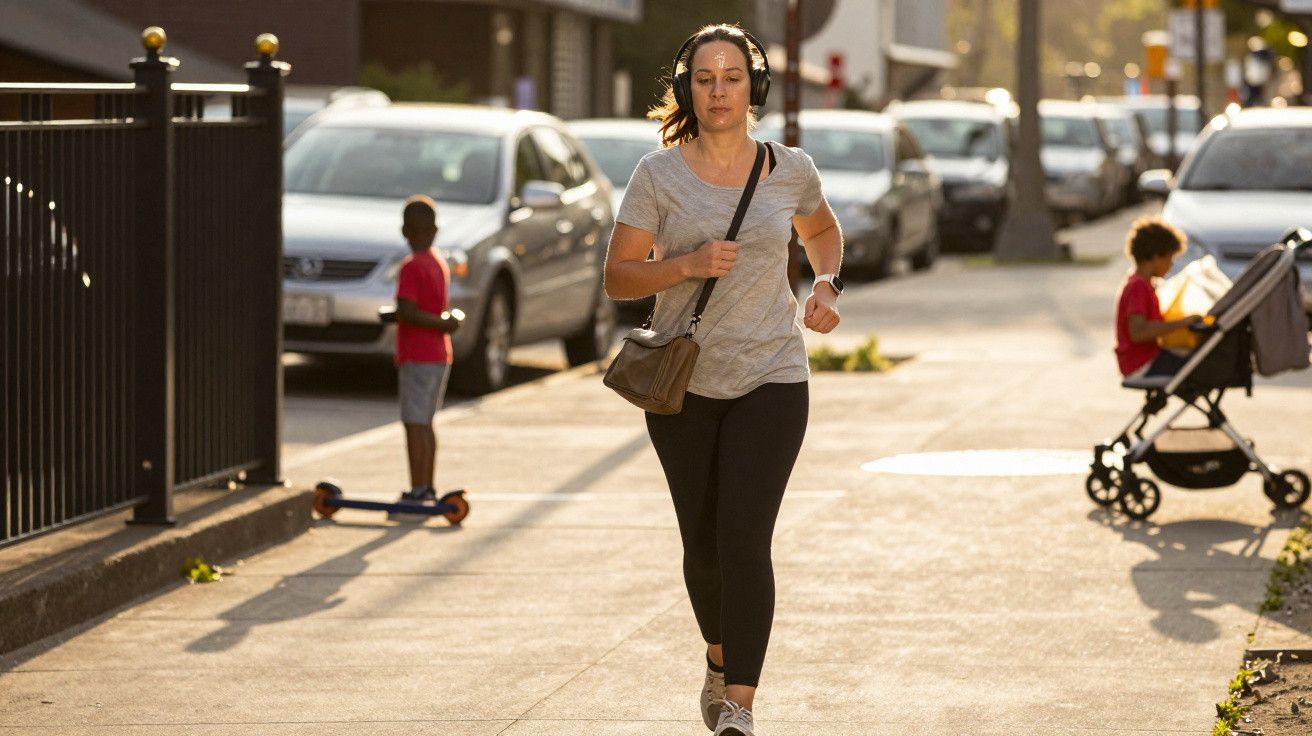
Thirty minutes of consistent walking offers another perspective. It makes no difference whether you are on 4,000 steps or 14,000. Instead, it encourages a daily ritual that can suit different bodies, ages and moods. A teenager listening to loud music through headphones, a 70-year-old circling a small park and a new parent finding half an hour with a pram are all using the same basic engine at different stages of life.
We all recognise the feeling when the day has worn us down, you go outside “just for a bit”, and 20 minutes later the world seems a little less harsh. That is the power of a steady walk. It is not heroic or Instagrammable. It is simply, quietly radical in a busy life.
The science will continue to develop. Some research will support higher step totals, while other studies will refine the idea of the “perfect” intensity. The human reality is more straightforward. Most of us do not need another health rule that we can fail to follow. We need one small, clear anchor that can adapt to real life while still benefiting us.
Thirty minutes at a steady pace on most days is not glamorous, fashionable or often worth a screenshot. Even so, it is the sort of habit that quietly changes how you sleep, manage stress and think at 3 pm.
So, if your watch stops working, your phone breaks or the 10,000-step craze fades into the background, you will still know what to do: put on your shoes, head outside and keep walking until the world – and your heartbeat – settle back into that calmer rhythm.
| Key point | Detail | Benefit for the reader |
|---|---|---|
| Continuity matters more than the total | A continuous 30-minute walk supports the heart and circulation more effectively than thousands of fragmented steps. | Understand why sustaining a walk has more impact than chasing a number. |
| Moderate intensity makes the difference | Being able to talk but not sing is a simple guide to reaching the right effort level. | Gain a practical, jargon-free way to adjust your pace every day. |
| A ritual, not an obsession | Make walking a regular, flexible appointment without relying on notifications. | Reduce guilt about missed steps and build a lasting habit. |














Comments
No comments yet. Be the first to comment!
Leave a Comment