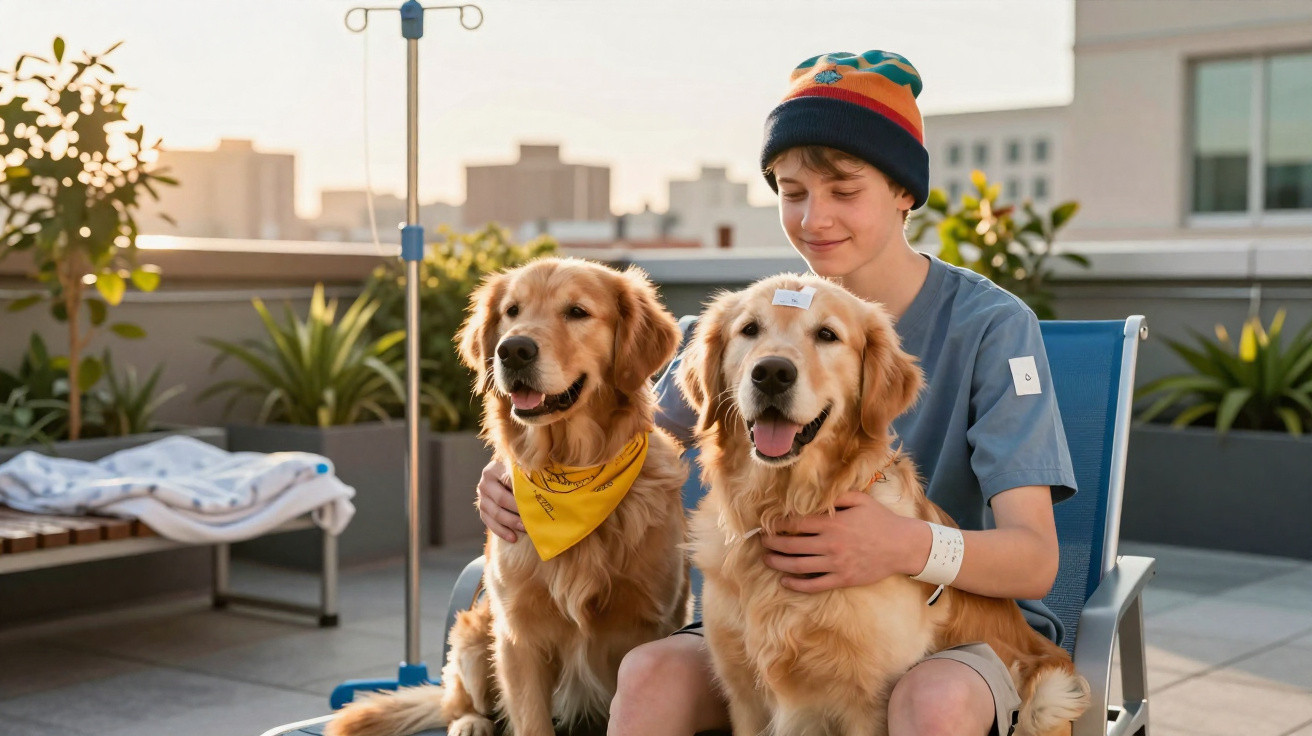
In a hushed paediatric cancer ward, a golden-coated visitor trotted in one morning and transformed the atmosphere for a terrified boy.
The teenager had only just received his diagnosis, while the dog was an experienced hospital volunteer. Within a few days, they would both be confronting cancer and drawing strength from one another in a fight neither had expected.
A teenage life upended overnight
Truman Caudill was 13 when unexplained signs began affecting his body. He was exhausted at football training, found climbing stairs difficult and repeatedly fell asleep at school. At first, his family suspected a growth spurt, stress or perhaps a virus.
However, blood tests arranged by his doctor revealed something far more serious. They identified abnormal cells, leading to a diagnosis of acute myeloid leukaemia, an aggressive blood cancer that begins in the bone marrow. For a boy who had been playing with friends only weeks before, the change was devastating.
His mother, Claudia, recalls the quiet of the consultation room and how the word “cancer” seemed to take the breath from her. A few hours later, they were in a children’s hospital confronting chemotherapy, infection risks and months in isolation.
One day he was worried about homework; the next, he was weighing up survival rates and treatment plans.
The unexpected arrival of Hogan
The day after Truman was admitted, a volunteer came to his door with one straightforward question: would he like a therapy dog to visit? He paused before agreeing.
Hogan entered the room: a 10-year-old Golden Retriever with a greying muzzle and gentle, observant eyes. For years, he had visited hospital patients, moving quietly between beds and providing comfort without saying a word.
Hogan followed his familiar routine. He carefully climbed onto Truman’s bed, slowly turned around, then dropped down with a deep sigh. Before long, he was asleep beside the astonished teenager, snoring quietly.
The room still smelled of antiseptic and fear, but the sound of the dog snoring made Truman laugh for the first time since his diagnosis.
Claudia later said that this small, absurdly ordinary moment broke through the fear. It showed her that her son was still a child, free to find humour even during the worst day of his life.
Five months of chemotherapy, anchored by a dog
The following five months became an endurance test. Truman started intensive chemotherapy, a demanding treatment that targets cancer cells but can also destroy healthy blood cells. He lost his hair, his appetite and some of his independence.
His days settled into a distressingly familiar pattern: anti-sickness medicine, drips, blood tests and temperature checks every few hours. Contact with school friends was limited to video calls, and the world beyond the hospital began to feel remote.
Hogan’s regular visits interrupted that repetition. Nurses pushed equipment aside to make enough room for the large dog to get onto the bed or place his head in Truman’s lap.
- On difficult days, Hogan would lie quietly as Truman slept, providing warmth and reassurance.
- On better days, Hogan’s handler gave Truman a brush, offering him one small activity on which to concentrate.
- At times, Truman murmured fears into Hogan’s fur that he was not yet ready to discuss with adults.
Those appointments restored modest routines of care, affection and laughter. While Truman’s blood counts rose and fell, Hogan continued arriving, his tail thumping against the bed.
A shocking twist: the dog gets sick too
Partway through Truman’s treatment, Hogan’s owner received troubling news from the vet. The elderly Golden Retriever had developed cancer himself. The therapy dog who had comforted patients for years now required scans, medicine and rest.
Hogan’s handler and the hospital team considered whether visits should carry on. Might they place too much strain on the dog? Would the reality be too difficult for Truman? Ultimately, they decided to approach the situation with honesty and care.
“It connected us even more, because he was going through something similar,” Truman later explained.
Hogan began visiting less often and moved a little more slowly. At times, he needed assistance to climb onto the bed. Even so, he still pressed into Truman’s hands and shut his eyes as the boy rubbed his ears.
For Truman, the dog’s diagnosis changed their relationship. He was not simply a patient receiving comfort any more; he now had someone to care about, support and protect in his own way.
Two parallel battles against cancer
As doctors planned Truman’s chemotherapy cycles, vets created Hogan’s treatment plan. Each experienced side effects, each had days without an appetite, and each had carers walking corridors while waiting for news.
| Truman | Hogan |
|---|---|
| Intensive chemotherapy in hospital | Cancer treatment under veterinary care |
| Weeks in isolation to avoid infection | Reduced therapy visits to save strength |
| Supported by doctors, nurses and family | Supported by vet team and handler |
| Used Hogan’s visits to cope with fear | Relaxed and responded to Truman’s touch |
Claudia observed an unusual, quiet companionship emerge. When chemotherapy made Truman feel ill, Hogan’s presence helped regulate his breathing. When Hogan appeared tired, Truman spoke gently to him, as though urging him to continue.
She later said that she could not fully account for their connection; they simply appeared to need one another at precisely the right time.
Remission for both patient and dog
As the months went on, test results began moving in a positive direction. Doctors started to use the word “remission” in relation to Truman’s leukaemia. At roughly the same time, Hogan’s scans also indicated improvement.
After fighting side by side, both boy and dog reached remission, their battles easing in almost the same breath of time.
For hospital staff who had seen the events unfold, the two recoveries felt like a collective triumph. The teenager had the opportunity to grow up again, while the therapy dog could continue walking into rooms, gently wagging his tail as he comforted other patients.
How therapy dogs help in children’s hospitals
Truman and Hogan’s relationship may appear remarkable, yet animal-assisted therapy has been researched for many years. Hospitals operating these programmes report changes that may be subtle but still matter greatly.
Studies have associated time spent with therapy dogs with lower anxiety scores, less loneliness and even slight reductions in blood pressure. Children undergoing chemotherapy or lengthy admissions may respond more readily to a wagging tail than to an encouraging speech.
Some practical benefits are straightforward:
- Children are often more willing to cooperate during procedures taking place after a dog visit.
- Parents report feeling less powerless when they see their child smile or speak to an animal.
- Staff observe calmer behaviour in waiting areas when therapy dogs are making their rounds.
These advantages are not a substitute for medical care. Instead, they accompany treatment and make difficult therapies somewhat easier to endure.
What remission really means
Although “remission” may sound like an ending, it has a precise meaning in medicine. In cancer treatment, remission generally describes a time when signs and symptoms of the disease have substantially reduced or cannot be detected by tests.
It does not necessarily mean “cured.” With some cancers, patients require close monitoring for years. For a dog such as Hogan, remission may mean observation, follow-up scans and lifestyle changes, while still allowing him to enjoy walks and work.
During remission, families frequently occupy an in-between place. They celebrate every clear result while retaining a quiet understanding that follow-up appointments remain important. Support animals, peer groups and mental health professionals may help them through this stage.
Lessons for families facing long hospital stays
Accounts such as Truman and Hogan’s are more than uplifting stories. They point to practical methods through which families can help a child experiencing serious illness.
- Ask about animal-assisted therapy: Many hospitals operate certified schemes with rigorous hygiene and safety requirements.
- Create small rituals: A routine dog visit, a favourite song before treatment or watching a film together every Thursday can bring structure.
- Allow children to care for something: Brushing a therapy dog or completing a “visit log” can help restore a feeling of control.
- Speak openly: Children often grasp more than adults expect and can manage age-appropriate information about illness, including a pet’s health.
Not every hospital has therapy dogs, but the underlying idea still applies: genuine connection can alter a child’s experience of treatment. A peaceful animal, trusted volunteer or committed friend can occupy the difficult space between fear and hope, providing enough reassurance for the next step forward.















Comments
No comments yet. Be the first to comment!
Leave a Comment