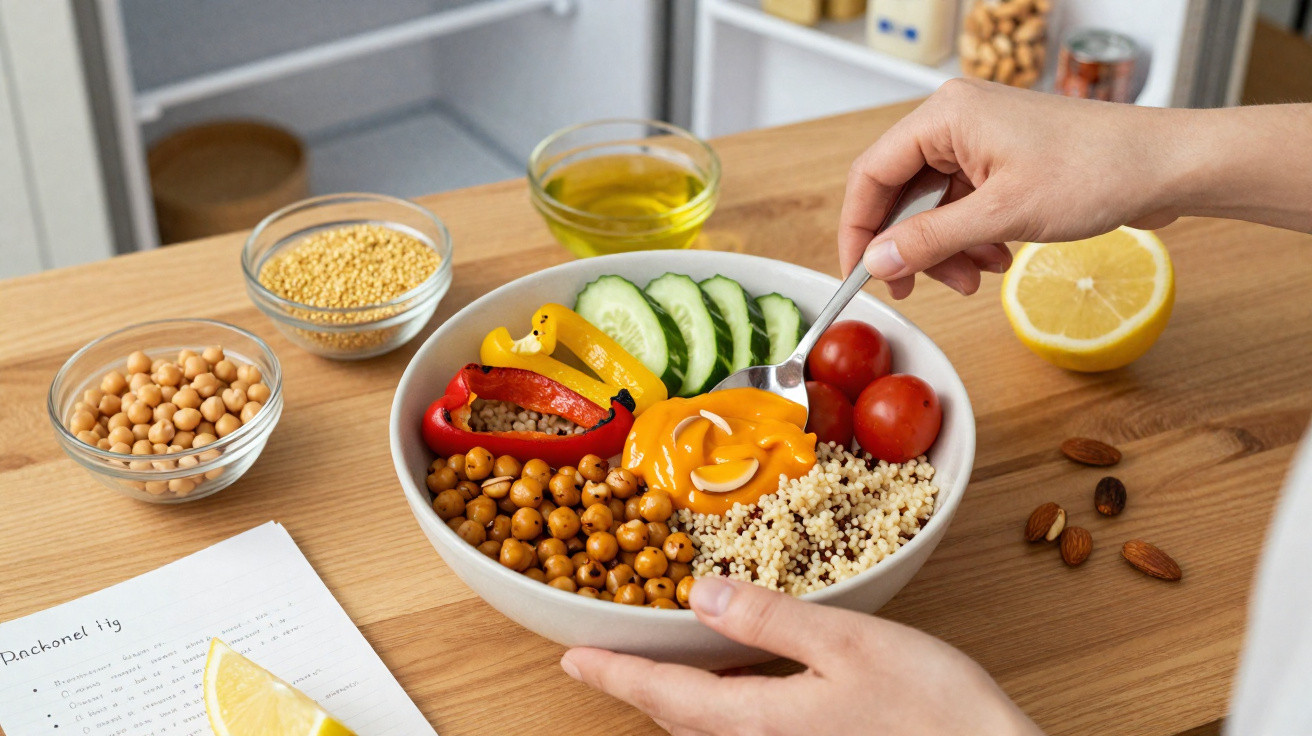
After a long day, anyone who cannot face spending hours in the kitchen often turns to frozen pizza or a takeaway. A US dietitian shows there is another option: a Mediterranean-inspired bowl with quinoa, chickpeas and a creamy roasted red pepper sauce. It is inexpensive, ready quickly and far healthier than the standard emergency meal.
Why this dish appears on the table every week
The principle behind this recipe is straightforward: plan once, buy a small selection of staple ingredients and vary them slightly each time. This is how dietitian Lisa Valente protects her evenings while still eating a balanced meal.
“Grains, pulses, vegetables and a few nuts: that is often all you need for a wholesome Mediterranean dinner.”
The bowl starts with cooked quinoa, chickpeas, cucumber, olives and a little feta. It is finished with a velvety sauce of roasted red peppers, almonds, olive oil and spices. The result is warm, flavourful, gently nutty and remarkably filling.
The Mediterranean principle behind the bowl
The recipe takes broad inspiration from Mediterranean cooking, which has long been regarded as particularly heart-friendly. Its defining features include plenty of vegetables, olive oil, pulses and wholegrains, complemented by smaller amounts of cheese or meat.
This bowl includes several elements associated with a low-inflammatory diet:
- Roasted red peppers: high in vitamin C and antioxidant plant compounds
- Almonds: provide unsaturated fats, vitamin E and some protein
- Olive oil: adds monounsaturated fatty acids and polyphenols
- Quinoa: a nutritious pseudo-grain containing antioxidants and plant protein
- Chickpeas: their fibre supports digestion
- Onion and parsley: contribute further beneficial plant compounds
Together, these ingredients create a meal that does more than satisfy hunger: it helps keep blood sugar steady and supplies lasting energy.
Filling fibre: why the bowl keeps you satisfied for so long
Valente calculates that each serving contains around eight grams of fibre. Many people do not even reach half the recommended daily amount in their normal routine. That is precisely where this dish excels.
The fibre in quinoa, chickpeas and vegetables works in several ways:
- it slows digestion and prolongs the feeling of fullness
- it reduces rapid blood sugar spikes
- it nourishes beneficial gut bacteria
Anyone who regularly reaches for a snack shortly after dinner should notice the difference: the mix of plant protein, fat and fibre makes this bowl surprisingly “well-behaved” for everyday eating.
How to make the Mediterranean quinoa chickpea bowl step by step
Ingredients for four servings
- about 200 g roasted red peppers from a jar, rinsed and drained
- 35 g flaked almonds
- 4 tbsp extra-virgin olive oil
- 1 small garlic clove, chopped
- 1 tsp paprika
- 1/2 tsp ground cumin
- 1/4 tsp chilli flakes (optional, for a little heat)
- 300–350 g cooked quinoa
- 40 g chopped Kalamata olives
- 40 g finely chopped red onion
- 1 tin chickpeas (400–425 g), rinsed and drained
- 150 g cucumber, diced
- 40 g crumbled feta
- 2 tbsp finely chopped fresh parsley
Making the red pepper and almond sauce
Place the roasted red peppers, almonds, 2 tablespoons of olive oil, garlic, paprika, cumin and, if desired, chilli flakes in a small blender.
Blend until the sauce is creamy and reasonably smooth. If it seems too thick, add a splash of water or another spoonful of olive oil.
Preparing the quinoa base and serving
Combine the cooked quinoa in a bowl with the chopped olives, red onion and the remaining 2 tablespoons of olive oil. Season generously with salt and pepper to taste.
Then divide the quinoa between four bowls. Add the chickpeas and diced cucumber, pour over the red pepper and almond sauce, and finish with feta and parsley.
“You now have a dinner that looks as though it came from a food blog, yet is on the table in just over 20 minutes.”
How this Mediterranean dinner helps you save money
Many people are put off Mediterranean recipes because olives, feta and nuts are considered costly. In this dish, however, the pricier ingredients are used sparingly, acting more as seasoning than as the main component.
The economical base consists of:
- tinned chickpeas
- quinoa or another grain
- cucumber, jarred peppers and onion
Olives, almonds and feta are used only in small quantities, but contribute plenty of flavour. To cut costs further, you could:
- replace some of the almonds with sunflower seeds
- use a basic white cheese instead of feta, or leave out the cheese altogether
- swap the quinoa for wholegrain rice or bulgur wheat
Ways to adapt it with whatever is in the fridge
The bowl is designed to be flexible: you can use almost anything you have in the vegetable drawer or cupboard. Valente suggests adding tomatoes, avocado or fresh spinach, for instance.
Practical everyday variations include:
- Using leftovers: leftover chicken, meatballs or roasted vegetables work particularly well
- Vegan version: simply omit the feta or replace it with a plant-based cheese alternative
- Low-carb version: substitute part of the quinoa with extra cucumber, tomatoes or salad leaves
- Meal prep: cook the quinoa and sauce on Sunday, then add fresh vegetables and chickpeas during the week
What this style of dinner can offer in the long term
Many typical after-work meals contain plenty of refined flour, fat and salt. The quinoa chickpea bowl provides a contrast: it is plant-focused and relatively light, yet remains satisfying thanks to its fat and protein content.
Eating this way more often may bring benefits such as:
- steadier blood sugar levels compared with heavily processed convenience foods
- a greater proportion of vegetables in everyday meals without hours of cooking
- a more diverse gut microbiome through regular fibre intake
For many people, “Mediterranean diet” sounds abstract. This dish makes the idea tangible: plenty of plant foods, quality oil, a little cheese and nuts, all prepared in a way that fits everyday life.
If you enjoy the flavour of the red pepper and almond sauce, it can also be used separately from the quinoa: as a spread for bread, a dip for raw vegetables or a topping for baked potatoes. A simple weekly recipe can therefore become a small toolkit for several meals, making the call for pizza and takeaway noticeably less frequent.





Comments
No comments yet. Be the first to comment!
Leave a Comment