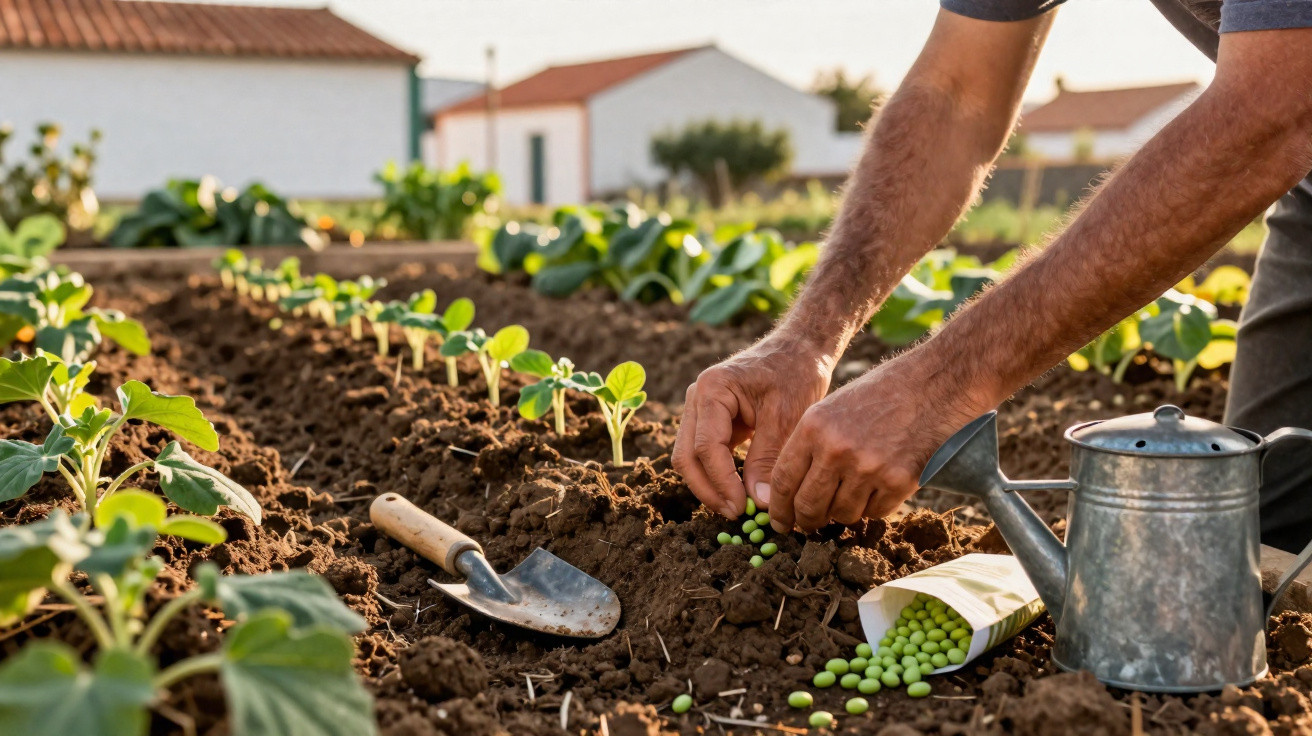
Anyone hoping to eat crisp, freshly picked dwarf French beans from their own garden in summer needs to choose the sowing date carefully – otherwise the harvest can be delayed by weeks.
Dwarf French beans are often seen as an ideal beginner’s vegetable: quick-growing, straightforward and tasty. Even so, many home gardeners run into trouble by sowing too early into cold soil or preparing the ground incorrectly. Follow a few simple principles and you can fill your first bowls with crunchy beans just two months after sowing.
The right time: when dwarf French beans can be sown outdoors
Dwarf French beans thrive in warmth and are sensitive to cold. Soil temperature, rather than air temperature, is the key consideration.
The soil in the sowing area should be at least 12°C, and ideally 15°C – otherwise the seeds will rot instead of germinating.
Guide dates for different locations
- Mild areas / sheltered urban gardens: the first sowings are often possible from late April
- Temperate lowland areas: it is usually safe from early to mid-May
- Cooler regions, higher ground and exposed plots: it is better to wait until late May or early June
As a broad guide, dwarf French beans can go into the bed at around the same time as tender summer flowers, once the risk of late spring frost has passed. A soil thermometer gives a much more reliable indication than calendar dates alone.
Depending on your location, the sowing period extends until the end of July, or even early August in particularly mild areas. Maturity time matters here: the first harvest generally comes around 50 to 60 days after sowing. Beans sown at the beginning of May can therefore usually be picked in early July. A mid-July sowing will produce beans in September.
The ideal soil: loose, warm and not overly wet
Dwarf French beans germinate quickly only in soil that is loose, free-draining and not constantly wet. Heavy, cold clay soils slow their start considerably.
- Loosen the soil: use a garden fork or cultivator to loosen it deeply, without turning it over completely
- Break up compaction: standing water must be avoided, so water needs to drain away freely
- Nutrient supply: beans are legumes and use bacteria to fix their own nitrogen, so generous applications of nitrogen-rich fertiliser tend to be harmful
- Avoid fresh manure: newly incorporated farmyard manure encourages rot and soft growth that is susceptible to disease
A slightly sandy, crumbly soil that warms up quickly in spring produces the fastest germination and vigorous growth.
How to sow dwarf French beans outdoors correctly
Your sowing technique determines whether the plants emerge evenly and stand firmly later on.
Row spacing and sowing depth
Start by making seed drills:
- Make drills 3 to 5 centimetres deep
- Leave 40 to 50 centimetres between rows so that you can walk between them comfortably later
Depending on the method, place the bean seeds individually or in small groups.
Individual sowing or sowing in clusters
Two straightforward methods work well:
- Individual sowing:
- place one seed every 5 to 10 centimetres
- creates an even, densely planted row
- Sowing in clusters:
- make a small hole every 30 centimetres
- place 4 to 6 beans in each hole
- the resulting plants support one another
Then cover the seeds with fine soil and firm it gently. This pressure provides good contact with the soil, allowing the seeds to absorb moisture.
Watering properly – especially at the start
For rapid establishment, the seedbed needs consistently moist soil, but not waterlogged ground.
- Water the drill thoroughly before sowing
- After covering the seeds, water only gently so that nothing is washed away
- Later, water at soil level rather than over the foliage whenever possible
During flowering and pod formation, drought stress directly affects both the quantity and quality of the crop: at this stage, it is better to reach for the hose one extra time.
From germination to the first harvest: how to save time
Provided the soil is warm enough, the first seedlings appear after 5 to 10 days. If they take longer, conditions were usually too cold or too wet.
Earthing up and mulching
Once the plants are 15 to 20 centimetres tall, a small amount of maintenance is worthwhile:
- Draw a little soil up around the row to improve stability
- Apply a thin mulch layer of grass clippings or shredded material between the rows
Mulch retains moisture in the soil and prevents surface capping after heavy rain. At the same time, the uncovered strip above the roots can still warm up well.
Bush or climbing beans? The difference in maturity
For a quick harvest, most gardeners choose low-growing varieties:
| Type | Advantage | Maturity time (from sowing) |
|---|---|---|
| Dwarf or low-growing varieties | Early harvest, no support structure required | Approx. 50–60 days |
| Climbing varieties grown on supports | Longer harvest period, higher overall yield | A few days longer until the first harvest |
A useful approach is to begin the year with low-growing varieties, switch to climbing types later in the season, and make a fresh sowing every two weeks. This way, the garden can provide regular fresh pods well into autumn.
How to get more yield from every square metre
Beans are undemanding when the position is suitable. With a little planning, you can make the best possible use of the space in your bed.
Spacing, picking routine and successive sowings
- Do not make rows too close together: good air circulation reduces disease pressure
- Pick ripe pods every one to two days: this encourages the plants to keep producing new beans
- Sow a new strip every 14 days from late May onwards: this prevents gaps in the harvest
Those who harvest consistently can get far more bowls of beans from a single bed than many people expect.
Common mistakes when growing beans – and how to avoid them
The crop is uncomplicated, but a few recurring pitfalls are worth avoiding:
- Sowing too early into icy-cold soil: seeds rot or germinate only slowly
- Persistent waterlogging: roots suffocate and plants remain stunted
- Too much nitrogen fertiliser: produces lush foliage but few pods
- Watering over the leaves in hot weather: encourages fungal diseases and leaf scorch
In windy gardens, it makes sense to protect beans with a simple fleece cover during their first few weeks. The fleece raises soil temperature slightly and shields plants from cold draughts.
Practical extra tips for home gardeners
Dwarf French beans work well in mixed planting schemes. They are especially useful alongside potatoes, brassicas or beetroot, as the beans enrich the soil with nitrogen. They are less compatible with onions or garlic, where the plants often remain smaller.
One important kitchen point: raw beans contain toxic compounds and must always be boiled, steamed or at least blanched. If you harvest larger quantities at once, you can blanch and freeze them without difficulty, allowing you to use the summer crop well into winter.
Keeping an eye on the calendar, thermometer and conditions in your own garden now will lay the foundations for a long bean season with only a few simple steps. A narrow strip in the bed, a handful of correctly placed seeds and regular care are all that is needed before your own harvest is bubbling away in a pan on the hob.

















Comments
No comments yet. Be the first to comment!
Leave a Comment