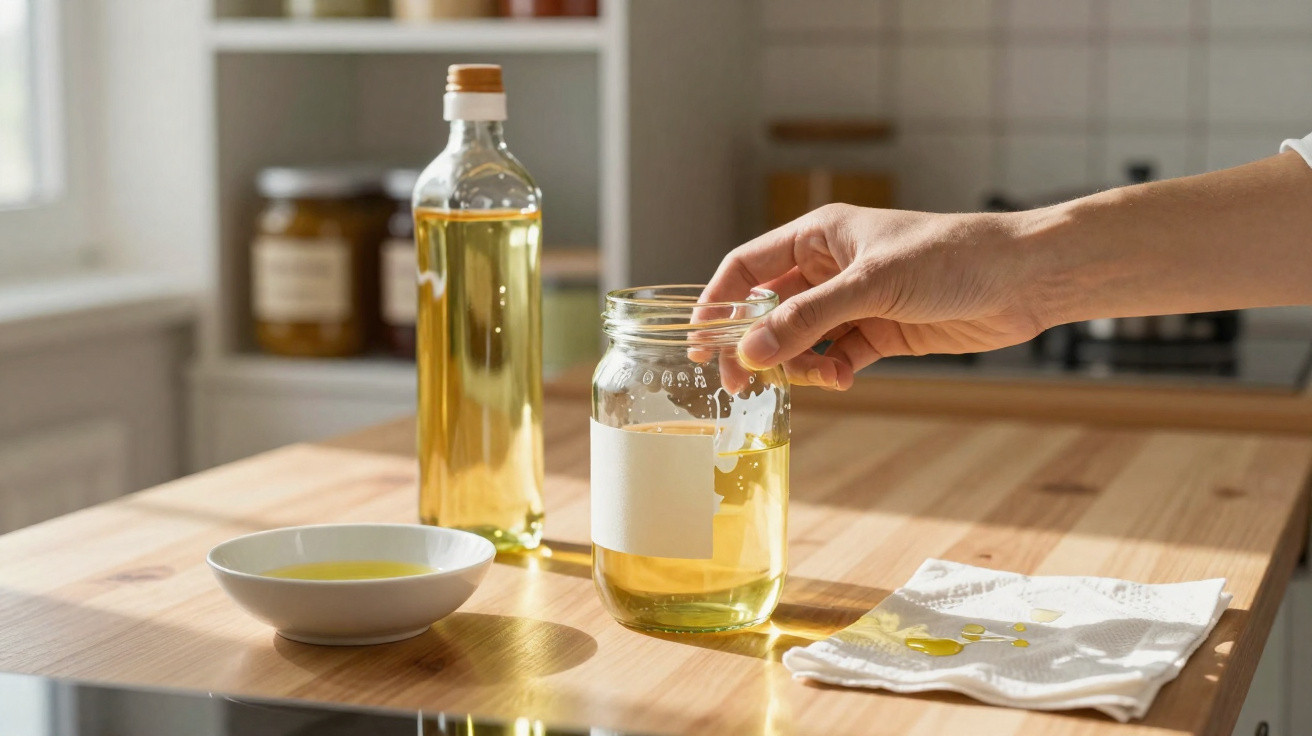
Thick glass, a ripple around the rim-the sort of jar your grandmother might have used for apricot jam. Yet the price sticker had different ideas. I picked at it with a fingernail, worked at it using the corner of a tea towel, and even reached for the final splash of alcohol in the first-aid bottle. The adhesive held on like a grudge. On impulse, I spread a little canola oil across the tacky patch and left it for a moment. The residue loosened, gathered beneath my thumb and came away. No acrid smell. No fuss. Only the calm, oily logic of an everyday solution hiding in plain sight.
The quiet solvent in your kitchen
A bottle in your cupboard can deal with a task you may be making unnecessarily difficult. Ordinary canola oil-the inexpensive, pale oil you use for cooking without a second thought-works as a mild solvent for sticky residue. It works its way beneath old adhesive, softens it and allows you to rub it away with a cloth, much like peeling away sunburnt skin.
Everyone knows the point when a label refuses to budge and you begin negotiating with it. A drop or two of canola oil changes the balance. Rather than scrubbing with more force, you simply give it time to work.
My neighbour Maya, who spends weekends rescuing second-hand jars, relies on it completely. She arranges her finds beside the sink, applies oil around the edges of every label and sets a timer for three minutes. When the kettle clicks off, the glue has given in. The jars shine, her hands stay clean and the kitchen has not been turned into a chemistry laboratory.
The explanation is straightforward, and rather neat. Many common stickers use pressure-sensitive rubber or acrylic adhesives combined with tackifiers. Because oil is non-polar, it penetrates those sticky layers and makes them less tacky. That weakens the bond without a battle. Powerful solvents can cloud plastic or remove finishes, whereas kitchen oil takes a gentler path: slower, but safer.
How to remove sticky residue with canola oil
Begin with a small amount. Add a teaspoon of canola oil to a soft cloth or cotton pad, then hold it against the sticky area until all of the residue is coated. Leave it for two to five minutes, then gently push at it with a plastic scraper or the edge of an old card. The adhesive should gather into small grey rolls. Wipe the surface, apply more oil once if necessary, and then wash the area with warm washing-up liquid to remove the oily film.
The effect on glass and metal can seem almost dramatic. Take a lighter approach on plastic and do not scrape hard; allow the oil to lift the residue instead. If working on car paint, stay in the shade, use a microfibre cloth and finish with soapy water followed by a quick rinse. For phone cases, use only a small dab and keep the oil clear of ports. Realistically, nobody does this every day.
Porous materials, including unfinished wood, unsealed stone and fabric, need a different approach. Oil may absorb into them and leave a dark mark. Test a tiny concealed area first, and consider another option, such as a little washing-up liquid paste or ice to make the glue brittle.
“If it’s sticky, oil is the friendliest solvent you already own,” Maya told me, “and the least likely to make you regret it.”
- Best suited to: glass, glazed ceramics, stainless steel, sealed wood and glossy plastics.
- Take care with: matt finishes, unsealed wood, painted walls and fabric.
- Extra help: a hair dryer on a low setting can warm stubborn adhesive before applying the oil.
- Do not combine it with bleach or aerosol cleaners; keep the process simple-oil first, then soap.
The stories stickers leave behind
There is a modest pleasure in preserving an item as it is. A family vase without its shop barcode. A new pair of shears free from the gummy strip on the blade. When the solution comes from something so familiar, it feels less like a chore involving an aisle of brightly coloured spray bottles and more like a useful skill stored in the cupboard.
Use it once and you will notice possible jobs all around you. A mirror marked by tape shadows from last winter’s decorations. A laptop still bearing an event sticker from last year. A child’s lunchbox that is scuffed yet worth saving. The oil encourages patience. Given time, the mess lets go.
There is a quiet restraint to this method that suits the moment. Less throwing away, more repairing. Fewer specialist products, more use what you already have. It is not a heroic fix, which is precisely why it works. It is simple, repeatable and unexpectedly satisfying.
| Key point | Detail | Benefit for the reader |
|---|---|---|
| The oil | Neutral canola or light vegetable oil softens sticker adhesives | Uses a cupboard staple rather than a specialist solvent |
| Simple method | Apply, wait 2–5 minutes, roll away residue, then wash with washing-up liquid | Clear, low-effort steps without a harsh smell |
| Surface awareness | Excellent on glass and metal; test on matt paint, raw wood and fabrics | Helps avoid damage while achieving a clean result |










Comments
No comments yet. Be the first to comment!
Leave a Comment