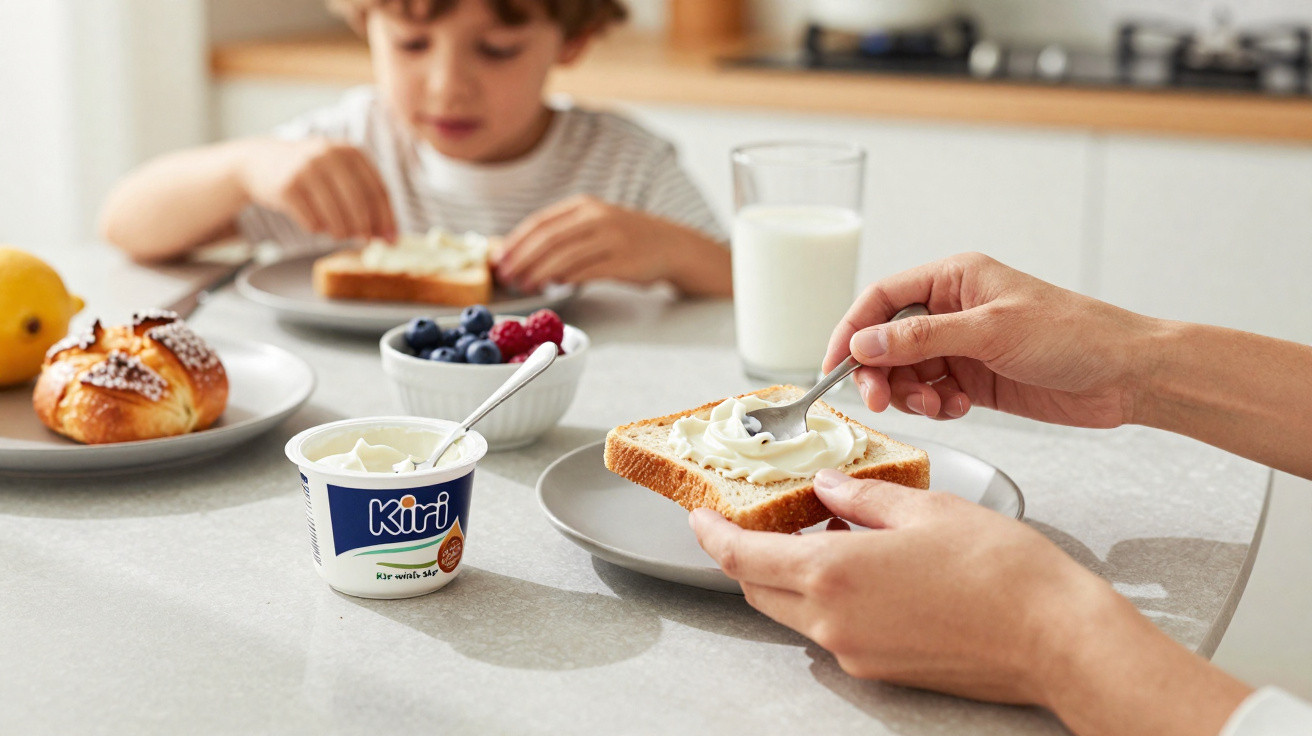
A classic from the chilled aisle has returned in a new form: Kiri with added Skyr is intended to make German breakfasts higher in protein and more “figure-conscious”. Many parents are hoping for a better choice than chocolate spread and honey on bread, while fitness enthusiasts see it as a modest protein upgrade. However, there is more to this attractively designed pack than first meets the eye.
What is behind the Kiri and Skyr combination?
For years, Skyr has been a star of the dairy aisle: it is high in protein, low in fat and usually low in sugar. Compared with ordinary yoghurt, Skyr contains around a third more protein on average – and Kiri is now making use of precisely that image.
The concept is straightforward: the familiar soft cheese is enriched with a proportion of Skyr. This is designed to improve satiety while retaining its creamy texture. In theory, it sounds like a smart answer to a common breakfast problem: too little protein, too much sugar and hunger returning too quickly.
The new spread is clearly aimed at people who want something “quick, tasty and reasonably healthy” in the morning – without giving up familiar products altogether.
There is a catch, though: Skyr makes up only a low double-digit percentage of the product. The remainder is still a conventional cheese preparation containing cream, and therefore a noticeable amount of fat. That means it is not a diet food or a “protein miracle”, but rather a slightly improved version of a familiar product.
How “healthy” is the spread in reality?
To put its nutritional value into context, it is worth considering the typical key characteristics usually found in similar products:
- Protein: higher in protein than classic Kiri, but substantially lower than a pot of plain Skyr
- Fat: the considerable cream content means it has a noticeable fat level, so it is not a typical “light” product
- Sugar: far less sweet than chocolate spread or honey, with a more mild savoury profile
- Calories: generally moderate – neither a real “calorie bomb” nor a pronounced slimming food
This places the spread in a category now occupied by many foods: it is better than the clearly unhealthy alternative, yet a long way from being a medically “optimised” product. The packaging can quickly suggest a minor breakfast revolution. Strictly speaking, it is a decent soft cheese spread with somewhat more protein.
Kiri with Skyr at breakfast: smart addition or marketing ploy?
The important question is what the topping is being compared with. Kiri with Skyr is clearly a better option than chocolate spread, hazelnut spread or sweetened fruit quark. Next to plain low-fat quark or natural Skyr, however, it is less impressive.
The spread becomes more interesting when the whole breakfast is taken into account. A rather heavy, sweet breakfast can be improved considerably through a few small changes:
- Wholemeal bread or bread rolls instead of refined white-flour options
- Cheese spread with added Skyr in place of a sweet cream spread
- Fruit rather than jam
- A handful of nuts or seeds for healthy fats
Used in combinations like these, the new bread spread becomes one component of a much more balanced breakfast. On its own, it is not a “superfood”, but a compromise: a little more protein and still plenty of enjoyment.
Comparison with other breakfast products
Looking across the rest of the chilled aisle is revealing. Anyone following the protein trend already has several alternatives available. A typical comparison might look like this:
| Product | Protein | Fat | Typical use |
|---|---|---|---|
| Cheese spread with added Skyr | medium | medium to higher | On bread, suitable for children |
| Plain Skyr | high | low | On its own, with fruit or muesli |
| Greek yoghurt (full-fat) | high | high | As a dessert or breakfast base |
| Cottage cheese | high | low to medium | Savoury, on bread or on its own |
| Plain soft cheese | low to medium | medium to high | Spread, cooking, baking |
The picture is clear: people seeking genuinely high protein with few calories will often be better served by plain dairy products such as Skyr, cottage cheese or low-fat quark. The new spread is aimed more at those who want to stick with a familiar bread topping while making a small dietary upgrade.
How useful is the spread for children?
Many parents are paying closer attention to what their children eat for breakfast. Chocolate spread, sweetened breakfast cereals and sugary drinks are increasingly coming under scrutiny. In that setting, a creamy cheese containing Skyr can almost automatically seem like the more sensible choice.
From a nutritional perspective, the spread can genuinely be a step in the right direction if it:
- Replaces chocolate or hazelnut spread
- Is paired with wholemeal bread
- Is served alongside fresh fruit
At the same time, it remains a processed product containing cream. Its strongest argument for everyday use is that children may accept the taste, while getting at least a little more protein at the start of the day. Those wishing to go one step further can choose natural products instead, such as Skyr served with some fruit and nuts.
Processing level: how much “industry” is in it?
The ingredient list is relatively short, which is a positive point. Even so, it is a processed dairy product. This is precisely what is attracting increasing criticism in nutrition: the more intensively a food is processed, the more likely it is to bring hidden additives, high energy density and unfavourable eating habits.
With the new Kiri product, this remains limited, but anyone wanting to eat as naturally as possible will automatically end up with simpler choices:
- Quark with fruit
- Skyr with oats
- Cottage cheese on wholemeal bread with tomatoes or cucumber
Who is buying Kiri with Skyr really worthwhile for?
The spread is primarily targeted at three groups:
- Families looking for a familiar product with slightly better nutritional values
- Occasional exercisers wanting to raise their protein intake a little without switching entirely to savoury foods
- Working people with little time in the morning who need a “quick, not entirely bad” breakfast
Anyone whose overall diet already focuses heavily on protein and low fat is unlikely to be particularly impressed by it. For people who want to continue eating soft cheese but do not wish to move straight to plain Skyr, picking it up from the chilled aisle may well be worthwhile.
Practical ideas for a better breakfast with the spread
A few simple pairings can turn the bread topping into a considerably more rounded breakfast:
- Light savoury option: wholemeal bread, Kiri with Skyr, cucumber slices and a little cress
- Sweet without chocolate: spelt toast, a thin layer of spread, strawberries or berries
- Protein boost: wholemeal bread with the spread, plus a boiled egg and a small handful of nuts
These combinations provide not only greater satiety, but also a steadier energy curve until lunchtime. They can be particularly helpful for anyone who starts snacking early at work or is hungry again by ten o’clock.
What terms such as Skyr, cottage cheese and similar products actually mean
Many dairy-aisle trend terms sound more modern than they really are. At its core, Skyr is a very low-fat, high-protein soft cheese that is eaten like yoghurt. Cottage cheese is likewise among the relatively lean dairy products rich in protein, and it works well on savoury bread.
Knowing these basic product types makes it easier to judge in the supermarket whether an item genuinely offers added value or is simply relying on familiar buzzwords. The new Kiri spread uses exactly this mechanism: it gives a familiar product the image of a trend food, while providing only a limited additional benefit.
All in all, Kiri with Skyr remains a decent dairy product that makes a typical breakfast slightly better – not a nutritional sensation, but not an empty promise either.
















Comments
No comments yet. Be the first to comment!
Leave a Comment