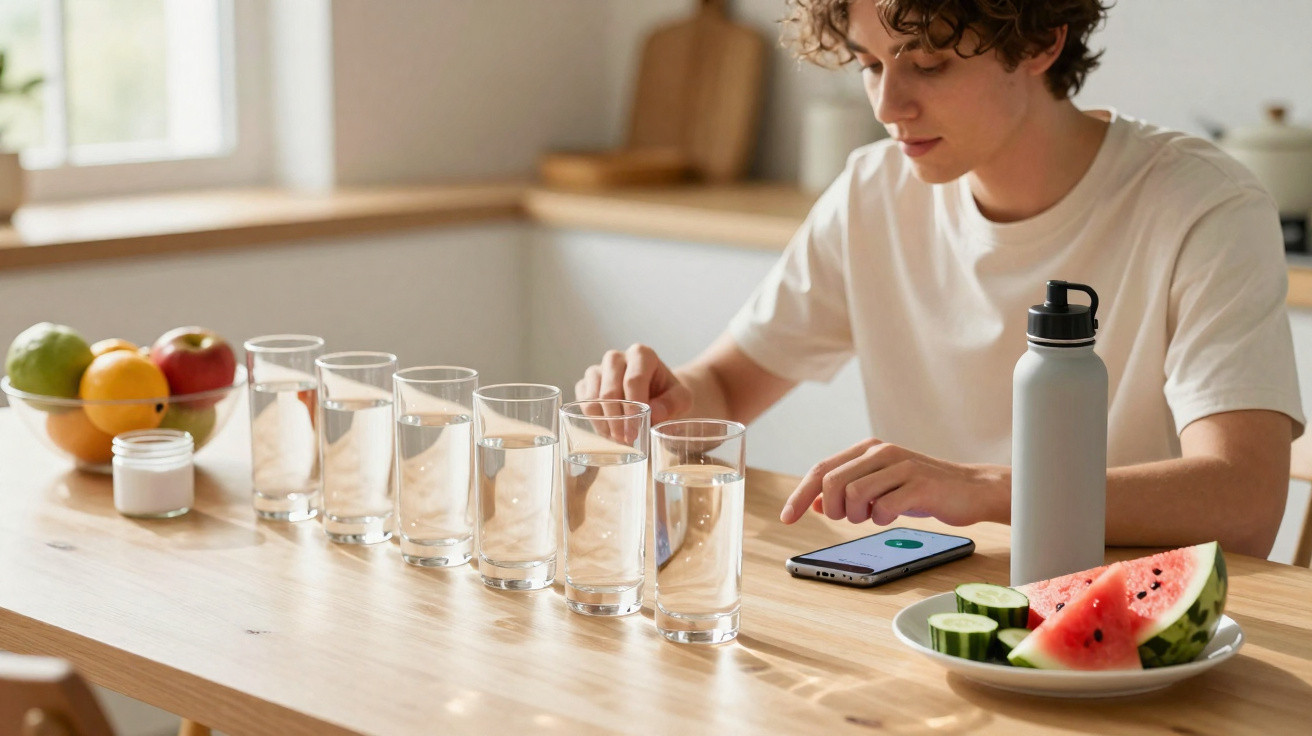
A one-week personal experiment produced some unexpected answers.
The rule of thumb seems to be everywhere: anyone aiming to drink enough should have around eight glasses of water a day. It sounds straightforward, almost like a portable health promise. One US journalist followed this rule rigorously for seven days, from breakfast until bedtime. Her account, alongside views from nutrition experts, offers an honest look at what really changes in day-to-day life, in the loo, on the scales and in your mind.
The experiment: 1.5 litres of water carefully spread across the day
The journalist was not already an expert at drinking water. She would usually keep a glass on her desk, take occasional sips and bring a bottle to exercise. Yet she had little idea how much she actually drank by the end of the day. Her impression was that it was probably too little.
For the experiment, she set herself a clear target: roughly 1.5 litres of water each day, or about eight glasses, deliberately spaced from morning to evening. Every serving was counted rather than estimated roughly.
What changed immediately in everyday life
After only a few days, she noticed some very tangible effects, although they were far less glamorous than the usual social-media promises:
- More trips to the loo: She needed to go noticeably more often. That was hardly a huge surprise, but it was certainly inconvenient during the working day.
- Less coffee and alcohol: To avoid increasing the constant trips back and forth, she automatically reached for coffee and an evening drink less frequently.
- No change on the scales: She weighed herself every morning before breakfast. After seven days, the result was exactly the same weight as at the start.
A week of 8 glasses of water meant more loo breaks and slightly fewer pleasure drinks – but no magical slimming effect.
Over this short period, she did not see dramatic changes in her skin, energy levels or sleep. That reflects what specialists say: water tends to support the body over the longer term rather than acting as an instant miracle cure.
What experts say about 8 glasses of water a day
Nutrition specialists regularly stress that water is involved in almost every process in the body. Around 70 per cent of our bodies is made up of water, so they react sensitively when supplies are low.
Common effects of drinking too little
According to nutrition doctors and specialists, insufficient fluid intake can become noticeable quickly:
- frequent or throbbing headaches
- tiredness and difficulty concentrating during the day
- a sluggish feeling, sometimes with water retention
- constipation
- poorer sporting performance and a greater risk of injury
The body is particularly sensitive during exercise: people who do not drink enough can overheat more quickly, tire sooner and place greater strain on their muscles and joints. Even minor shortfalls can noticeably reduce performance.
How much water is useful – and for whom
The familiar eight glasses are really only a broad reminder. European guidance is approximately as follows:
| Group | Recommended amount to drink per day* |
|---|---|
| Women | approx. 1.4–1.6 litres |
| Men | approx. 1.75–2.0 litres |
*Drinks only, not fluid obtained from food.
These figures are averages and can change substantially with physical activity, hot weather, fever or air conditioning. Children, older people and pregnant women are even more sensitive to fluctuations and require particular attention.
The famous 8 glasses are not a law but a guide. The body gives fairly reliable signals when something is not right.
What a week with 8 glasses of water can look like
Anyone who wants to try the experiment should not attempt to down their entire daily requirement in one go. That puts more strain on the circulation and kidneys than it provides benefit.
Spreading your water intake sensibly through the day
A practical daily routine could look like this:
- 1 glass after getting up
- 1 glass with breakfast
- 1 glass in the late morning
- 1 glass with lunch
- 1 glass in the afternoon, instead of a second or third coffee
- 1 glass before or after exercise
- 1 glass with dinner
- 1 small glass in the early evening
Drinking regularly throughout the day eases the load on the kidneys and helps prevent the unpleasant feeling of having a flooded stomach.
Foods that support hydration
Fluids do not come only from a glass. Foods with a high water content can also support your hydration balance:
- cucumber, tomatoes and peppers
- watermelon, oranges and strawberries
- soups, broths and light stews
- yoghurt and certain soft cheeses
Those who eat plenty of these foods can be a little more relaxed about water intake alone, as long as their body’s signals seem right.
How to tell whether you are drinking enough
Rather than clinging rigidly to a number, many experts recommend watching for a few straightforward signs:
- Thirst: Persistent strong thirst or feeling thirsty very often can indicate a shortfall.
- Urine colour: Pale to light yellow is a positive sign, while dark yellow to amber may be more concerning.
- Everyday energy: If your head regularly starts pounding and fatigue hits hard in the afternoon, too little fluid is often behind it.
Anyone who deliberately drinks eight glasses for a week will usually notice quickly: the loo calls more often, the head pounds less frequently – but the weight stubbornly stays the same.
Why drinking more water does not automatically make you lose weight
Many people secretly hope for a drinking trick: simply have more water and the kilos will fall away. The journalist’s experience makes it very clear that it does not work like that.
Water contains no calories and may mean that you consume fewer high-calorie drinks such as fizzy drinks or wine. This reduces your overall energy intake, which can help with weight loss. However, that requires consistent changes over weeks and months, not merely seven days with a measuring jug.
A more realistic benefit is that drinking a glass of water before meals often makes you feel full sooner and may lead you to eat slightly less. It is a small useful tool, but no substitute for a balanced diet and sufficient exercise.
When too much water can be risky
As harmless as water may appear, unlimited quantities are not a good idea. Drinking large amounts within a very short time can dilute the salt concentration in the blood. Experts call this water intoxication, which can put considerable stress on the circulation and brain.
People with kidney problems, heart failure or certain hormonal disorders should discuss their fluid intake with a doctor. In these cases, the idea that more is always better can be genuinely dangerous.
How to make drinking water easier in everyday life
A few small strategies can prevent 8 glasses from becoming an irritating obligation:
- Keep a carafe or bottle within sight at work
- Have a glass of water with every coffee
- Link drinking breaks to set routines, such as a phone call, emails or checking the news
- Try lightly flavoured water with cucumber slices, lemon or berries if plain water feels too boring
After a few days, much of this becomes automatic. Anyone who seriously tries the eight-glasses experiment for a week will get a very honest sense of where they currently stand – and whether their body is asking for more, or perhaps even less.









Comments
No comments yet. Be the first to comment!
Leave a Comment