Dry streaks, lifted grain and that faint grey cast that never seems to wash away. You could purchase an expensive conditioning set, or simply put up with the splinters. Yet another option may already be in the cupboard: an unassuming bottle that tends to be forgotten until it is time to dress a salad.
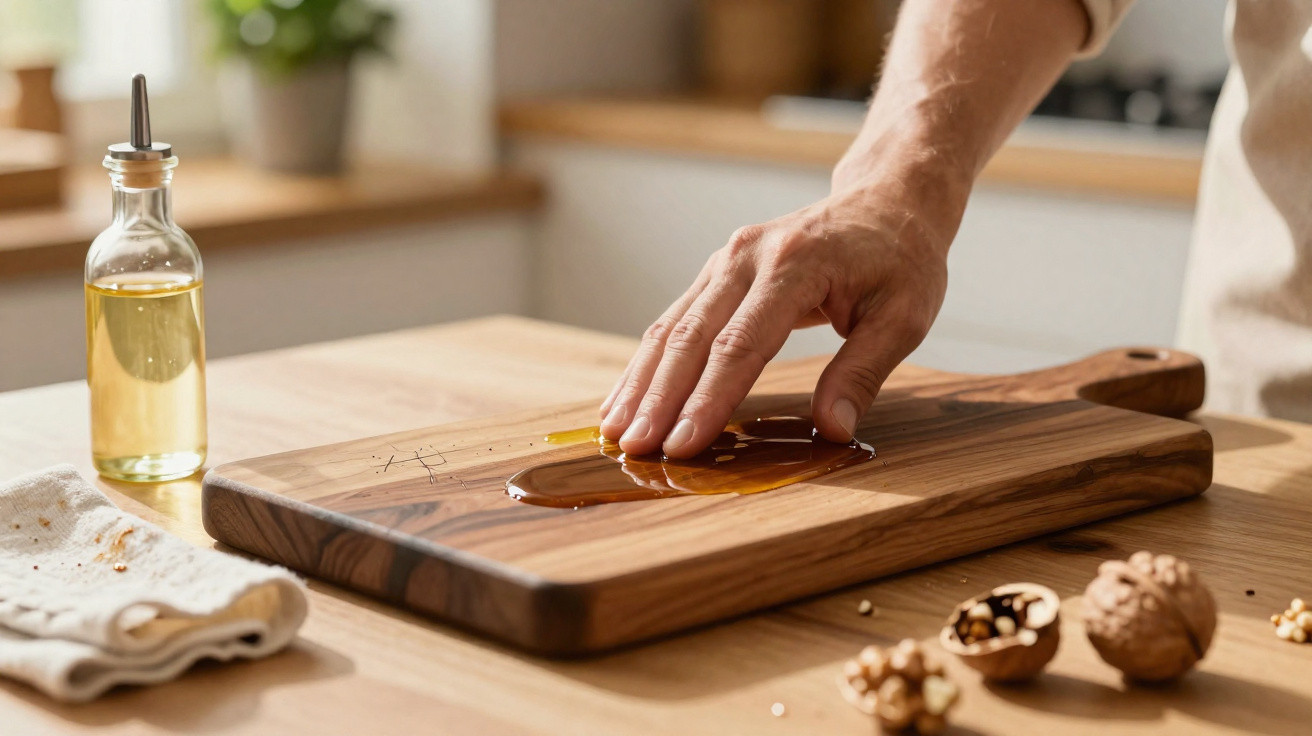
At a neighbour’s Sunday lunch, I watched a chopping board transform before my eyes. It bore the familiar marks: scars, a dull area where tomatoes had stained it all summer, and some fluffiness where a knife had torn rather than cut. My friend smeared a little oil from a short glass bottle over their thumb, warmed it between their hands as though sharing a secret, then worked it into the surface. Within two minutes, the board looked as if it had had eight hours’ sleep and drunk a gallon of water. The timber changed from chalky to rich. The knife regained its smooth glide. The answer had been sitting beside the vinegar.
The cupboard remedy hiding in plain sight
That overlooked kitchen oil is walnut oil. Not a heavy varnish, but the ordinary culinary oil used on winter salads. It often waits behind the olive oil for a cheese board that seldom materialises. Walnut oil penetrates dry timber and, with a little time, settles into place. The parched edges of your board ease, and the surface becomes more even. It requires very little work but makes a striking difference. It is the sort of remedy you try once before wondering why you tolerated rough boards for so long.
I first encountered it in my grandmother’s kitchen, where every utensil had a history and nothing was discarded. After washing up, she would spread a few drops of walnut oil across the breadboard, moving her hands in slow circles as if pressing a shirt. There was no fuss and no dedicated cloth. By supper, the board looked almost good enough to give as a present. A carpenter I later met relied on it for end-grain blocks. “It dries hard,” he told me, tapping a maple slab, “and I don’t taste last week’s onions.” That sentence stayed with me.
The understated science is that walnut oil is a drying oil: it polymerises. Put simply, it reacts with air to create a slender, flexible layer within the wood. This seals the grain internally, helping moisture move more evenly and slowing the absorption of stains. Food-grade mineral oil, the standard recommendation, is also excellent, although it remains liquid indefinitely. Walnut oil changes state and sets, so it needs replenishing less frequently while giving a satin-like feel beneath the knife. It is not sticky like varnish; it is more like a soft-focus filter for your chopping board.
How to restore a chopping board with walnut oil in 10 minutes
Keep the process straightforward. Wash the board in hot water and, if it is particularly dirty, scrub it with coarse salt or bicarbonate of soda. Rinse it, then dry it thoroughly. Warm a teaspoon of walnut oil in your palms and massage it into the board, following the grain. Two light applications are better than one generous pour. Leave it for 20 minutes, remove any remaining sheen, and stand the board upright to air. Repeat the treatment once if the timber was especially dry. Then it is ready to use again.
A few sensible precautions help. Do not apply too much oil. A tacky finish suggests that you used too much too quickly, or that the board was still damp underneath. Leave it somewhere with circulating air rather than beneath a wet tea towel. Should the surface feel fluffy, lightly sanding it with 320-grit sandpaper before oiling can make a remarkable difference. Is there a nut allergy in the household? Avoid walnut oil and choose food-grade mineral oil or board cream instead. Let’s be honest: nobody does this every day. Once a month is a good target, or whenever the board starts to look chalky.
Treat it as a small ritual that brings substantial rewards. The board remains flatter, smells fresher and demands less hard work. Your knife moves more easily. Cooking feels different when that first cut is effortless. We have all experienced the moment when a tool finally performs as it should, and supper simply… moves faster.
“I tell customers to treat boards like skin in winter,” says a longtime butcher I met at a market. “Small amounts, more often than you think, and stop when it looks alive.”
- Use: culinary walnut oil, thin coats and warm hands.
- Avoid: olive or rapeseed oils, which can turn rancid on wood.
- Alternative: food-grade mineral oil, or a mineral oil and beeswax blend.
- Timing: apply when the surface appears pale or feels rough.
- Drying: leave upright for 6–12 hours for the best finish.
Why walnut oil outperforms a quick wipe - and when to select another oil
Olive and rapeseed oils are excellent in a salad. On a board, however, they may remain sticky and absorb odours. Walnut oil behaves differently: it hardens within the fibres and creates a clean, understated finish. That is why chefs use it on wooden spoons and butcher’s blocks. On a large end-grain board that soaks up oil, walnut oil’s light consistency penetrates further before setting. The wood looks nourished rather than greasy. It is a slight distinction, but one you notice with the first tomato you slice.
There are also strong reasons to choose mineral oil. It is hypoallergenic, readily available and remains stable indefinitely. For homes where nut allergies are a concern, it is the safest option. Some people combine the advantages of both in a board cream: mineral oil provides saturation, while beeswax adds a gentle outer layer, a finish that laughs at tomato juice. For quick results, walnut oil has the advantage. For complete neutrality, mineral oil is the better choice. There is no need to commit to just one; alternate them as you would your knives.
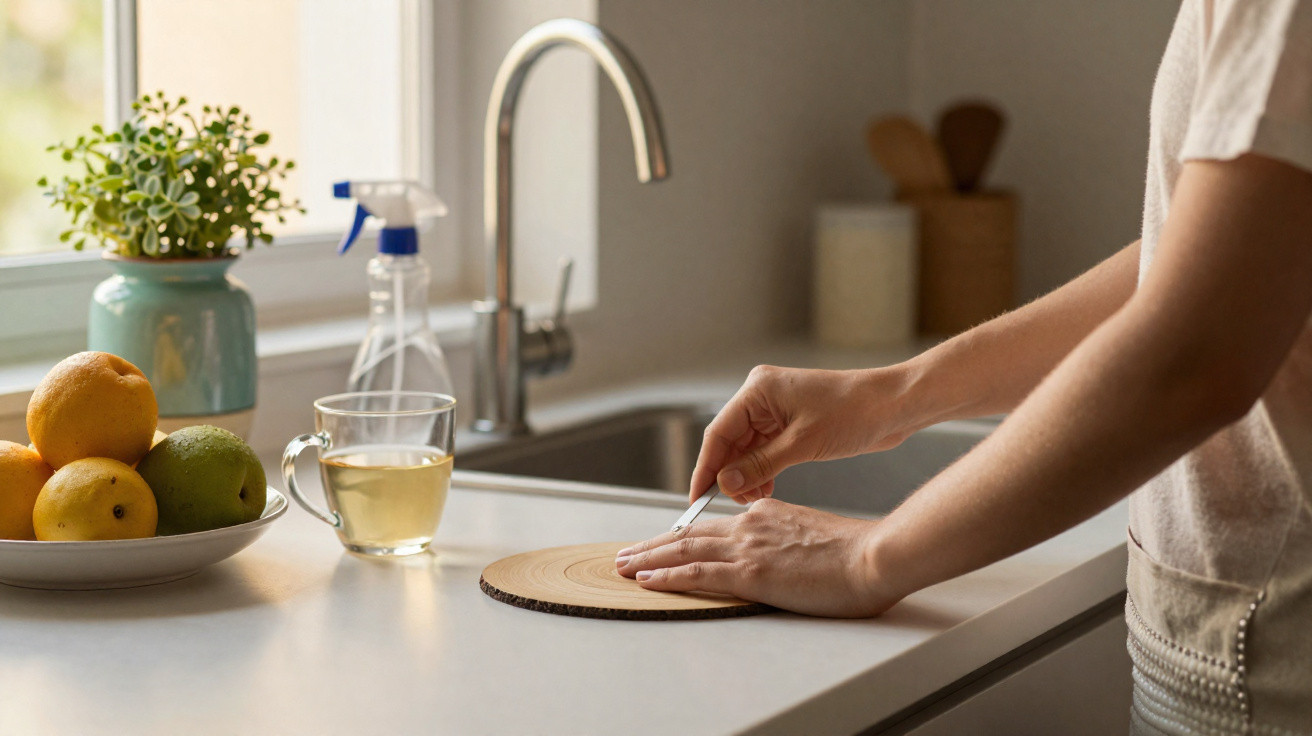
Good care begins before oiling. Do not leave boards soaking in water for extended periods. Stand them upright to dry so that air can reach both sides. When disinfection is needed, use vinegar or diluted lemon rather than a bleach soak. If odours persist, scrub with a paste of salt and lemon before applying oil. Less water, more air, light oiling - that is the winning combination. Oil cannot repair a cracked board; clamp and glue it, or demote it to serving cheese. Small routines add up. A minute now beats an hour later.
You can scroll on and continue chopping on a worn-out board. Or you can spend a minute with a bottle already in your kitchen and notice the change at supper. Walnut oil makes maintenance feel like a small act of hospitality. Your knife becomes quieter and the surface reflects the light. Once you have tried it, it no longer feels like a chore. You may find yourself working in a few drops while soup simmers, thinking about something else, then smiling as the grain comes back to life. Share the tip or save it as your kitchen’s small party trick. Either way, the board will reward you every night.
| Key point | Detail | Benefit for the reader |
|---|---|---|
| Walnut oil’s secret | It polymerises, creating a thin film that hardens inside the wood | Smoother cutting and longer-lasting conditioning |
| Straightforward routine | Clean, dry, apply thin coats, wipe and leave to air-dry upright | Minimal work for visible results |
| Sensible alternatives | Mineral oil for neutrality; beeswax blends for an additional seal | Options suited to allergies, habits and budget |












Comments
No comments yet. Be the first to comment!
Leave a Comment