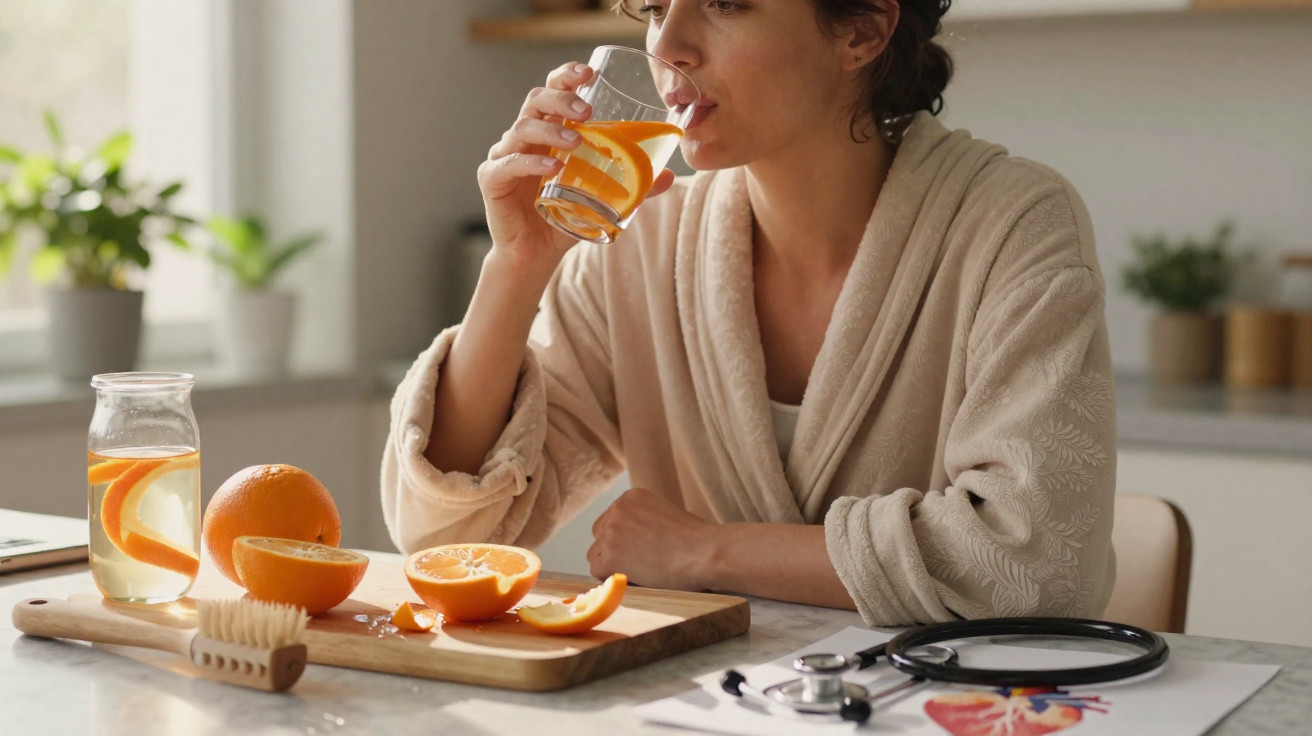
The woman ahead of me in the café placed her order as though it were a password. “Hot water, orange peel only. No tea bag.” The barista lifted an eyebrow, gave a shrug and placed a curl of vivid zest in the cup. At a table nearby, a man in running clothes ordered exactly the same thing. When I asked what prompted him, he bent closer, as though passing on a rumour: “Cardiologist on TikTok swears by it. Cleans the arteries, apparently.”
On my phone, however, a different cardiologist described the very same drink as “a dangerous fashion with zero proof.”
One unassuming strip of peel, and two utterly opposing judgements.
Why orange peel water has become the latest morning obsession
Open wellness Instagram at 7 a.m. and the image appears again and again: a hot mug filled with pale orange water, with rough strips of peel bobbing on top like small, unhurried boats. There is no coffee froth or oat milk, only citrus. Captions tend to make grand claims about cholesterol, toxins or “resetting” the heart.
It seems innocent, even slightly romantic.
That apparent innocence is precisely what helps it travel so quickly.
Last month at a cardiology clinic in Paris, Dr Léa Benali watched a 52-year-old patient take a small container of dried orange peel from her handbag. “I’ve stopped my statins,” the patient announced with pride. “I do this now every morning. It’s natural.” Her cholesterol, which had at last settled after months of treatment, had risen sharply again.
Dr Benali told me that she now encounters versions of this situation almost every week. People arrive persuaded that orange peel water can achieve what decades of medical research cannot. Some have encountered it through TikTok, while others have received the advice through family WhatsApp chats. The wording is strikingly similar each time: “My cousin’s friend reversed his plaque with this.”
Why, then, is the belief so compelling? Orange peel does contain flavonoids, including hesperidin, which researchers have examined for possible effects on blood vessels, inflammation and cholesterol. In theory, they can sound like miniature superheroes. Yet such research commonly involves concentrated extracts rather than half a peel left over from breakfast. The dose, length of use and wider circumstances all matter.
Cardiologists are not disputing that orange peel contains compounds worth investigating. Their concern is the jump from “potential benefit” to “miracle home remedy.” When people discreetly abandon their prescribed medicines, that jump may be harmful.
How orange peel water is made - and what cardiologists think
The standard method could scarcely be more straightforward. Take a fresh orange, rinse it under hot water and scrub its skin, then remove the peel with a knife or vegetable peeler. Use the coloured outer zest only, leaving behind as much of the white pith as possible. Place several strips in a mug, cover them with very hot rather than boiling water, and leave them to infuse for 5–10 minutes.
Some people simmer orange peel on the hob for longer. Others dry it first, keep it in a jar and use it as they would an herbal tea. A small number add slices of ginger or a cinnamon stick, perhaps to feel like genuine herbal alchemists.
In a small Spanish town, 63-year-old Carlos boils orange peel every morning at 6:30 a.m. “for the heart,” his daughter explained to me by telephone. He once drank sweetened coffee and smoked on his balcony. He now tells everyone, “My cardiologist would be proud, I’m finally healthy.” His cardiologist, however, is not proud.
Carlos never told the doctor about the orange peel. The doctor spoke instead about walking, blood-pressure medication, reducing salt and stopping smoking. Carlos kept the peel but abandoned the rest. His daughter says he believes this ritual alone “protects” him and offsets his cigarettes. Realistically, almost nobody follows a daily ritual while changing nothing else… until a health scare forces the issue.
The cardiologists I spoke with make a distinct distinction. One camp says, “If it helps people drink something warm and unsweetened in the morning instead of soda, fine. Hydration, a bit of flavonoids, no drama.” The other is less troubled by the infusion itself than by the narrative that surrounds it.
Once a basic infusion is presented on social media as the centrepiece of heart prevention, the less exciting but reliable foundations - controlling blood pressure, taking medication as prescribed, sleeping well, managing stress and exercising - can fade from view. Orange peel water isn’t the problem; the halo we put around it is. That is the point at which fear, confusion and misplaced hope can take hold.
Trying orange peel water safely without believing the “miracle” claims
If you would like to try it and your doctor has not advised you to avoid citrus, begin modestly and keep your expectations grounded. Choose an organic orange where possible, wash it thoroughly and scrub the skin under warm water to remove dirt and wax. With a knife or peeler, remove only the orange outer layer rather than a thick piece of bitter white pith.
Put one or two strips into a mug, add hot water, leave it for a few minutes and then taste it. There is no reason to use the peel from half an orange on the first day. You are not trying to launch a rocket; you are simply testing a different morning habit.
Citrus infusions can cause mild heartburn or stomach discomfort for some people when consumed on an empty stomach. If that happens to you, drink it after breakfast instead. If you take medicines that interact with grapefruit, speak to your doctor or pharmacist about whether orange peel could also matter; the answer is generally no, but your individual circumstances should be checked.
The main risk is not physical but psychological. Feeling that you have done something “super healthy” at 7 a.m. may quietly make the rest of the day feel less important. More salt at lunch, a missed walk or a forgotten blood-pressure tablet can follow. The mind is very fond of these compensation games.
One cardiologist put it this way during our call:
“Orange peel water is like lighting a scented candle and thinking you’ve done your housework. It smells pleasant, but the real cleaning still has to happen,” said Dr. Benali.
To ensure that the candle does not replace the cleaning, she recommends this practical checklist:
- Continue taking every prescribed heart medicine exactly as instructed, whether you drink orange peel water or not.
- Connect the drink to one tangible habit, such as a 10-minute walk, checking your blood pressure or preparing a healthy snack for later.
- Be honest with your doctor about what you drink rather than concealing it “to avoid a lecture”.
- Make orange peel water a way of reducing sugary drinks, not an excuse to leave everything else unchanged.
- If a post promises “artery cleansing in 7 days”, close the app and recognise it as marketing rather than medicine.
Orange peel water: between miracle cure and passing fad
Viewed closely, orange peel water is neither a saint nor a villain. It is a straightforward infusion made from leftovers, shared by people who hope to live somewhat longer and better without being overwhelmed by medical terminology. It can be comforting, give structure to a morning and create the feeling of doing something for the heart in a world that often feels relentlessly hurried.
Yet it also exposes how eager we are for easy answers. We can readily exchange long-term, unglamorous habits for an attractive ritual that fits into a 15-second video. Some cardiologists raise their voices in warning, while others simply shrug and say, “If this is the door that gets them into real prevention, I’ll take it.”
Perhaps, then, the more useful question is not “Is orange peel water good or bad?” but what you are quietly hoping it will repair beyond your arteries - and which more fundamental change you may be delaying as you stir that fragrant mug.
| Key point | Detail | Value for the reader |
|---|---|---|
| Orange peel water is not a cure | It contains potentially interesting flavonoids, but evidence that typical homemade amounts offer real-world heart protection is weak | Helps prevent false hope and the dangerous substitution of proven treatments |
| The ritual may still help | A mild, unsweetened morning drink can replace sugary drinks and support healthier routines | Enables readers to treat it as a supportive practice rather than a miracle |
| Speak to your doctor | Tell them about all “natural” remedies, particularly if you take heart or blood-pressure medicines | Lowers the possibility of interactions and supports open, effective care with professionals |








Comments
No comments yet. Be the first to comment!
Leave a Comment