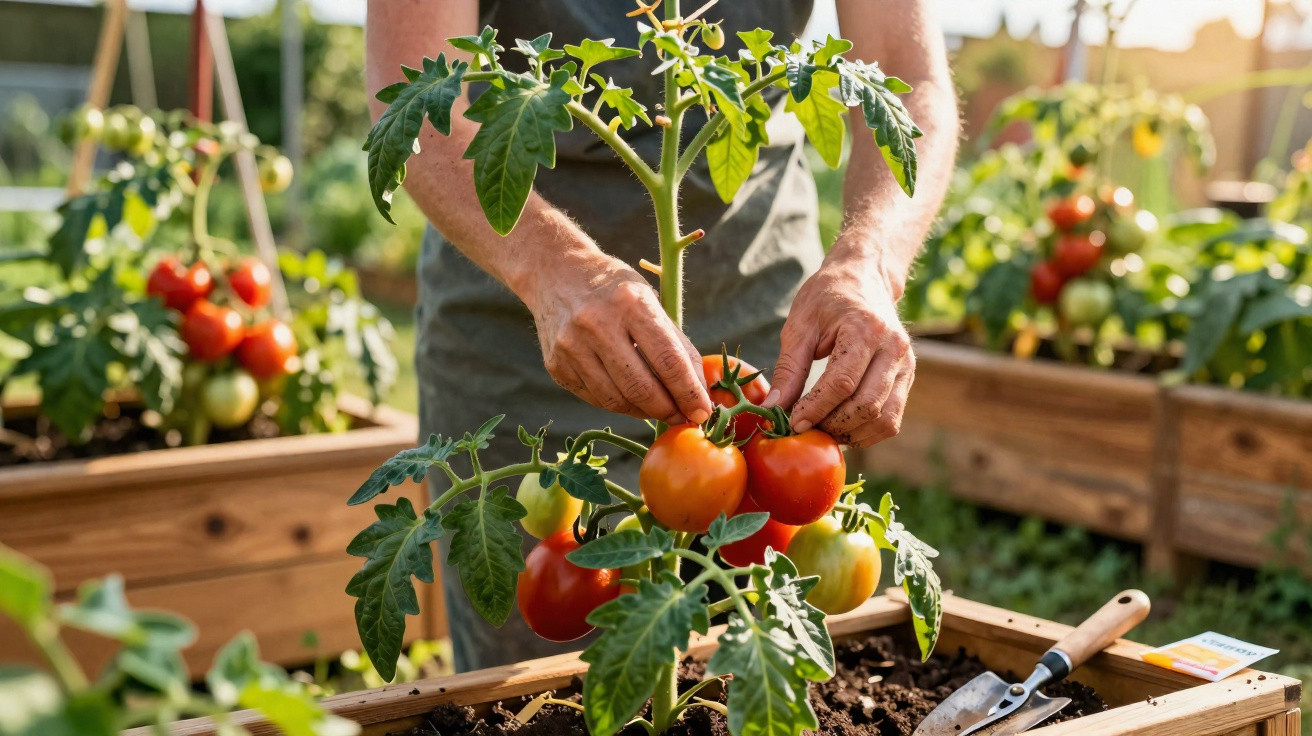
The problem is often not a lack of effort, but the technique: how the soil absorbs water determines whether tomatoes produce abundantly or struggle along. A surprisingly simple preparation before the watering season can transform their overall growth – making plants hardier and far less susceptible to problems.
Why tomatoes wilt despite regular watering
Tomatoes are known to be thirsty plants, yet they are extremely sensitive to fluctuations. Too much water one time and too little the next can quickly put them under stress. Many gardeners recognise the typical consequences from their own vegetable patch:
- Fruit splits after a downpour or a heavy watering session
- Leaves turn yellow, curl up or appear scorched
- Fungal diseases spread quickly after the first summer rains
- Overall growth seems weak despite sufficient watering
The reason is that tomatoes prefer consistent conditions. When the soil repeatedly dries out and is then suddenly soaked, tension develops in the fruit and plant tissue. Skins may split, pathogens can enter and rot takes hold easily.
It is less about “how much” water tomatoes receive than “how” they are watered that determines whether they stay healthy.
Watering tomatoes properly: water the roots, not the leaves
Vegetable gardening specialists recommend watering tomatoes at soil level, directly around the root area. Water should be applied slowly and precisely rather than splashed hurriedly over the entire plant.
Watering from above onto the foliage creates several risks at once:
- Leaves remain wet for a long time, creating ideal conditions for fungal diseases
- Some water evaporates before it can even reach the roots
- The soil surface becomes compacted and forms a crust
A method frequently used by professional vegetable growers is ideal: water less often, but for longer and deeply. This encourages roots to grow downwards instead of gathering just beneath the surface. A drip hose or a watering can used slowly with a fine rose can help achieve this.
The overlooked enemy: constant water stress
It is easy to make this mistake in everyday gardening: brief, frequent watering may keep the surface damp, but the lower layers of soil remain dry. The plant detects this change and responds with signs of stress. Leaves may droop or feel crisp from dryness, while stems can become soft if the roots are occasionally left standing in water.
This is precisely where the straightforward yet highly effective step to take before intensive watering begins comes in.
The key step before the watering season: mulching tomatoes correctly
Before the hot period of daily or near-daily watering begins, it is worth taking one preparatory measure: spread a protective layer of mulch around tomato plants. This ground cover fundamentally changes how the growing medium behaves.
With mulch, tomato soil and roots remain more stable, calmer and supplied far more evenly.
Gardening experts point out that uncovered soil dries out very quickly on sunny days. The upper few centimetres become hot and hard, causing roots to retreat or dry out. A mulch layer has the opposite effect: moisture is retained for longer and temperature fluctuations are reduced.
Suitable mulch materials for tomatoes
Natural, airy materials work particularly well:
- Straw or hay, preferably untreated
- Shredded, dry leaves
- Mature or semi-mature compost mixed with grass clippings
- Chipped plant material from the garden
The layer should be around 5 to 10 centimetres deep. Too little has minimal effect, while too much may encourage waterlogging in wet weather. Leave a small open ring around the stem, about one to two finger-widths wide, so that the main stem is not sitting directly in damp material.
| Material | Benefit | Note |
|---|---|---|
| Straw | Very good insulation and dries quickly | Secure it in windy conditions, for example with twigs |
| Leaves | Break down into humus and feed the soil | Best applied after shredding |
| Compost | Supplies nutrients and retains moisture | Do not use it too fresh, as there is a risk of mould |
| Grass clippings | Quickly available and provides good cover | Apply only in thin layers, as it heats up strongly |
When to apply the mulch layer
Starting early removes stress from the growing season. Two stages are useful:
- Apply an initial, thin mulch layer in spring, once the soil has noticeably warmed up
- Top it up after planting out in May, once the tomatoes are growing outdoors or in the greenhouse
One detail makes all the difference: if the soil is bone dry when mulch is applied, the mulch layer will take up moisture first, leaving the roots without it. It is better to water thoroughly beforehand, then cover the still-moist soil. This allows the soil to “store” water beneath its protective layer.
How mulch changes everyday watering
Once tomatoes have a stable layer of mulch, the correct approach to watering changes. Soil beneath the covering can look dry at the surface for a long time – and this is where many people make their next mistake by watering too frequently.
A quick check reveals the true situation: push the mulch aside and insert a finger two or three centimetres into the soil. If it feels cool and slightly moist there, the plant can wait. If the soil is dry and crumbly at that depth, it is time for a thorough watering.
With mulch, soil depth matters – not how the surface looks.
When watering, direct the water onto the exposed soil around the root area. Then return the mulch to its place. This ensures the water reaches the roots, while the protective layer prevents moisture from disappearing immediately.
Benefits for tomato health and yield
Gardeners who use mulch repeatedly report much more stable plants. Protecting roots from extreme temperature peaks supports even growth. The result is:
- Fewer split or misshapen fruits
- Hardier plants that cope better with rainy spells
- Reduced weed growth around tomatoes
- Less frequent watering overall, especially during heatwaves
There is also a long-term benefit: mulch gradually decomposes and improves the soil. The ground becomes looser, retains more water and nutrients, and is less likely to develop a crust.
Avoid common mistakes when mulching tomatoes
Although the method seems simple, there are several potential pitfalls:
- Pressing mulch directly against the stem, which encourages rot
- Using overly thick layers of fresh grass clippings, which can heat up intensely
- Mulching very cold soil too early, delaying its warming in spring
- Never checking beneath the layer and watering according to what appears dry on top, which can quickly lead to permanently wet soil
Keeping these points in mind creates a balanced root environment. Plants repay this with vigorous growth and sturdy fruit trusses capable of carrying heavy clusters.
Practical additions for even sturdier tomato plants
Mulch and monitored watering can easily be combined with further measures. A sturdy tomato cane or a string-support system in the greenhouse takes pressure off the stems. Regularly pinch out side shoots so the plant directs its energy into fewer, but better supplied, fruit trusses.
Choosing the right location also matters: an airy, sunny spot where rain does not remain on the leaves for extended periods noticeably reduces fungal infection. Outdoors, a simple roof made from plastic sheeting or multiwall polycarbonate panels protects foliage from prolonged rain, while the root zone remains calm and evenly moist thanks to mulch.
Anyone who has been dealing with fungal diseases for some time can also ensure wider spacing between plants. Greater distance allows leaves to dry more quickly. Combined with a mulch layer, this creates an environment in which tomatoes are exposed to less stress – and that is often when they taste their best in the end.













Comments
No comments yet. Be the first to comment!
Leave a Comment