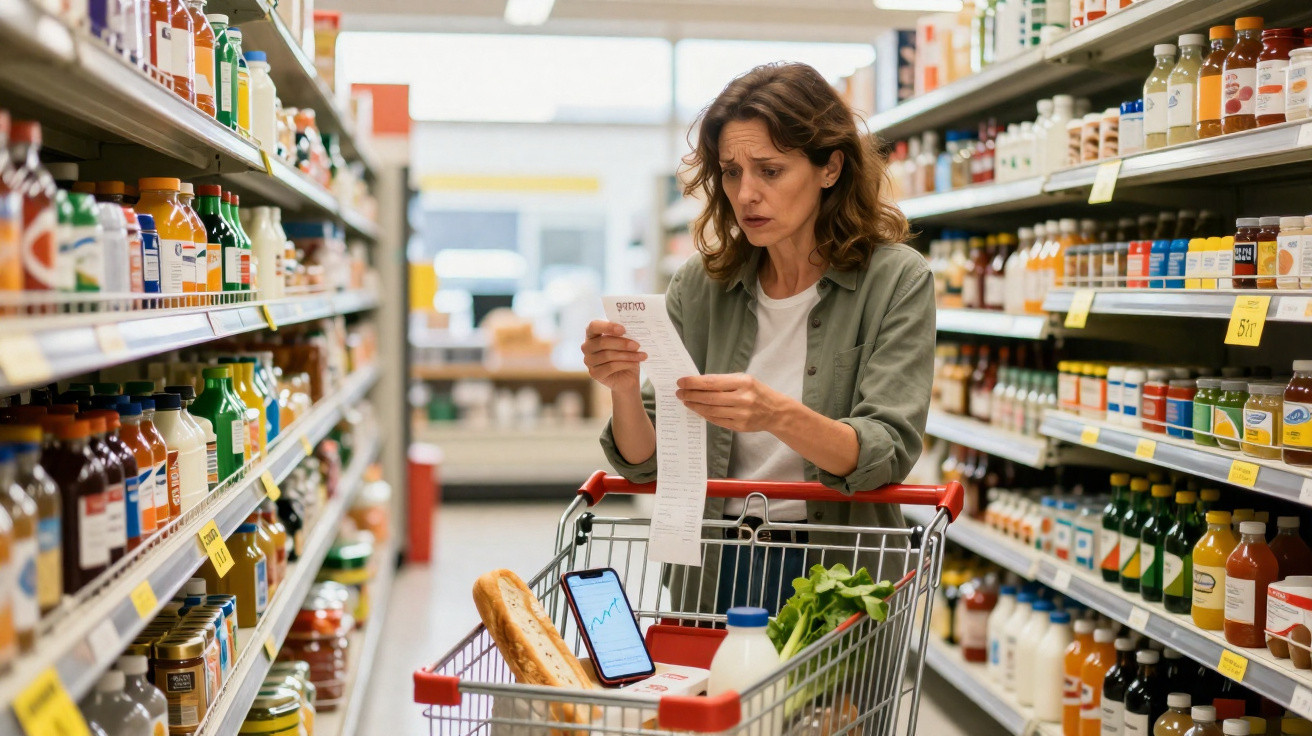
Within a matter of hours, economists began issuing warnings, while social media timelines filled with images of increasingly expensive receipts. Bread, milk, pasta and infant formula: this time, even the most essential goods appear to be affected.
Experts are now issuing alerts in language normally reserved for financial crises and market collapses. Their message is stark: your grocery bill is about to explode. Not next year, nor at some undefined point in the future, but virtually immediately.
And when one chain makes a move like this, others usually follow.
Your weekly shop has changed – whether you have noticed it or not
Imagine an exhausted parent in a supermarket at 7.30 pm, beneath unforgiving fluorescent lighting. With a basket in one hand and a phone in the other, they repeatedly open their banking app, quietly hoping the balance will somehow look better. They look along the shelves and remove items in their mind: put the biscuits back, choose supermarket cereal rather than the branded version, buy a smaller portion of meat. Their trolley contains less, yet the amount due at the till is greater.
At the checkout, the figure appears: more than last week and more than last month. The cashier offers the brief, sympathetic smile they have already offered dozens of times that day. A receipt as long as a short novel emerges from the printer, and the only familiar feeling is frustration. Walking back to the car park, the shopper cannot escape one repeating thought.
How did food get this expensive, this fast?
A glance at the latest prices reveals a harsh pattern. Everyday essentials are among the first products to rise. A packet of pasta, once barely worth thinking about, now feels like a purchase that needs consideration. Fresh vegetables increase by a few pence at a time. Toilet roll, cleaning supplies and children's snacks have all edged upwards – enough to hurt, though not enough to seem shocking when viewed individually.
This reflects a broader change already witnessed elsewhere. Food prices in the UK rose at their quickest pace for more than 40 years between 2022 and 2023. Household surveys in parts of Europe and North America show families buying less fresh fruit, lower-quality meat and fewer branded goods, not because of dietary choices but because they are trying to get by. One supermarket insider described the revised approach to pricing in stark language: “We’re testing how far the elastic will stretch before it snaps.”
In theory, the reasons sound almost mundane: greater energy bills for shops and warehouses, higher pay, unreliable transport, climate-related damage to harvests and global supply networks that seem increasingly fragile each month. The supermarket says its margins remain “under pressure”. Economists refer to “inflation persistence” and “input cost pass-through”. But once these clinical phrases reach ordinary households, they mean barer fridges and less substantial meals.
The timing is what concerns specialists most. Just as households begin recovering from rising rents, fuel costs and electricity bills, food spending takes over the burden. When groceries rise after everything else, there’s nowhere left to cut. Unlike a streaming subscription, dinner cannot simply be cancelled. That is why the warnings are becoming louder now.
How to push back when prices refuse to move
Consumer advocates repeatedly recommend one practical approach: create your own “household basket”. This need not involve an elaborate app or spreadsheet. Simply list the 30 to 40 products your household buys almost every week: rice, cooking oil, milk, eggs, bread, yoghurt, basic cleaning products, coffee, and the fruit and vegetables you normally choose. Write each item on its own line, alongside its current price at your usual supermarket.
Revise that same list the following week, and again the week after. Compare identical products, using the same brand or an equivalent alternative. There is no need to become obsessive; a five-minute check will do. After a month, the less visible price surges will be clear. Perhaps cooking oil has risen by 20%, while pasta has remained steady. Cheese may suddenly feel like a luxury, while frozen vegetables have not changed. Armed with that information, you can alter the parts of your shopping plan that matter most rather than walking the aisles in a haze of general anxiety.
Emotionally, the shock of these new prices can be almost as burdensome as their financial effect. People criticise themselves for failing to “manage better”, buying small treats or not preparing meals every Sunday. A quiet embarrassment now surrounds the checkout, as though a full trolley demonstrates poor planning rather than simply the reality of everyday life. In a difficult week, the supermarket can feel less like a place of plenty and more like a test you are failing.
Let us be honest: nobody genuinely does all of this every day. Nobody spends their life cutting out every voucher, comparing three different shops, making everything from scratch, never wasting a crumb, while also working, looking after children, managing tiredness and dealing with life. The demand to become the “perfect” budget warrior merely adds another form of exhaustion. The better approach is to choose two or three manageable habits and maintain them, rather than pursue an impossible vision of supermarket perfection.
This is where expert advice meets the experience of ordinary shoppers. Economists call it “demand substitution”; families call it changing brands and giving up luxuries. Both are describing a similar reality: when prices climb, the remaining control lies in changing what you buy, where you buy it and how you buy it. One consumer advocate expressed it plainly:
“You can’t negotiate with the barcode, but you can choose which barcode you scan – and how often.”
To make that principle useful in practice, many cost-conscious households apply a simple mental checklist while standing in front of the shelves:
- Swap once: test the less expensive brand for one week.
- Stretch twice: make at least two meals from a single ingredient.
- Skip three: leave out three items that are pleasant but not essential.
- Store smart: freeze or portion products that are likely to spoil.
- Scan slowly: check the price per kilogram or litre, rather than only the shelf label.
Used from time to time, this sort of checklist can lessen the impact without making the weekly shop feel like a military exercise.
What the grocery bill price shock reveals – and what may happen next
When a supermarket chain raises prices so widely, it is more than a commercial decision; it also holds up a mirror. It exposes how vulnerable many households have become after years of restricted wage growth and increasing fixed costs. It reveals which products people collectively resist giving up – coffee, baby products and a handful of “comfort foods” – and which quietly disappear from their baskets. It can even reshape cities, with discount retailers flourishing while small local shops struggle to match wholesale prices.
Food is never merely about calories on a personal level. It encompasses family traditions, cultural connections and individual routines. The weekly roast becomes a monthly meal. Branded cereal is replaced with a supermarket alternative that children refuse to eat. The Friday takeaway turns into an occasional indulgence. On a difficult day, such adjustments can feel like losses rather than sensible financial choices. On a better day, they may inspire an unusual form of creativity: cooking in large batches, exchanging recipes with neighbours, trying less expensive cuts of meat and sharing leftovers instead of throwing them away.
At a wider economic level, experts see a choice ahead. If these rises become the new normal, a greater number of people will have to rely on food banks, emergency assistance and community kitchens. Some governments could introduce targeted subsidies or price caps for essential products. Supermarkets may come under pressure to explain their margins line by line. Alternatively, a quieter change could emerge: millions of shoppers gradually altering their habits, moving away from unaffordable brands and supporting retailers that manage to keep basic goods within reach.
One point is beyond doubt: you are not imagining it. Your receipt is telling the truth. And you are far from the only person standing under fluorescent lights, wondering what the next total will be – and how much further your grocery bill can stretch before it truly does explode.
| Key point | Detail | Why it matters to the reader |
|---|---|---|
| Major price rises | A large supermarket is increasing prices on hundreds of everyday products | Understand why the checkout total is suddenly rising |
| Essential products affected | Basic foods, including pasta, milk, oil and vegetables, are among those most affected | Identify the spending areas that should be monitored first |
| Practical strategies | Tracking a “household basket”, switching brands and adopting new shopping habits | Gain practical tools to limit the rise in the grocery budget |














Comments
No comments yet. Be the first to comment!
Leave a Comment