Key takeaways
- A Scandinavian spirit, aquavit is attracting growing interest from American bartenders and drinkers, while worldwide demand is forecast to rise more quickly than gin over the coming decade.
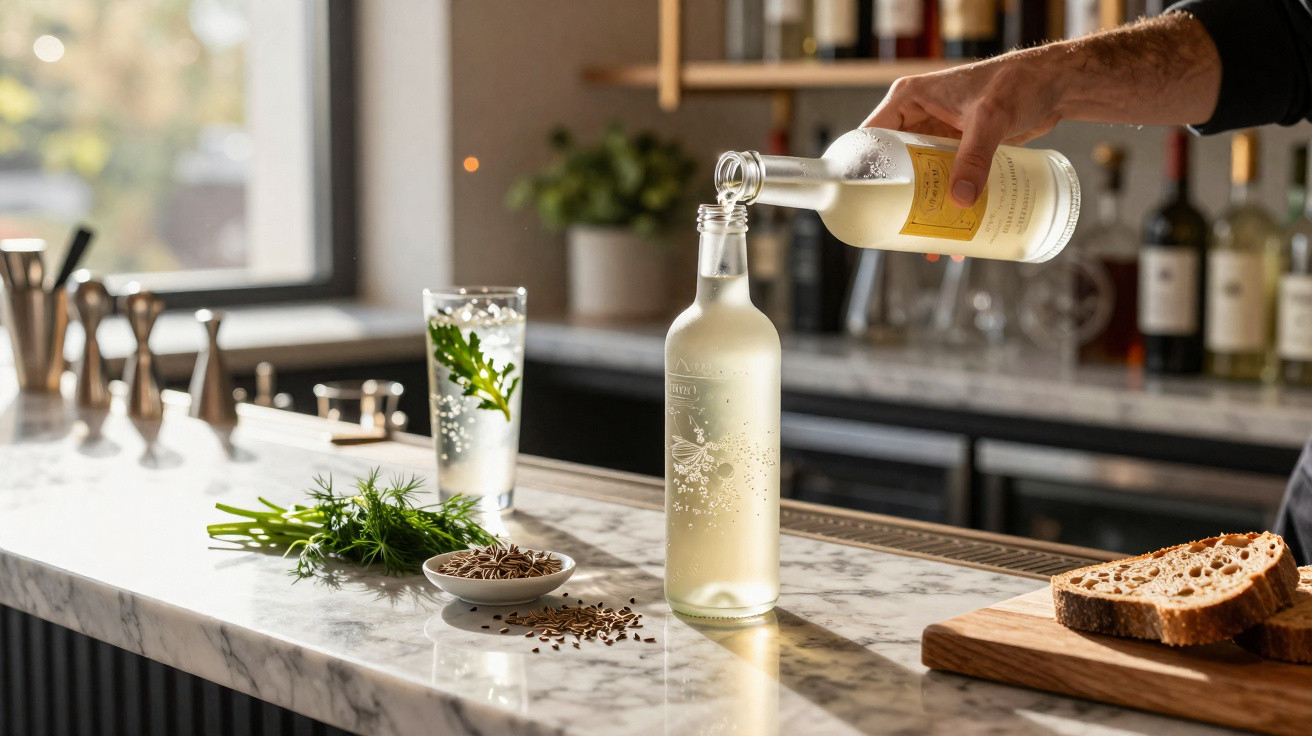
- Made from neutral spirit and flavoured with botanicals such as caraway or dill rather than juniper, aquavit is a savoury, complex alternative to gin, with styles that differ between countries.
- Distinctive and adaptable, aquavit works equally well served neat or in cocktails, and bartenders are trying it in Martinis, Rickies and other classic drinks.
From time to time, a once-overlooked spirit breaks into the mainstream. Mezcal is a notable case: few people in the US had heard of it 20 years ago, whereas it is now a familiar fixture of American drinking culture.
Aquavit may be the next spirit to enter the wider drinking consciousness. Figures point to significant potential for this traditional Scandinavian spirit. Over the next decade, the global aquavit market is expected to record a compound annual growth rate (CAGR) of 4.7%, with rising US interest identified as an important force behind that expansion. That rate exceeds the projected 3.8% CAGR for the worldwide gin market during the same period.
The statistics make the case plainly: there has rarely been a better moment to discover aquavit. Its layered flavours and range of styles make the category well worth investigating, whether it is enjoyed by itself or mixed into a cocktail. But what is aquavit, exactly, and why might it become a mainstream choice?
What type of alcohol is aquavit?
Aquavit is a savoury, botanical-led spirit with Scandinavian origins. Its name comes from the Latin phrase “aqua vitae”, meaning “water of life”. The connection is fitting in both traditional Nordic and contemporary Scandinavian culture, where taking shots of the spirit is central to marking special occasions and festive gatherings. “There’s a lot of familiar, ritualistic practices around aquavit in countries like Denmark and Sweden,” says Robyn Cleveland, co-founder and distiller of Norden Aquavit in Chelsea, Michigan. “In that sense, you can almost view aquavit as Scandinavia’s tequila.”
Aquavit is most closely comparable with gin. Documented histories place both spirits in the 16th century, though aquavit came first by roughly 50 years. Each is a neutral spirit infused with herbs and botanicals, and both may contain ingredients including coriander, citrus peel and orris root. Yet one essential distinction separates them: while gin uses juniper as its dominant botanical, aquavit is built around either caraway or dill.
Robyn Cleveland, co-founder and distiller of Norden Aquavit
“There’s a lot of familiar, ritualistic practices around aquavit in countries like Denmark and Sweden. In that sense, you can almost view aquavit as Scandinavia’s tequila.”
- Robyn Cleveland, co-founder and distiller of Norden Aquavit
Those similarities can make aquavit seem more recognisable and approachable than other lesser-known spirits.
Aquavit comes in three clearly defined styles: caraway-forward, sometimes called “taffel”; dill-forward; and barrel-aged. These styles commonly correspond with particular countries.
“Aquavit should be thought of more as a spirit that varies from country to country,” says Brooklyn bartender Ben Hopkins. “Norwegian style is rich, spicy, and spirit-forward; Swedish is dill- and citrus-forward; and Danish is caraway-forward, almost like an amaro.”
Considering aquavit through the lens of these styles challenges the notion that it is simply a direct substitute for gin. “In my experience, I’ve found that people who don’t like gin like aquavit,” says Cleveland. “They tend to feel like aquavit does for them what gin doesn’t do flavor-wise.”
How to drink aquavit
For centuries, aquavit has been drunk neat. This is also the best starting point for anyone new to the category, as it reveals the broad spectrum of styles available. A dill-led Swedish aquavit offers an entirely different flavour experience from a rich, spicy Norwegian-made aquavit.
It is common to serve aquavit extremely cold, nearly frozen, but Cleveland does not recommend it. “I’ll probably get aquavit fans showing up at my door with torches and pitchforks for saying this, but please don’t freeze our aquavit,” he says. “Instead, start with a neat pour at room temperature. Just a small sip, followed by a larger sip. This will bring the botanicals to the palate.”
Aquavit in cocktails
Because aquavit has long been part of Scandinavian culture as a shot or spirit to sip neat, there are no traditional classic aquavit cocktails. In recent years, however, bartenders have used it in mixed drinks with considerable success.
“Aquavit’s versatility is wildly underrated,” says Tyler Kleinow, bar manager at Meteor in Minneapolis. “They can range from barrel-aged and brooding to the most refreshing thing on the planet. Dirty aquavit Martinis are cool; Aquavit Rickies are like air-conditioning in a glass; And while Nordic tiki is probably never going to be a thing, one of my favorite things to do is to use dill-forward aquavit in tropical-style drinks.”
Before mixing aquavit into cocktails, it is important to recognise the different flavour profiles across the category. “It’s important to think of aquavit like you think of whiskey,” says Hopkins, “Just like the whiskey category contains bourbon, rye, and scotch, there are different styles within the aquavit category. Because of this, it’s important to figure out what style you have before you use it.”
If choosing only one style, Hopkins recommends beginning with Norwegian or Danish aquavit. For the greatest flexibility, though, he advises keeping Norwegian, Swedish and Danish-style aquavits available.
Once you understand how the various aquavit styles taste, you will probably see how they could pair with other flavours. The most effective way to find out is to replace the base spirit in your favourite classic cocktails with aquavit.
“If someone is just getting their toes wet with aquavit, it would probably be easier for them to pick a few favorite classics and throw aquavit at it,” says Kleinow. “In my 15 years of playing with the spirit, I do not recall encountering a classic that was downright bad with the right types of aquavit subbing in for whatever base spirit.”
The spirit of the future?
The data indicates that aquavit, in all its styles, could achieve mainstream recognition. It may not become as prominent as mezcal, but it could be established enough that people recognise the category when they spot a bottle or three on a back bar. There is hope, if not an expectation, that this promise will be fulfilled.
“I believe it can go mainstream,” says Cleveland. “I wouldn’t be doing what I do if I didn’t think it could.”













Comments
No comments yet. Be the first to comment!
Leave a Comment