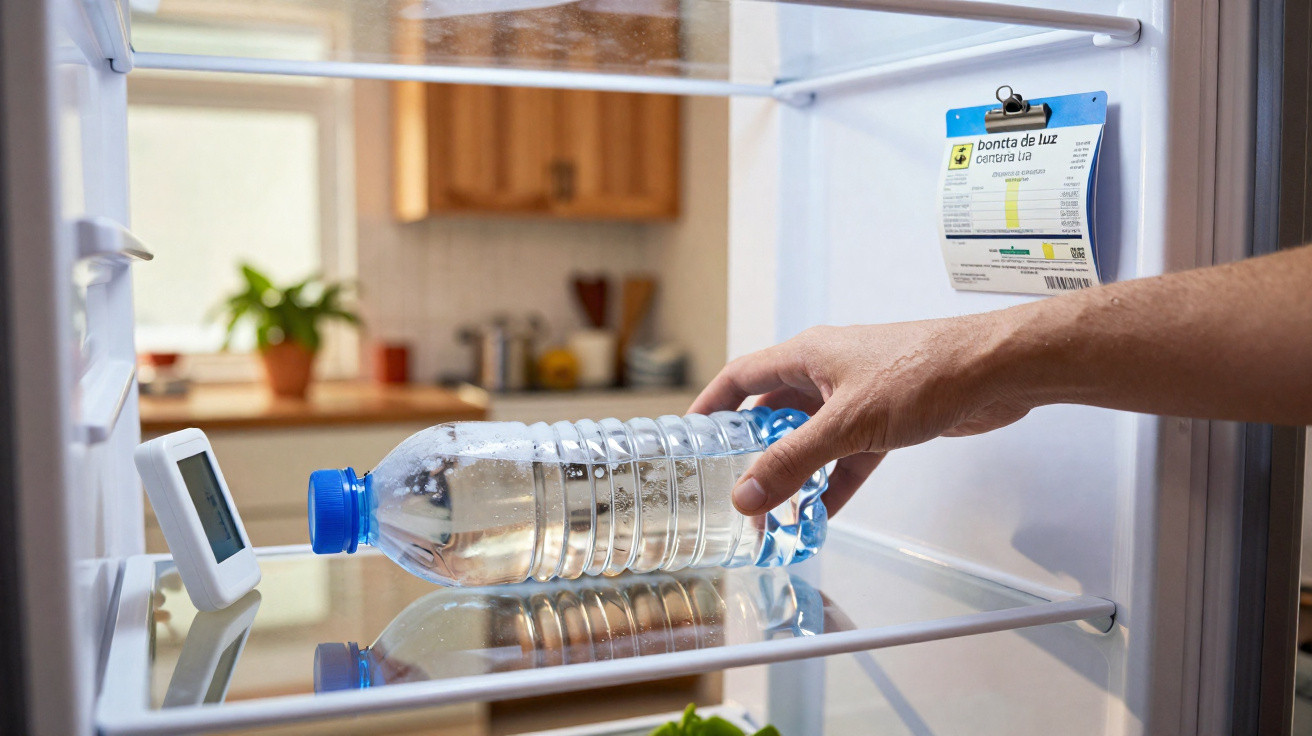
On the top shelf, a handful of forgotten peas and an ice tray sit beneath a layer of frost, while the motor at the back drones like an exhausted fan. Your electricity bill is still held to the fridge by a magnet, impossible to overlook. You take out a half-full plastic water bottle, look at it, then towards the freezer. A passing thought appears: could something this small really make any difference?
You have heard somebody mention “that bottle trick” for checking whether a freezer is working. Another person insisted it helped them detect a power cut. More recently, TikTok has been full of freezer hacks and warnings about soaring energy bills. It seems far too easy to make a difference. Even so, your hand hovers in the cold.
One bottle. One modest hack. One unexpectedly significant result.
The unexpected value of a frozen water bottle
For many people, the freezer is a kind of black hole. Food goes in, vanishes for months and sometimes returns as an unrecognisable block of ice. Behind drawers crammed with frozen pizzas and berries, however, a machine is running around the clock and steadily using electricity. Because it is out of sight, it is easy to forget about it - until the bill arrives with a jolt.
That is where the water bottle hack comes in: a simple blind spot in everyday life. Put a partly filled bottle in the freezer door or at the rear of a shelf. There is no special equipment and no advanced technology involved. Yet the bottle becomes a small indicator of what your freezer has been doing while you were away: whether it stayed properly frozen or stopped working overnight.
With one minor adjustment, something you cannot normally see becomes obvious.
Last summer, an energy comparison website in the UK estimated that inefficient or overworked fridges and freezers could add tens of pounds to an annual household bill. It can sound vague until you hear about somebody such as Claire, a 34-year-old teacher from Manchester. She believed her ageing freezer was “a bit loud, but fine”.
Then, during a storm, there was a short power cut while she was at work. The lights came back, and everything appeared normal. There were no alarms or warning beeps. Two days later, she opened a packet of chicken, cooked it and was violently ill overnight. Only afterwards did she inspect the water bottle she had frozen as a test. The ice had melted and refrozen into an unusual shape. Her freezer had failed unnoticed for long enough for the food to thaw.
A £1 bottle could have revealed the problem much sooner.
By freezing some water in a bottle and positioning it correctly, you are effectively creating a time stamp for your freezer’s performance. Water in its frozen state is honest: if the ice shifts, melts or slumps, the temperature has changed. Greater melting generally means more time in the danger zone, where food may spoil.
A freezer should remain at around -18°C. Every warmer period, even a brief one, means it has to work harder later to cool its contents again, consuming additional electricity. Over the weeks and months, this creates a pattern in your energy consumption. The bottle hack makes that pattern visible without apps or costly smart plugs: it is low-tech monitoring that you can assess immediately.
Once that pattern is visible, you may make different decisions about what to store, discard and replace.
How the water bottle hack works and can reduce costs
The method itself is straightforward. Take a small plastic bottle, fill it to roughly halfway with water and freeze it upright. Wait until it has frozen fully. Next, place the bottle on its side and return it to the freezer. The frozen water will rest along one side, forming an icy horizon line.
If your freezer stays consistently cold, this frozen ice bar will remain in precisely the same place. If a power cut occurs or the door is left open, the ice will gradually melt and shift. Once the electricity returns and the freezer cools again, it will refreeze in a different position. A quick look at the bottle can show whether the freezer became warm enough to put your food at risk. There is no need to guess or rely on a smell test.
That knowledge alone can prevent considerable food poisoning and avoid wasting money on food thrown away merely as a precaution.
The financial benefit becomes clearer in daily use. You may open and close the freezer dozens of times on an ordinary day: children searching for ice cream, or you looking for ideas for dinner. Every opening lets warmth in and forces the motor to work harder, drawing more power. The water bottle hack encourages you to see your freezer as a climate you can monitor, rather than a magical storage box.
Perhaps you spot a slight movement in the ice line after a hectic day of cooking. You then begin combining freezer visits, taking out everything you need at once rather than making three separate trips. You may also find that cramming it with miscellaneous half-used packets restricts cold-air circulation, meaning the motor runs for longer. Clear and organise the contents, and the bottle’s line may become more stable.
There is nothing dramatic about it. It is quiet optimisation: reducing wasted energy through small decisions made every day.
Many people test the hack once before forgetting all about it. Life becomes busy, the freezer continues humming and the bottle turns into just another frozen item beneath a bag of crisps. That is entirely normal. Let us be honest: nobody really does this every day.
The key is to create a relaxed routine around it. Check the bottle while putting away the weekly shop. Look at it after storms or when you return from a weekend away. Refer to it when deciding whether that questionable tub of leftovers should be thrown out. Each brief check offers a small piece of information about the freezer’s reliability and, by extension, your household’s energy habits.
It is not about doing everything perfectly. It is about having one dependable sign in a busy kitchen.
How the water bottle hack can change your energy mindset
The most compelling aspect of the water bottle hack is not really the ice, but the change in perspective it can create. It begins with a single bottle in the freezer, then you start noticing that your fridge has a similar story. Perhaps its seal has cracked, the back wall is icing up excessively or it is set colder than necessary, making you pay for cold you do not need.
That interest can spread further. You may notice subtle energy drains throughout the home: the nearly empty second fridge in the garage, or the habit of leaving the fridge door open while choosing a snack. This is not about making your life into an efficiency spreadsheet. It is simply about no longer overlooking what is there.
When money is tight, such awareness may be the difference between fearing the arrival of a bill and feeling you have at least some control.
We have all received an energy bill and genuinely wondered how the total could possibly be so high. The freezer is part of that surprise, operating in the background, always using power and rarely being questioned. The bottle provides one specific way to say: “Okay, this part I can actually track.”
After you understand your freezer’s behaviour, you may move on to cleaning the coils at the back, defrosting substantial ice build-up or lowering the thermostat by one setting. Every adjustment takes a little from its consumption. These are not attention-grabbing figures, but savings that build quietly from one month to the next.
That is the understated appeal of low-tech hacks. They do not impress you for five minutes; they gradually alter how you live, often without you noticing.
“The bottle trick didn’t just help me spot a power cut,” says Mark, a 41-year-old dad from Leeds. “It made me realise my freezer was on its last legs. Replacing it felt expensive, but my follow-up bills dropped so much that the new model paid for itself way faster than I expected.”
Experiences such as Mark’s are not unusual. Older freezers can be genuine energy vampires, particularly if their seals are worn or insulation has deteriorated. The water bottle hack cannot solve those issues by itself. Instead, it quietly signals that something may be wrong. Once you notice that signal, you are much more likely to act before food goes off or a breakdown leaves you needing an urgent, full-price replacement.
Here is a simple way to turn that warning into action:
- Keep one “ice line” bottle in your main freezer and inspect it each week.
- If the line shifts regularly, examine the seals, temperature setting and ice build-up.
- Record any major changes after storms or time away from home.
- Use what you learn to decide when to defrost or when it is time to upgrade.
A small routine that changes how you view your home
There is something unexpectedly reassuring about opening the freezer and seeing one clear, uncomplicated signal. There are no app alerts, graphs or bills marked in red. There is only a frozen line in an inexpensive plastic bottle, showing whether the cold you pay for is actually doing its job.
This is why the hack spreads so quickly across social media. It is easy to copy, very difficult to get wrong and oddly comforting. You do not need to be “good with money” or intensely focused on sustainability to benefit from it. You only need to do it once and then pay occasional attention as life moves through the kitchen.
The bottle cannot solve problems with your energy supplier, climate anxiety or rising prices. It can, however, offer a small victory whenever the line has not moved.
Perhaps you will mention it to a neighbour. Your children may start checking it and asking how much “cold” costs. That alone could shift your household, one conversation at a time. These are small domestic changes: noticing, caring and adjusting. They are not flashy or flawless, but they are real.
From the outside, it is simply frozen water. In practice, it is a quiet prompt to take a second look at the machines humming in the background of your life. If one bottle in the freezer can alter how you think about energy, what might happen if you found similar small “truth detectors” elsewhere in your home?
That is the real message behind this viral trick: once the invisible becomes visible, it is difficult to go back to ignoring it.
| Key point | Detail | Why it matters to the reader |
|---|---|---|
| The “ice line” | Freeze the bottle upright, then lay it down to monitor temperature changes. | See at a glance whether food remained safe after a power cut. |
| Warning signal | A moved line indicates an unstable freezer or one nearing the end of its life. | Avoid food poisoning and plan a replacement before a complete breakdown. |
| Quiet savings | Fewer unnecessary openings, better freezer organisation and optimised settings. | Lower the electricity bill without major investment or daily effort. |















Comments
No comments yet. Be the first to comment!
Leave a Comment