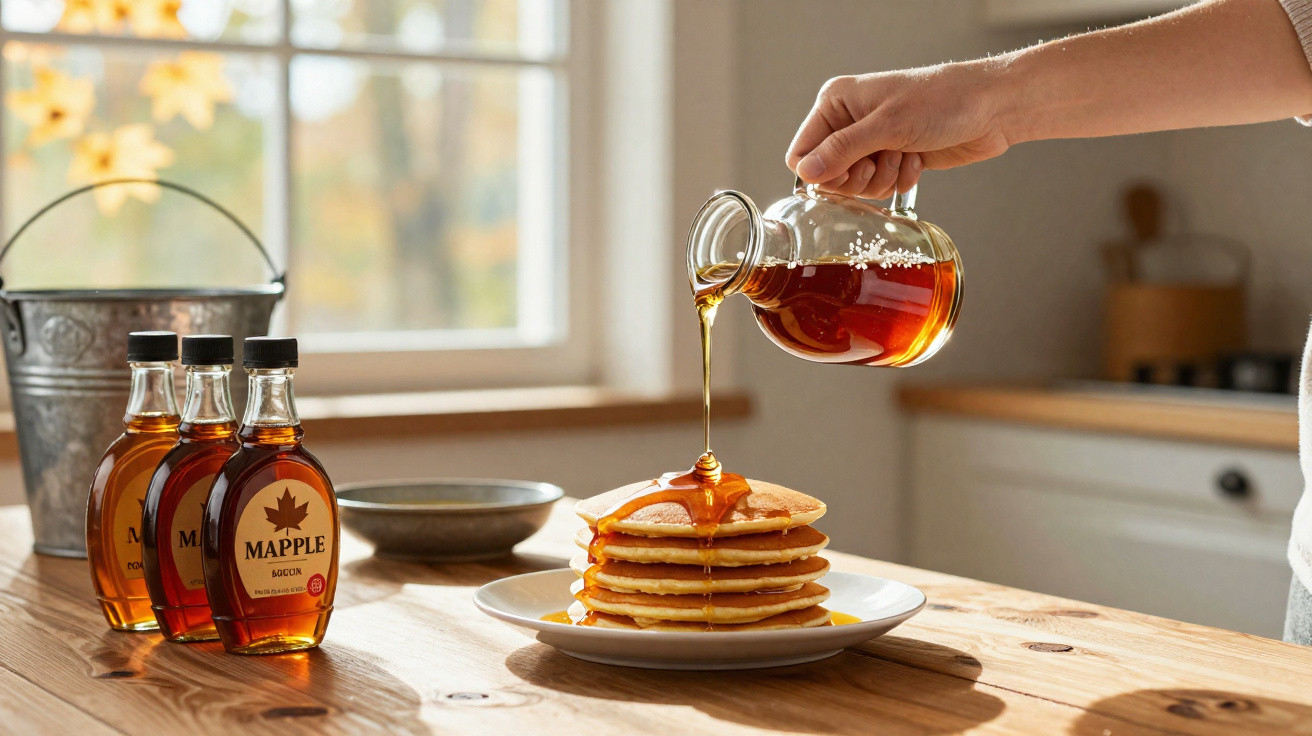
Maple syrup is a particularly welcome cupboard staple in colder months, when pancakes take centre stage at weekend breakfasts and root vegetables benefit from a drizzle of this liquid gold. There are countless enjoyable ways to use maple syrup in the kitchen, from adding it to coffee to using it to sweeten a pork or turkey marinade. Knowing how syrup is produced and what the various grades signify is useful when choosing your next bottle. Here is everything you need to know about the appeal of maple syrup.
Maple syrup grades
Maple syrup was once largely classified using three grades: fancy, A and B. (The precise systems could differ between states and provinces.) This approach created considerable confusion because many shoppers believed that “fancy” meant the finest option and that B denoted inferior quality. In fact, B referred to a darker syrup with a more pronounced taste, making it well suited to cooking.
Following a petition from the International Maple Syrup Institute, the U.S. Department of Agriculture (USDA) revised its grading system in 2015 to give consumers a clearer idea of what was in each bottle. All maple syrup sold today is labelled “grade A”, with two further descriptions indicating its colour and flavour. Every syrup therefore falls into one of these categories:
- Golden colour, delicate flavour
- Amber colour, rich flavour
- Dark colour, robust flavour
- Very dark, strong flavour
“Generally speaking, you get the lighter stuff at the beginning of the year and the darker syrup later in the season,” says Laura Sorkin, cofounder of Runamok in Fairfax, Vermont. “You're really only going to get the dark syrup at the end of the season; however, you can get light syrup all season.”
Are maple syrup and pancake syrup the same?
Maple syrup and pancake syrup are entirely separate products. Pancake syrup consists of corn syrup mixed with artificial maple flavouring. “Everyone presumes that's what maple syrup is, but it's definitely not. [Pancake syrup] is thicker and has a lot more corn syrup in it,” says Sorkin. Pure maple syrup, in contrast, is more fluid and offers a far more layered flavour, with caramel, brown sugar, butterscotch and vanilla notes. It is also produced in working forests, known as sugar bushes. “It's not like most agriculture that's cultivated and conveniently on the fields,” Sorkin notes. “You have to walk out into a wild forest and tap trees. It's uniquely North American and the taste is just out of this world. There's nothing else like it.”
How maple syrup is made
Most maple syrup makers tap their trees from January to April. Larger producers, including Runamok, begin as early as they can so every tree has been tapped before the sap begins to run. But how are trees tapped for maple syrup? “You literally walk through the forest, drill a hole into each tree, and then hammer a tap in,” Sorkin explains. Sap starts flowing when daytime temperatures rise above freezing and night-time temperatures fall below it; these shifts in temperature create the pressure that lifts sap and causes it to flow from the trees.
Freshly collected sap contains just between 1% and 3% sugar, along with substantial amounts of water and minerals. After all the sap has been gathered, it is boiled down-often in small outbuildings called sugar shacks-to remove most of its water, creating maple syrup with at least 66% sugar. “Vermont has a slightly higher standard for maple syrup. It must contain 66.6% sugar content, whereas most other regions require it to be 66% sugar content. This is why we think ours tastes better,” adds Sorkin.
Where maple syrup comes from
Canada is the world’s biggest maple syrup producer, and Quebec alone accounts for roughly 70% of global syrup supplies. In the United States, Vermont is the leading maple syrup supplier, although New York State is closing the gap. “Excuse the pun, but if they tap into all of their maple groves, they would surpass Vermont pretty quickly,” says Sorkin. Maple syrup production is not confined to New England and Canada, however: Minnesota, Ohio, Wisconsin and Virginia are also significant producers of this sticky staple. “There's plenty of maple syrup produced as far west as the Continental Divide - you just need the right growing conditions,” Sorkin adds.
How to store maple syrup
Consider where maple syrup is displayed in the supermarket: on a shelf in an aisle towards the middle of the shop. Storage at home follows the same principle, as unopened maple syrup can stay in a cupboard at room temperature for up to three years. After opening a jug, refrigerate it; it will similarly keep for around three years in the fridge. “Sugar is its own preservative, but there are certain types of mold that can creep in,” says Sorkin. “If you leave opened maple syrup out on the counter for a few weeks, it'll form mold.” The North American Maple Syrup Council advises against skimming off and reheating syrup that has developed mould. Instead, it should be discarded.
Choosing the right maple syrup varieties for cooking, baking and more
“In order to have the maple flavor come through, you need dark-colored syrup,” says Sorkin. “I think the lighter flavored stuff is better in cocktails and on fresh fruit where you just want a little maple flavor. For pancakes, waffles, and French toast, Grade A amber color, rich flavor is probably the best.”







Comments
No comments yet. Be the first to comment!
Leave a Comment