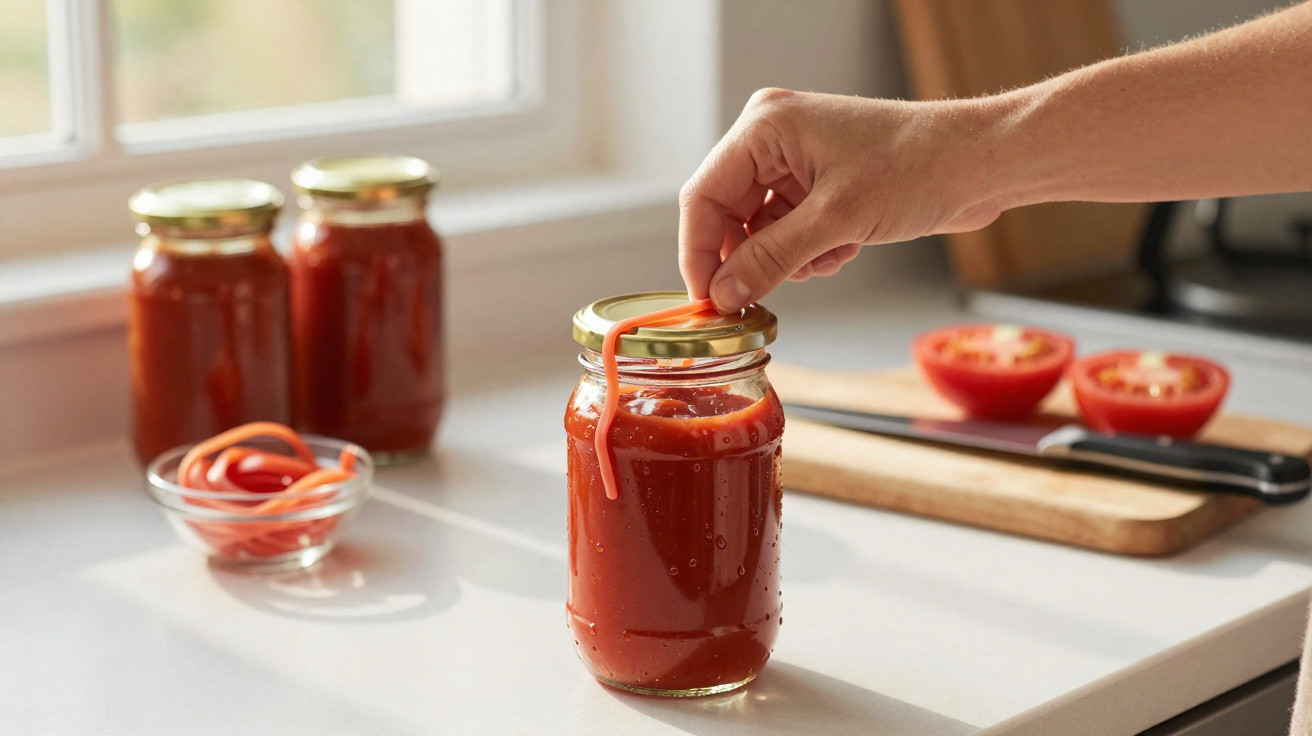
Ever felt that sharp flash of annoyance when a jar of tomato sauce simply will not open? The pasta is cooked, water is bubbling over the pan, and you are battling a lid that refuses to shift. Your fingers slide, your wrist starts hurting, and you reach for a tea towel, then your T-shirt, and, for some reason, your teeth. The jar remains unmoved, staring back at you: smugly sealed.
Then somebody appears, takes one rubber band from the odds-and-ends drawer, stretches it around the lid and – pop – the jar gives in with a single twist. You are left blinking, equally relieved and slightly insulted.
How can something so simple work?
The everyday battle with stubborn jars
Everyone knows the moment when an ordinary jar becomes a challenge to your strength and self-respect. You knock the lid against the worktop, hold it under hot water and ask, “who closed this thing, Superman?” It can feel faintly absurd to be in a fight with a condiment.
While that happens, the rest of the meal is waiting. The pan starts smoking, the salad wilts and your patience disappears faster than the steam above the hob. What began as a minor nuisance somehow becomes rather personal.
A food-packaging survey conducted a few years ago listed “difficult to open jars” among the leading kitchen irritations, alongside blunt knives and burnt toast. It may sound insignificant when written down, but it feels very different in the moment.
Picture an older person with reduced grip strength trying to open a jar of jam at breakfast. Or a student in a cramped halls kitchen, turning a lid until their fingers turn red, with no tools to hand. The same scene plays out in millions of kitchens worldwide, on quiet Tuesday evenings and hectic Sunday lunches.
Yet the answer is often sitting a metre away, overlooked because it seems far too ordinary to be useful. A basic office rubber band-the sort that normally perishes at the bottom of a drawer-can suddenly make you the person who “always opens everything”.
There is no magic involved: only physics, friction and a little common sense. When a smooth metal lid meets slightly damp or soapy skin, the two surfaces slip against one another. Alter that one factor-the contact between your hand and the lid-and the result can be completely different.
The rubber band trick that really works
This is the method that people tend to swear by. Find a thick, wide rubber band, such as the type used around broccoli bunches or post. Stretch it carefully and place it around the entire metal lid, positioning it in the centre of the ridged section. It should sit flat rather than twisted, closely following the lid’s shape.
Grip the lid directly over the rubber band. Your fingers should press into the band instead of the exposed metal. With your other hand, keep the glass jar secure on a stable surface. Then turn the lid. You are using the same strength and the same wrist, but achieving a different outcome.
The first time you try it, the sudden ease can feel almost unfair. One moment your face is flushed with effort; the next, there is a soft “crack” as the seal releases. The lid turns a few millimetres and you realise that was all it took.
This is also where people often go slightly wrong. They use a narrow, worn-out rubber band and fit it loosely, then decide the trick is ineffective. Or they hold the jar in mid-air instead of bracing it on the worktop. Small changes make a major difference to how it feels. You are not weak or clumsy; the arrangement simply was not right.
“I thought it was one of those TikTok hacks that only works in perfectly staged kitchens,” laughs Marie, 42, who lives in a small apartment in Lyon. “Now I keep two thick rubber bands permanently in my cutlery drawer. The jar never wins anymore.”
Choose the right band
Pick a wide, flat rubber band; vegetable or postal bands are ideal. Thin bands can snap or roll out of place, reducing the grip.Anchor the jar
Brace the glass firmly against the worktop or a damp tea towel so that it cannot slide while you turn the lid.Use dry hands
Wet, greasy or soapy fingers reduce some of the additional friction provided by the rubber band.Combine it with a gentle tap
When a lid is especially stubborn, lightly tap its edge on the worktop before using the band. You will often hear the seal release.Keep one in the kitchen
Let’s be honest: hardly anyone uses this every day, but keeping a rubber band near the spices or cutlery can make it an easy new habit.
Why the rubber band trick stays with you
After using a rubber band to open a stubborn jar, it is difficult to forget the experience. There is a small, almost childlike burst of satisfaction when something that resisted you for minutes suddenly opens without any fuss. It is the sort of kitchen tip you end up sharing with a friend on the phone, partly proud and partly amused.
Because deep down, these “small wins” anchor the feeling that your home is a place where things work, not a daily obstacle course.
| Key point | Detail | Value for the reader |
|---|---|---|
| Rubber band = extra grip | The band raises friction between your hand and the lid’s smooth metal surface. | Opens jars with less strength, less pain and less frustration. |
| Right band, right gesture | Use a wide, flat band, fit it tightly and brace the jar on a stable surface. | Changes a random “hack” into a dependable, repeatable method. |
| Simple tool, big impact | It costs nothing, fits into any drawer and works with most screw-top lids. | Offers greater independence to children, older adults or anyone with limited grip. |
FAQ:
- Question 1 Does this work on every jar lid, even the really huge or tiny ones?
- Question 2 What if my rubber band keeps slipping when I twist the lid?
- Question 3 Can this trick help people with arthritis or weak grip strength?
- Question 4 Is there a type of rubber band that works better than others?
- Question 5 What can I do if the jar is still stuck after trying the rubber band?










Comments
No comments yet. Be the first to comment!
Leave a Comment