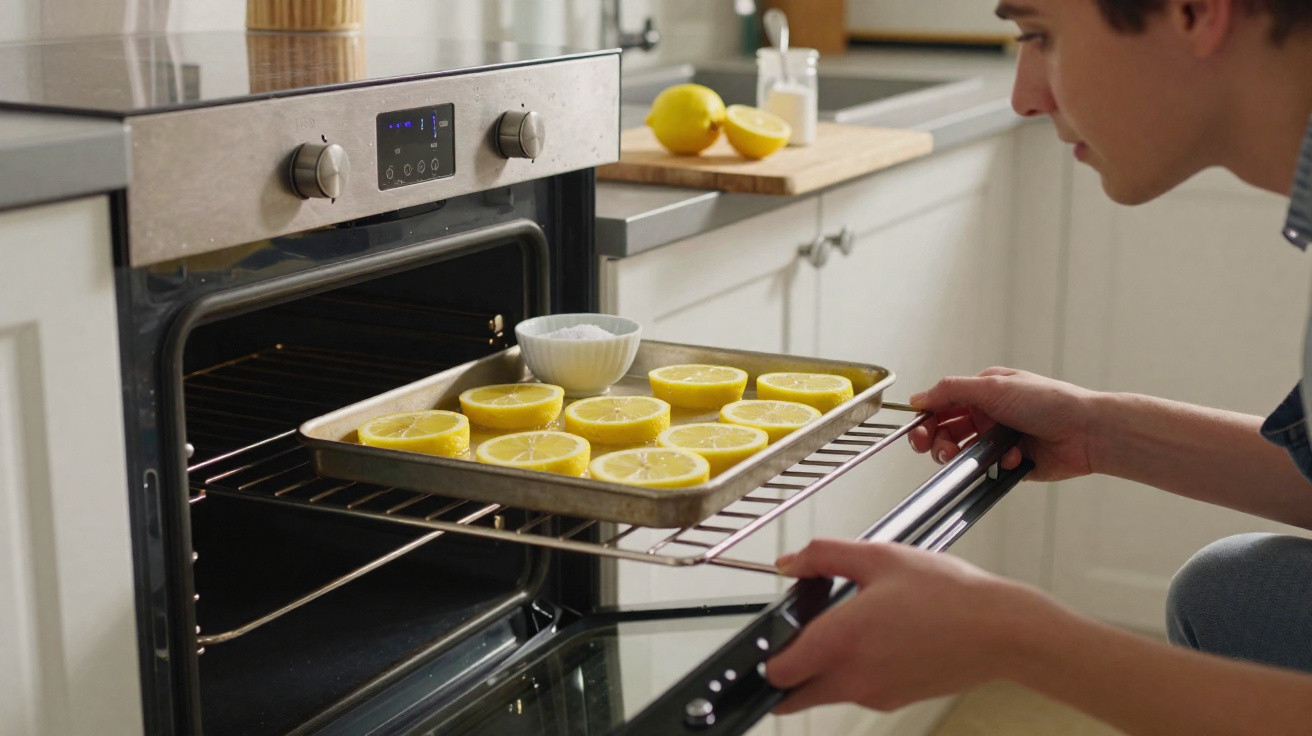
You slide a tray into the cold oven, perch a single lemon slice on the rack and feel strangely virtuous. It is the sort of small household ritual that makes you think your kitchen might be about to become a spa. Online, people insist this trick will clean every surface, deodorise the entire home and perhaps even improve your life a little.
The door shuts with a gentle thud, you turn the dial and, for a brief second, feel hopeful.
Then the uncertainty arrives.
Why people are putting lemon slices into a cold oven
This practice predates TikTok. Well before cleaning hacks went viral, home cooks placed lemon halves in greasy ovens after a roast, in the hope that steam would shift the dirt. The newer version involves setting a slice in a cold oven as a preventative measure, much as someone else might light a scented candle. You put down the lemon, turn the control and persuade yourself that you are doing something smart and natural.
There is a quiet pleasure in it: a modest, citrus-scented rebellion against abrasive cleaners and scouring pads.
A scroll through social media reveals plenty of people claiming it transformed their lives. One woman says her oven “never smells like fish again”. Another claims she has not used oven cleaner for a year, relying only on lemons and heat. The clips follow the same formula: a hand, a lemon slice and an oven door that already appears improbably spotless.
What they never show is the starting point: baking trays covered in burnt cheese, brown trails of old grease around the fan and the odour left behind by one frozen pizza too many.
The simple reality is that one piece of fruit cannot replace an afternoon of intensive cleaning. Heating lemon releases citric acid and aromatic oils, both of which do have genuine effects. Steam can loosen a little grease, the fragrance can disguise certain odours, and moisture on the surface can make fresh splashes easier to wipe away.
Yet that supposed magic has clear limits. Putting a slice in a cold oven is closer to freshening your face with a cool flannel than having a shower: pleasant and occasionally helpful, but vastly overstated when years of grime have been baked on.
When the lemon trick works - and when it is simply theatre
For this hack to have any practical effect, the timing matters most. A lemon slice in a cold oven is useful after a lightly messy cooking session, rather than after months without cleaning. Think of cooking vegetables, baking a cake or making something mildly odorous, such as fish - not something as disastrous as a cheesy lasagne.
Place the slice inside while the oven remains slightly warm, or as it is gently heating up again, giving the citrus time to steam rather than burn. That is when this modest ritual can genuinely prove worthwhile.
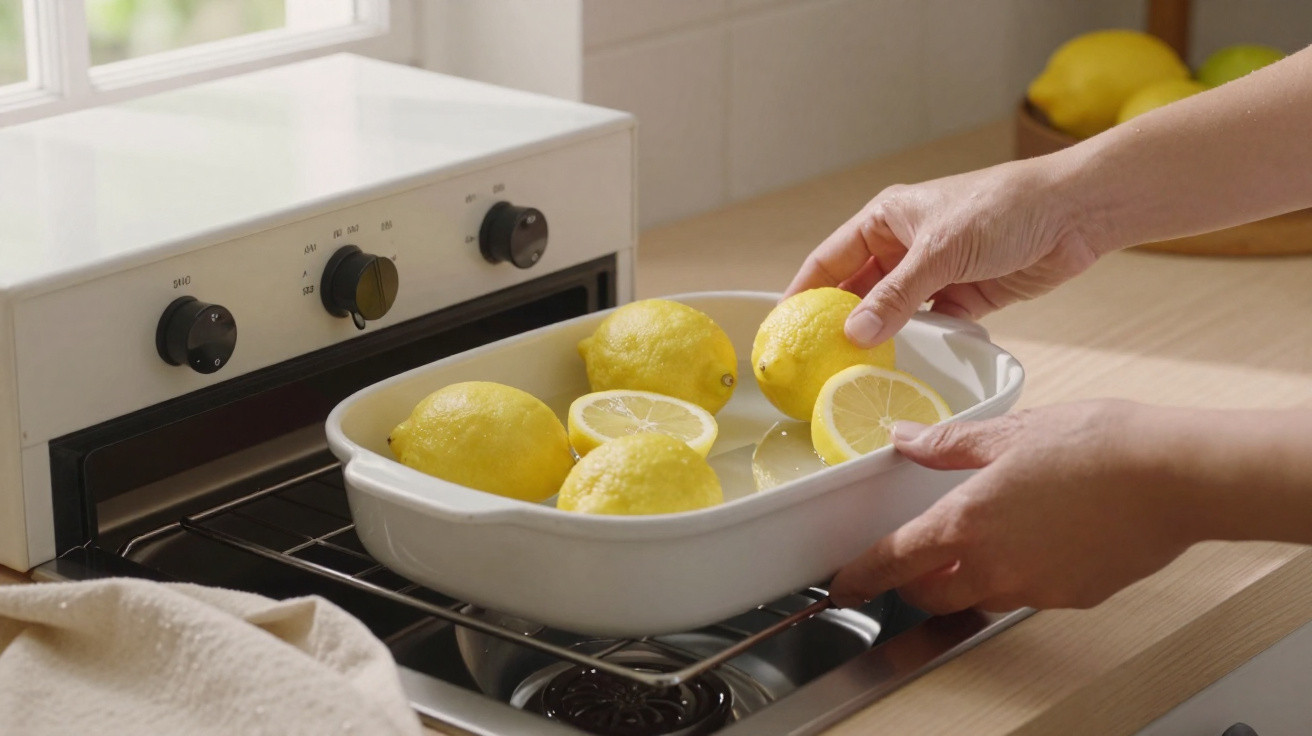
For a method that does more than scent the room, fill a small oven-safe dish with water, add several thick lemon slices and set it on the middle shelf of a cold oven. Set the temperature to low–medium, around 120–150°C (250–300°F), then allow it to heat for 20–30 minutes.
On opening the door, the glass should be lightly misted, the lemon should be soft and fragrant, and the oven walls should have a fine layer of moisture. Act promptly: with a cloth ready, wipe the warm walls and racks before they dry out again.
The useless version of this trend is throwing a dry slice inside, immediately turning the heat up to 220°C and leaving it there. In that case, you are essentially roasting citrus for its fragrance while doing nothing about the dirt. We’ve all been there, that moment when you secretly hope a smell will disappear if you just “air it out” long enough.
In truth, hardly anyone follows this routine every day. Life intervenes, and the oven slowly turns into a museum of previous meals. At that stage, the lemon slice can feel less like a clever cleaning tip and more like hopeful thinking.
Even so, some home cooks remain committed to the ritual despite understanding its shortcomings.
“Lemon isn’t a miracle worker, it’s a reminder,” laughs Claire, a home baker who admits her oven door tells the story of every Sunday roast she’s ever made. “If I put a slice in, I know I’m going to wipe it down while it’s warm. The lemon is just my little nudge.”
To ensure that nudge is genuinely useful, pair it with a few straightforward habits:
- Wipe the inside of the oven with a damp cloth after the lemon steam, while it is still warm.
- Try the method after “normal” cooking, rather than waiting until the grime is black and crunchy.
- Use lemon steam alongside a baking soda paste for persistent marks.
- Save chemical cleaners for properly baked-on messes that citrus cannot tackle.
- Leave the door slightly ajar while the oven cools so odours can disperse more quickly.
Is the lemon-in-the-oven trick worth keeping?
A lemon slice in a cold oven occupies an unusual middle ground between science and ritual. Citric acid can indeed assist with light grease, while the scent can genuinely lessen lingering cooking odours. However, an overworked appliance covered in layers of old spills will not be rescued by one citrus round, however attractively it is filmed.
For some, the trick is a legitimate part of light maintenance. Others treat it as a magical shortcut, only to be disappointed. The lemon is not what separates those experiences; expectations are.
There is a quiet benefit in recognising both the capabilities and limits of this small routine. A lemon slice in a cold oven is not a deep clean. It is a reset button: a simple, easy and almost meditative prompt to spend five minutes looking after the place where you prepare food.
If that is all you expect from it, the hack becomes less futile and more of a mild, zesty reminder that little actions can make a difference, provided you allow them to remain little.
| Key point | Detail | Value for the reader |
|---|---|---|
| When it works | Following light cooking, using lemon slices in water at low–medium heat and then wiping quickly | Provides a realistic method for using the hack so that it has a genuine effect |
| When it fails | With severe baked-on grime, or if no wiping or scrubbing follows | Avoids frustration and unrealistic expectations about “miracle” cleaning hacks |
| Best role for lemon | An odour freshener, a light grease softener and a ritual that prompts you to clean the oven while warm | Shows readers how to make it part of a straightforward routine rather than treating it as a complete solution |














Comments
No comments yet. Be the first to comment!
Leave a Comment