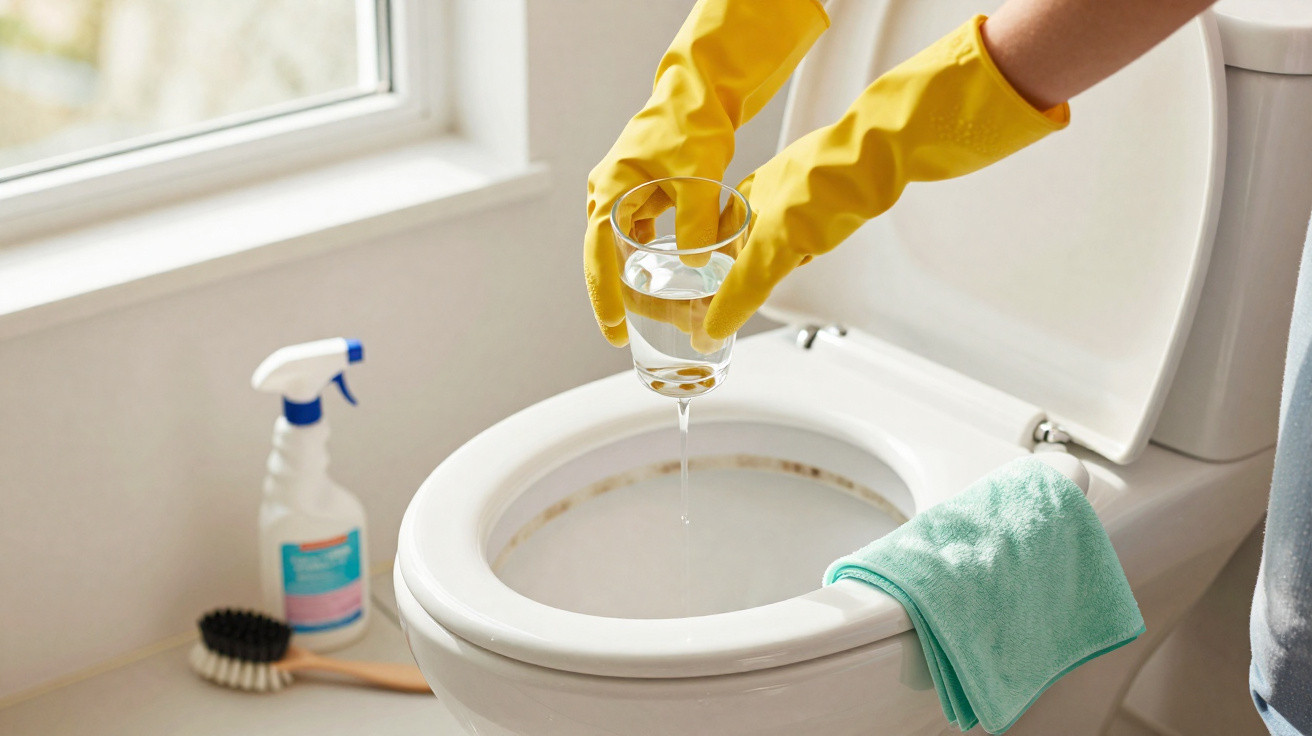
Across Europe and the US, growing numbers of people are looking to refresh worn toilets and sinks rather than replace them. This has put the spotlight on inexpensive, low-waste cleaning methods that can make a dull, apparently scratched bowl look remarkably close to showroom bright.
Why old toilets can look dirty after cleaning
Older toilets and sinks may appear stained for reasons beyond everyday surface dirt. Hard water deposits minerals onto porcelain, creating a rough coating that holds on to grime, bacteria and odours. Ordinary bathroom sprays have little effect on this layer.
Three particularly persistent types of build-up commonly develop over time:
- Limescale: a white or grey crust caused by minerals in hard water
- Rust stains: brown or orange discolouration from iron in the water supply or ageing pipes
- Organic residue: invisible films left by waste and cleaning products
Once limescale has formed a crust inside a toilet bowl, every flush adds a little more, locking in stains and smells.
This explains why an old toilet can look grubby again only days after being cleaned, while a newer one looks fresh under the same cleaning routine. The aim is to dissolve the mineral coating safely without damaging the glaze.
The “half-glass” trick: why it has so many supporters
“Half a glass” generally means using a small, measured amount of a strong liquid cleaner, often a product already available in the kitchen. The chosen product differs between households, but the principle remains the same: apply a concentrated dose where it is needed, at the right time, and allow it to work.
A small, targeted amount of cleaner left to work for hours often beats pouring in a full bottle and scrubbing frantically for minutes.
A step-by-step method used by many homeowners
People commonly follow a “half-glass” routine with acidic household products, including vinegar or citric acid solutions, in the following way:
- Flush the toilet to reduce the water level as far as possible.
- Use paper to dry the rim and the exposed bowl sides, helping the cleaner make better contact.
- Pour roughly half a glass of the chosen liquid slowly around the inner rim, so that it runs down the sides.
- To treat stubborn rings, soak several sheets of toilet paper in the same liquid and press them against the affected areas.
- Leave the treatment in place for several hours, ideally overnight, keeping the lid shut.
- The following morning, wear gloves to remove the paper, then scrub gently with a toilet brush or non-scratch pad.
- Flush twice to wash away the residue.
Giving the acid plenty of contact time helps it loosen mineral deposits without harsh scouring. For very old or heavily stained bowls, many people carry out the treatment over several nights.
Natural acids and chemical cleaners
Households generally fall into two groups: those who use supermarket toilet gels and those increasingly turning to cupboard staples such as vinegar, citric acid or baking soda mixtures.
| Cleaner type | Typical benefit | Main risk |
|---|---|---|
| Vinegar or citric acid | Breaks down limescale, inexpensive, low fumes | Works slowly and may require repeat applications on heavy scale |
| Commercial descaler | Quick on thick deposits and formulated for toilets | More powerful fumes and potential skin and eye irritation |
| Chlorine bleach | Lightens stains, kills bacteria and removes smells | Does not remove scale and can harm surfaces if used too often |
Bleach can make a stained toilet look whiter for a few days, but the limescale underneath usually remains untouched.
Experts often recommend combining approaches: first use an acid-based product to dissolve deposits, then, if required, apply a small amount of bleach later for disinfection. The two must never be mixed or used at the same time.
Detailing the toilet bowl: where dirt is usually concealed
A toilet does not become dirty only in the places that are easy to see. Some of the heaviest deposits gather in hidden sections.
Beneath the rim
The small holes beneath the rim release flush water and can become blocked by limescale. This may weaken the flush and create brown streaks down the bowl. A narrow brush or old toothbrush dipped in your “half-glass” cleaner can help break up the crust. Some people also soak strips of cloth or cotton pads in acidic liquid and tuck them along the rim for several hours.
Waterline and “ring” marks
The well-known brown or grey ring forms where water, air and minerals meet continuously. Once the scale has softened, a mild abrasive, such as a paste of baking soda with a little water, may help if used with great care. Specialist pumice stones made for toilets are widely used across Europe and the US for severe rings, although they need careful handling to prevent scratching.
Inside the trap
The trap is the curved pipe at the base of the bowl that permanently holds water. Deposits and odours can collect there. Some homeowners add their half glass of cleaner directly to the standing water and leave it to sit, sometimes following this with hot, but not boiling, water to help dissolve residue.
Beyond the toilet bowl: refreshing the whole sanitary set
An ageing bathroom will rarely look fresh if only the inside of the toilet receives attention. Taps, sinks and tiles can show the same mineral staining and yellowing.
- Sinks: Placing a cloth soaked in acidic solution over limescale marks is more effective than a quick wipe.
- Taps: Limescale can be treated by wrapping it in vinegar-soaked kitchen roll secured with a rubber band for an hour.
- Silicone joints: Dark or mouldy seals may require a targeted mould remover and good ventilation, or replacement if they are crumbling.
Using the same small measured dose of cleaner on taps, sinks and toilets brings visual unity back to an older bathroom.
Safety and combinations to avoid
Older sanitary ware often comes with older plumbing, so cleaning should be approached carefully. Strong chemicals may react with metal components or rubber seals.
Plumbers frequently emphasise these key points:
- Never combine bleach with vinegar, descalers or any acid, as the reaction may produce toxic gas.
- Do not use metal scouring pads on porcelain; they scratch the surface and can worsen future staining.
- Keep the bathroom ventilated whenever concentrated cleaning products are used.
- Wear basic protective equipment, including gloves, and leave the room regularly if fumes are strong.
How often to repeat the “like new” routine
Old toilets will not remain pristine for long where water is hard or flushing is weak. A practical schedule is important, and many households adopt a two-level routine:
- Light cleaning with a standard toilet brush and mild cleaner two or three times each week.
- A more thorough half-glass descaling treatment once a month, or every two weeks in areas with very hard water.
In places with exceptionally mineral-rich water, some people fit small filters or water softeners to reduce future build-up. Others accept that their monthly “restoration night” is now part of their household routine, much like washing curtains or defrosting the freezer.
When cleaning cannot save an old toilet
Even the most effective half-glass trick has limitations. Deep cracks, worn glaze and ongoing leaks indicate that the porcelain itself has deteriorated beyond cosmetic repair. Repeated use of harsh products at that point may do more damage, making the surface rougher and more welcoming to bacteria.
Environmental groups often encourage people to keep sanitary ware in service for as long as possible, as producing and transporting new ceramics carries a substantial carbon footprint. This is one reason gentle, low-impact cleaning methods have attracted attention: they can keep fixtures functional and presentable for additional years before replacement is necessary.
Extra insights: why acidity works and where it does not
The effectiveness of many toilet-restoration methods is based on simple chemistry. Limescale consists largely of calcium carbonate. Acids break it down into soluble salts while releasing gas bubbles that help lift the deposit away from the surface.
However, that chemistry cannot solve every problem. Yellowing caused by cigarette smoke, dye spills or glaze damage is unlikely to improve greatly with vinegar or citric acid. For these issues, repainting products designed specifically for sanitary ceramics or professional refinishing may be the only way to improve the appearance.
For tenants and people on a limited budget, understanding the distinction between removable scale and permanent damage can prevent hours of fruitless scrubbing. A straightforward test used by many cleaners is this: if a small patch becomes noticeably brighter after one overnight acidic treatment, the issue is mainly limescale. If there is no change, the surface itself has probably aged.
When used carefully, a humble half glass of cleaner is less a miracle solution than a precise cleaning tool. With patience, protective equipment and a realistic understanding of old porcelain’s limits, it can keep toilets and basins functional and respectable for much longer than many people expect.











Comments
No comments yet. Be the first to comment!
Leave a Comment