The odour reaches you before you make it across the kitchen: a faint, bitter hint of “something burnt” that has somehow settled in the air, on the walls and even on the clean tea towel hanging from the oven handle. You open the oven, hoping you have imagined it, only to find a patch of dark cheese fused to the rack, crumbs charred onto the tray and the lingering remains of last week’s lasagne refusing to disappear.
You have already promised roast chicken for dinner, guests are on their way, and the windows are shut because it is cold outside. One more burst of burnt odour and the entire house will smell of it.
Your hand reaches for the oven control, then you remember the lemons sitting in the fruit bowl.
Used properly, they can do something quietly magical.
Why burnt oven smells keep returning
Most burnt oven smells do not arrive all at once. Instead, they linger like an unwelcome visitor, returning whenever you preheat the appliance. You may scrub the glass door, clean the racks and even use a powerful spray, yet as soon as the temperature climbs, that bitter haze appears again.
The issue is not limited to the mess you can see. A hidden layer of grease, caramelised sugar and smoke particles sticks to the metal surfaces and oven walls. Every meal you cook afterwards can then pick up the slightest trace of the previous culinary mishap.
Imagine this: a friend once made a beautiful apple tart for Sunday brunch. It was flaky, golden and perfect by the book. The week before, though, cheese from a frozen pizza had spilled onto the oven base. She gave it what she considered an adequate wipe with a sponge, then forgot about it.
The tart looked excellent when it came out, but its aroma was slightly burnt, slightly plastic and slightly… unsettling. Everyone said it was “fine”, yet most slices were left half-eaten on their plates. A small spill left behind can spoil an entire occasion.
The explanation is simply kitchen-scale chemistry. Burnt fat and crumbs break down, releasing volatile compounds. When the oven is heated again, those compounds reactivate and enter the air. They then cling to the moisture and fat in fresh dishes, which is why even newly baked bread may develop a stale, smoky undertone.
The usual response is to turn the oven up high or use a harsh chemical cleaner. For a while, either option can intensify the odour. There is, however, a gentler method for refreshing the atmosphere inside that metal box before you start cooking again.
The lemon trick that gently refreshes your oven
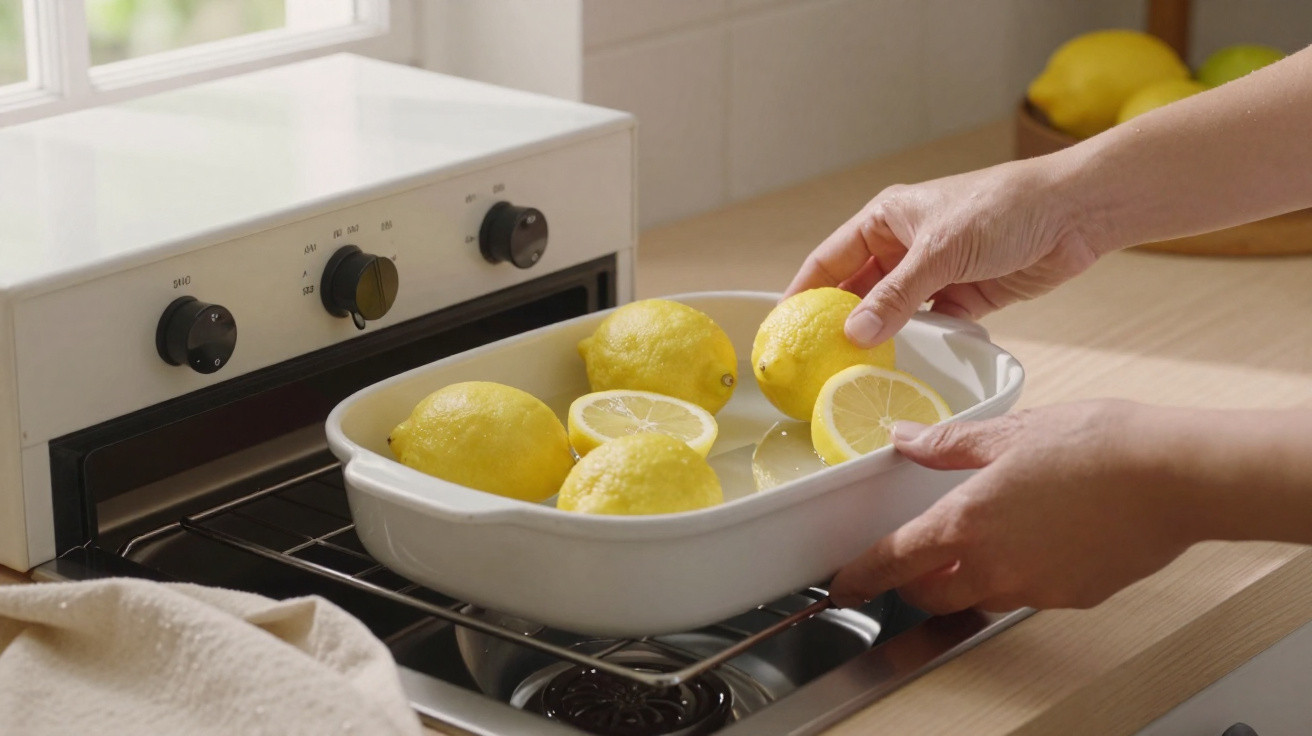
This is the approach many home cooks quietly rely on. Before making anything, take one or two lemons, cut them into thick slices or quarters, and put them in an ovenproof dish. Add water until it reaches roughly halfway up the fruit, creating a shallow lemon bath.
Place the dish in the centre of the oven. Set it to a low 120–140°C and leave it for 20 to 30 minutes. As the water produces steam, the lemons release their natural acids and essential oils, sending a crisp, sweet-sharp mist around the oven interior.
Over those 20 minutes, the lemon steam works in two ways. First, it lightly dampens dry, burnt-on residue, so it is easier to remove afterwards. It also helps to neutralise the stale odours lingering in the oven cavity. Rather than covering a burnt smell with artificial fragrance, you soften it and then let it disperse.
After switching the oven off and allowing it to cool slightly, open the door. That gentle rush of citrus-scented air feels surprisingly rewarding, like pressing a small reset button on the day.
This is the point at which many people misunderstand the lemon trick: it is not a miracle alternative to cleaning. It is an easy ritual that makes cleaning less unpleasant and makes cooking immediately afterwards much nicer. You cannot leave blackened lumps stuck to the oven floor and expect half a lemon to make them vanish.
Honestly, nobody does this every day. Still, treating it as a preheating ritual once a week, or after a serious oven mishap, can make a real difference. Your kitchen begins to smell of food again instead of a burnt canteen tray.
We’ve all been there, that moment when you open the oven and instantly regret the last three dinners. “I thought I wiped this,” you mutter, staring at a mysterious dark ring on the tray. The lemon trick doesn’t judge you. It just quietly helps undo a few rushed evenings.
- Slice and steam: Cut up 1–2 lemons, put them in a dish with water and heat at a low temperature for 20–30 minutes.
- Wipe while warm: Once the oven is warm rather than hot, carefully wipe the walls and racks using a cloth or sponge.
- Concentrate on the bottom: Give the oven floor particular attention, as this is where spills gather and burn again.
- Avoid harsh sprays: Allow the lemon steam to loosen the grime before turning to strong chemicals.
- Repeat after major spills: Use the method after cheesy bakes, roasts or sugary puddings.
Turning the lemon oven trick into a kitchen ritual
A last-minute solution before guests arrive can gradually become a calming routine. Rather than dreading that first rush of hot, stale air, begin cooking by refreshing the space with a dish of lemon water. It also gives you a few peaceful minutes to prepare ingredients, arrange spices or perhaps wash the salad.
There’s something disarmingly soothing about this tiny gesture that says: this kitchen works with me, not against me.
You may spot a few additional benefits. Food can taste cleaner, while the after-smell from a rich dinner is less likely to remain until the following morning. The oven may look less stained too, because burnt marks are not repeatedly given the chance to harden.
Friends may come into your home and say, “It smells so fresh in here,” without knowing exactly why. It is not a fragranced candle or a spray; it is simply heat, water and fruit carrying out an old-fashioned task in a modern kitchen.
The method seems almost too straightforward, and that is precisely its appeal. It needs no specialist product, complex routine, app or gadget. It is simply a way to pause between yesterday’s accidents and this evening’s meal. Try it before your next roast and you may be surprised by how quickly the burnt reminders fade.
You may never view the slightly wrinkled lemons in your fruit bowl quite the same way again.
| Key point | Detail | Value for the reader |
|---|---|---|
| Use lemon steam | Heat lemons in a shallow dish of water at a low temperature before cooking | Naturally and gently neutralises burnt odours |
| Wipe while warm | Clean after the lemon-steam session, when the residue has softened | Cuts down scrubbing and helps prevent recurring odours |
| Make it a ritual | Repeat weekly or after substantial roasts and cheesy dishes | Keeps the oven fresher, food flavours cleaner and the kitchen more pleasant |
FAQ
- Question 1 Can I use bottled lemon juice instead of fresh lemons? Yes, although fresh lemons are more effective because the peel releases essential oils as well as the juice. If bottled juice is all you have, add a few tablespoons to water and heat it in the same way.
- Question 2 How long does the fresh smell last? It generally remains through the next cooking session and for several hours afterwards. Where burnt residue is particularly heavy, repeat the process and combine it with a thorough wipe-down.
- Question 3 Will this remove black burnt patches completely? No. The lemon trick softens residue and deodorises rather than removing deep burns. Stubborn marks will still require a sponge, mild soap or bicarbonate of soda, plus a little elbow grease.
- Question 4 Is it safe for all types of ovens? Yes, it is usually safe for gas, electric and fan ovens. Do not spill lemon water directly onto heating elements, and always use an ovenproof dish.
- Question 5 Can I do this right before baking a cake or bread? Absolutely. When the steaming session has finished and any excess moisture has evaporated, preheat to your usual baking temperature. Many people find their cakes taste “cleaner” afterwards.
















Comments
No comments yet. Be the first to comment!
Leave a Comment