Many people know the situation: you buy bright yellow bananas – and two days later, they are brown, soft causes for concern in the fruit bowl.
This drama plays out in kitchens across the UK every day. Bananas are considered a healthy snack between meals, inexpensive and convenient – yet they still end up in the bin remarkably often. The instinct is to put them in the fridge or a dark cupboard. However, that usually achieves the exact opposite of what we want. So where should bananas really be kept to ensure they stay attractively yellow and appetising?
The real culprit: an invisible gas
Bananas do not spoil “just like that”. A very specific process is responsible for the brown spots. The fruit produces its own ripening gas, called ethylene. This gas acts as a natural accelerator for ripening.
Ethylene gas is released mainly from banana stems and speeds up the change from firm and yellow to soft and brown.
When ethylene comes into contact with oxygen, chemical reactions take place in both the peel and the flesh. Starch is converted into sugar more quickly, the texture softens and the peel changes colour. This mechanism is useful when a green banana needs to become ready to eat – but frustrating once the fruit is already perfectly ripe.
The clever trick: focus on the stem area
The best place for bananas? Surprisingly, it is neither the fridge nor a dark cupboard. The key point is at the top of the fruit: the stem.
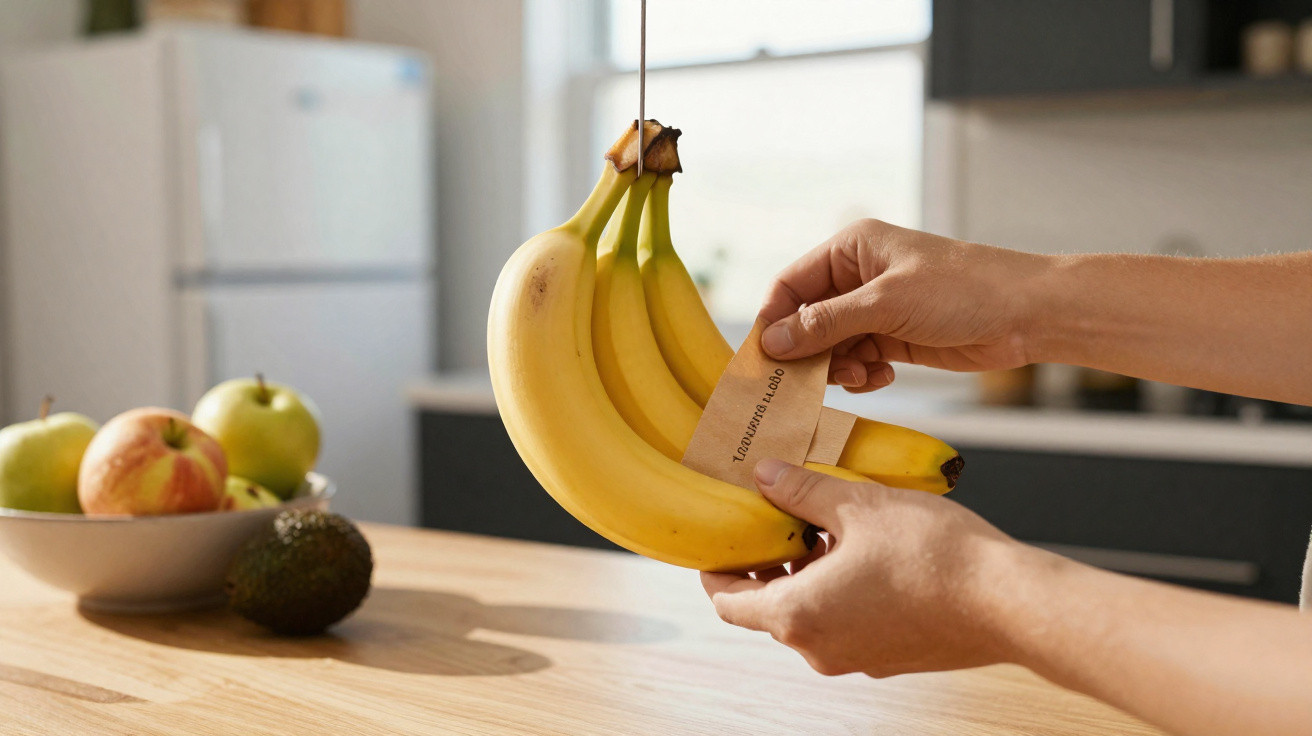
Wrapping banana stems tightly slows the release of ethylene – and keeps the peel beautifully yellow for several more days.
How the “stem brake” works, step by step
- Buy bananas as a bunch rather than separating them straight away.
- Wrap the upper part of the bunch – the joined stems – tightly in cling film or a piece of beeswax wrap.
- Make sure that as little air as possible can get in.
- Then store the bananas uncovered at room temperature, ideally at around 16 to 20°C.
This keeps more of the gas “trapped” around the stems, so less of it spreads through the rest of the kitchen – and, naturally, through the fruit itself. If preferred, each banana can even be wrapped individually at the stem, especially once bananas are gradually broken away from the bunch.
Why the fridge and cupboard often do more harm than good
Many households routinely store bananas in the fridge. It sounds sensible, but the outcome is often disappointing.
| Storage location | What happens to the banana? |
|---|---|
| Fridge (too cold) | The peel quickly turns grey-brown, suffers cold damage and, although the inside initially remains edible, it loses flavour. |
| Dark cupboard | Ethylene gas builds up, there is little air circulation and the fruit ripens even faster. |
| Open bowl at room temperature | Natural ripening; the peel stays presentable for longer when the stems are well wrapped. |
If heat is added – from a hob, oven or direct sunlight on the worktop, for example – the process speeds up even further. The combination of ethylene gas and warmth then creates a real ripening frenzy.
Bonus tips for keeping bananas fresh for much longer
The stem method already makes a noticeable difference, but a few additional measures can extend shelf life even further.
Keep your distance: bananas do not like “neighbours”
Many types of fruit give off ethylene. Placing bananas directly beside apples, avocados or tomatoes causes the fruits to speed up each other’s ripening.
- Keep bananas as separate as possible from apples, pears, avocados and tomatoes.
- Arrange the fruit bowl so that bananas sit near the edge or on their own plate.
Avoid plastic bags; paper is fine
Plastic bags trap moisture and ethylene. This quickly creates a small greenhouse that effectively “cooks” the fruit. An open paper bag allows air to circulate and reduces condensation.
If you choose packaging, a paper bag is a better option than a plastic bag – the banana can “breathe” much more freely.
If it is already too late: rescue bananas instead of binning them
Even bananas that have turned brown do not need to go straight into the bin. In fact, the riper they are, the sweeter they become – an advantage for baking or blending.
- Freeze: Remove the peel, slice the banana, freeze the slices briefly on a plate, then transfer them to a freezer bag.
- Use them up: They make an ideal base for smoothies, banana ice cream, pancakes or banana bread.
The pieces will keep for several months in the freezer and can later replace ice cubes in a blender – while adding extra sweetness and creaminess.
Store bananas better, throw away less
Bananas are a regular item on many families’ shopping lists. That is exactly why it is worth looking more closely at how they are stored. Anyone who throws away two or three fruits each week wastes a noticeable amount of money over the course of a year – and adds unnecessarily to food waste.
With a piece of wrap around the stem and a sensible storage spot, food waste from bananas can be reduced significantly.
There is also a health aspect: bananas provide potassium, vitamin B6, vitamin C and fibre. They support the heart and circulation, deliver quick energy and may ease periods of intense hunger. Every fruit that does not end up in the bin therefore contributes directly to a better diet.
So where exactly should bananas be kept?
In everyday terms, this means:
- not in the fridge, except as a last-minute rescue measure;
- not in a closed drawer or dark cupboard;
- but uncovered, well ventilated and at normal room temperature – with the stems covered.
A classic choice is a fruit bowl on the worktop, away from the hob and windowsill. Better still are banana hangers, which allow the fruit to hang freely. This creates airflow all around, makes bruising less likely and gives mould a harder time.
Everyday scenarios: handling different situations
Just before a holiday
There are still three bananas left and your flight is tomorrow. The approach: peel ripe fruit, slice it and freeze it. Once you return, blend it with a splash of milk or plant-based milk to make instant banana ice cream.
The big weekly shop
Anyone buying a full bunch of slightly green bananas can stagger their ripening cleverly. Keep some in the bunch, with their stems wrapped, at room temperature. Break off two or three bananas and place them closer to apples if they need to ripen faster – for children or breakfast cereal, for instance.
Limits and drawbacks of these methods
The stem method slows ripening but does not stop it completely. In very warm kitchens or during the height of summer, brown spots can still appear within just a few days. Anyone extremely sensitive to visual changes will therefore still need to plan carefully.
Cling film also has a drawback: it is usually made from plastic. Environmentally conscious households can use reusable beeswax wraps or silicone covers instead. The effect remains similar, while less waste is produced.
How smart banana storage affects everyday life
Ultimately, this is about more than a nicely yellow peel. Optimising the way bananas are handled brings several benefits at once:
- Less stress, because looking into the fruit bowl each day does not immediately create the pressure of “Eat me now!”
- Greater flexibility when planning meals, as the fruit remains at a pleasant stage of ripeness for longer.
- A small but practical contribution to reducing food waste – every day, without much effort.
The real message behind the question of bananas is this: even a seemingly ordinary detail such as the stem shows how much smart everyday habits can achieve. Once you have seen that simply reaching for some wrap can add several days of yellow, it will usually change the way you handle fruit for good.









Comments
No comments yet. Be the first to comment!
Leave a Comment