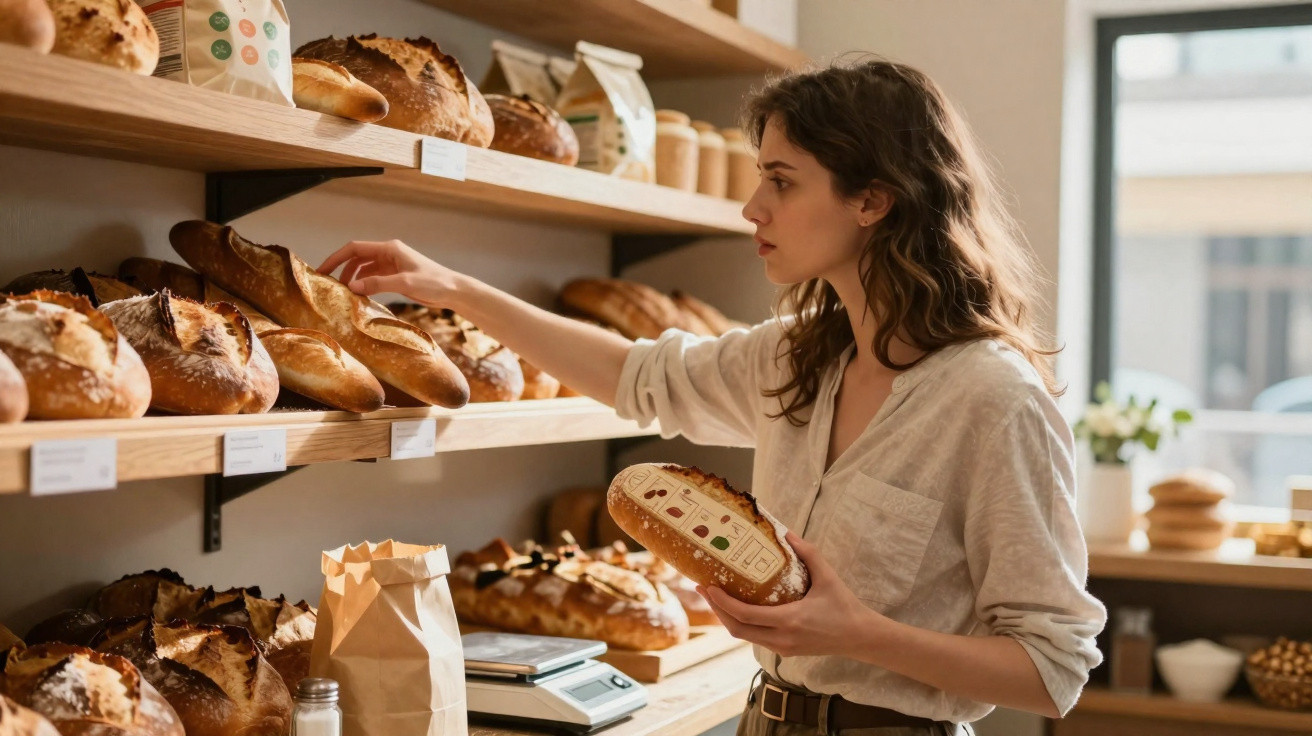
Nutrition can differ markedly between bakery chains, and a new consumer review has reignited the discussion.
France’s foremost consumer organisation has compared everyday loaves sold by leading bakery brands. Its findings go beyond baguette tradition, examining fibre, salt and additives in detail.
What the French watchdog found
UFC-Que Choisir examined bread from several nationwide chains, among them Marie Blachère, Paul, La Mie Câline and Boulangerie Louise. The assessment covered familiar products, including wholemeal loaves and country-style breads, considering their nutritional value, ingredients and the information available to customers.
The researchers identified substantial differences between brands. Certain loaves offered plenty of fibre and straightforward ingredient lists, while others contained high levels of salt and relied more heavily on additives. According to the group, labelling in bakeries is rarely useful for customers making a quick purchase.
UFC-Que Choisir wants bakeries to display Nutri-Score on bread, so shoppers can see nutrition quality at a glance.
The ranking that raised eyebrows
Marie Blachère came top in the study summary. Its wholemeal bread achieved a Nutri-Score A and scored 16 out of 20 on the organisation’s scale, alongside an overall average of 13.3. These results suggest more fibre and a better balance for everyday consumption.
Boulangerie Louise finished at the foot of the table. The consumer group reported below-average ratings and a Nutri-Score D for several products. Its review pointed to high salt levels and less favourable ingredient choices, also identifying Louise’s country bread and traditional baguette as weaker performers than comparable products.
Paul and La Mie Câline were also included in the comparison. Their results differed from one product to another, underlining why customers should look beyond the brand name and check what is actually being sold.
Why salt and additives matter
Bread may appear innocuous, but it can add considerably to salt consumption without people realising. One ordinary portion can quickly raise a day’s total, particularly when the loaf itself is salty. Over time, too much salt is associated with higher blood pressure and cardiovascular risk.
Additives present a further consideration. Emulsifiers and improvers can create a lighter texture and extend shelf life. Some people say they experience digestive discomfort from heavily processed recipes, whereas others simply favour shorter ingredient lists and slow fermentation.
Bread can account for a serious share of daily salt. Small switches at the bakery reduce that load without losing the ritual.
The chain in the hot seat
The report identifies Boulangerie Louise as a particular concern. UFC-Que Choisir highlights high salt levels in its key loaves and generally poorer nutrition ratings. When a baguette or country-style loaf receives a low score, regular customers may be nudged towards an eating pattern lower in fibre and higher in sodium.
That does not mean that every item sold by the chain should be avoided. Rather, the tested average quality trailed behind competitors in the same price-led market segment. For those buying the same loaf every morning, the advice is straightforward: check the fundamentals before it turns into routine.
What shoppers can do today
- Start by asking for wholemeal or wholegrain bread. Fibre supports fullness and gut health, and wholemeal loaves generally achieve stronger ratings.
- When the details are available, check the salt content per 100 g. Where possible, choose bread with around 1 g or less per 100 g.
- Seek out uncomplicated recipes containing flour, water, salt, yeast or sourdough starter. Fewer additives usually make for a more transparent product.
- Choose long-fermented or sourdough loaves. Slower dough preparation may improve flavour and digestibility.
- Keep an eye on serving sizes. Two thick slices with salty toppings can soon add up in sodium.
- Freeze bread you will not use straight away, then toast it from frozen. This reduces waste and makes portions easier to manage.
Labelling and the rules of the game
UFC-Que Choisir is calling for prominent, easy-to-read Nutri-Score labels in bakeries. The system rates food from A to E according to its overall nutritional profile. It favours fibre while marking down excessive salt, sugar and saturated fat. French supermarkets frequently show these ratings, but bakeries rarely do.
Clearer labels would allow customers to compare a rustic loaf and a seeded wholemeal loaf within seconds. They could also quietly encourage chains to reformulate, whether by slightly reducing salt, adding more wholegrain or using fewer improvers. Such changes can improve a grade without sacrificing flavour or profit margins.
How this lands for British readers
Shoppers in the UK encounter a similar issue. Bread may seem like a simple staple, but recipes vary widely. Front-of-pack traffic-light labels offer guidance in supermarkets, yet fresh bakery counters and independent bakeries seldom provide nutritional figures. As a result, habit often replaces informed decision-making.
Salt reduction targets and reformulation efforts continue to evolve in Britain, and many loaves now contain less sodium than they did a decade ago. Nevertheless, notable variation remains. Two brown loaves can differ greatly in fibre, salt and additives. The only reliable option is to ask questions or seek out displayed information.
Picking a better loaf, fast
Use this quick approach when bread information is scarce. It can work in France, the UK or anywhere labels provide little detail.
- Put wholemeal first: if the crumb is brown throughout rather than merely flecked, it is more likely to provide extra fibre.
- Use seeds wisely: they bring texture and healthy fats, but the type of flour used for the base remains more important.
- Judge the weight: a heavier, denser loaf often contains more wholegrain, whereas very light white bread will usually provide less fibre.
- Notice the saltiness: if the crust tastes noticeably briny, it is likely to come with a milligram cost.
- Ask one question: “What flour do you use?” A clear, straightforward answer suggests a transparent bakery.
Rule of thumb: a high-fibre bread delivers 6 g fibre or more per 100 g. That’s the number to chase when labels exist.
Context you can use
Nutri-Score explained: the system weighs nutrients that should be limited, including salt, sugar and saturated fat, against nutrients or ingredients to encourage, such as fibre, protein, fruit, vegetables, pulses and wholegrains. A loaf may improve its grade by increasing its wholegrain content or lowering its salt. It is not ideal for every type of food, but it is particularly useful for bread, where fibre and sodium account for much of the nutritional picture.
Wholemeal versus wholegrain: in the UK, wholemeal generally means that the entire grain has been milled into flour. Some breads labelled “multigrain” contain refined flour with only a scattering of seeds. For meaningful fibre, choose wholemeal bread or products stating a percentage of whole grain. Country-style descriptions are no guarantee of nutritional quality.
For people baking at home, an uncomplicated sourdough using 70–80% wholemeal flour can provide strong fibre without becoming difficult to make. A long, cool rise makes the crumb softer and reduces acidity. Using salt at roughly 1.5% of the flour weight provides flavour while keeping the finished loaf moderate in sodium.
UFC-Que Choisir’s warning does not diminish the appeal of a warm baguette. It simply encourages everyone to regard bread as the everyday staple it is. Choose a loaf that works in your favour, and the rest of the meal becomes easier.

















Comments
No comments yet. Be the first to comment!
Leave a Comment