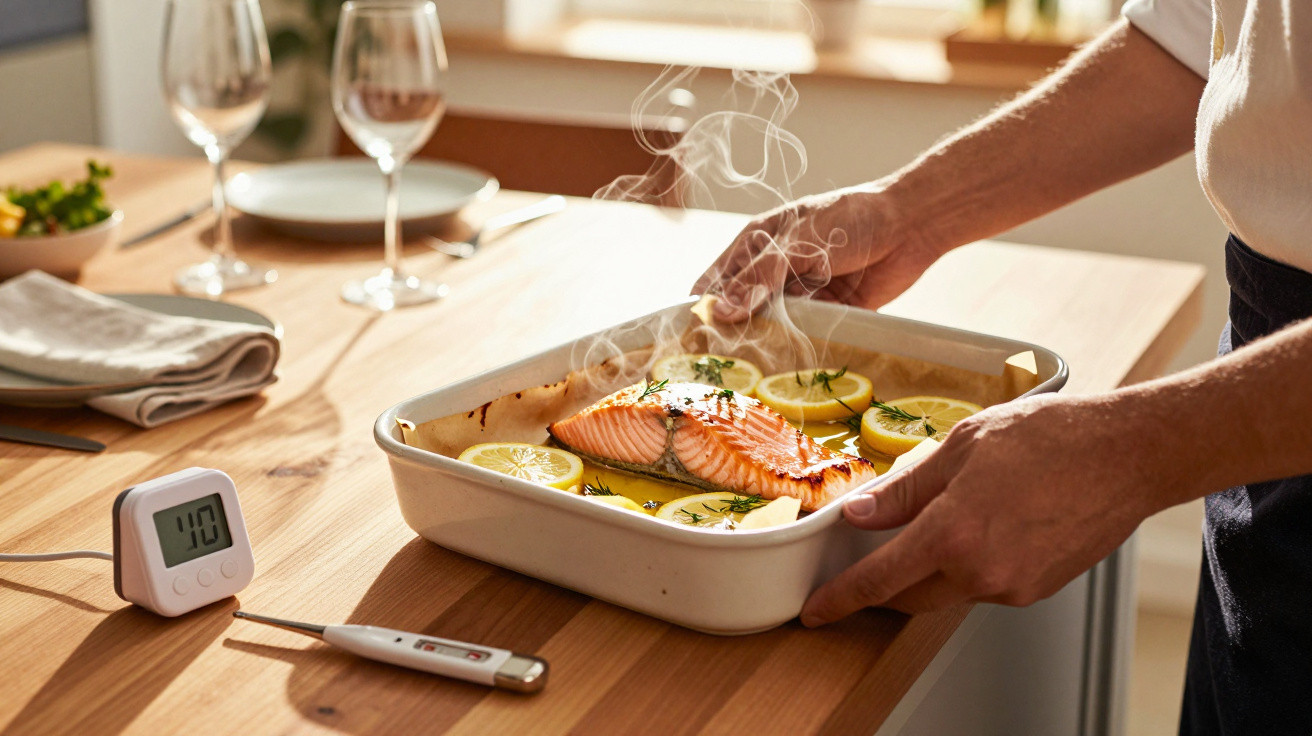
The dish reaches the table, the skin lifts away effortlessly and the salmon flesh opens into broad pink flakes, still glistening at the centre. This sort of result may seem exclusive to restaurants, yet it often comes down to a few minutes of cooking and one very simple instinct: knowing when to stop before it is too late.
We have all had that slightly disappointing moment: you pick out a lovely salmon fillet from the fishmonger, prepare a side dish that fills the kitchen with wonderful aromas, then take the salmon from the oven to find dry edges and a chalky middle. It is not necessarily about skill, or even a complicated recipe. Fish simply cooks faster than we expect, particularly in an oven that is already very hot. The good news is that pearly, tender and juicy flesh is no culinary miracle. You just need to consider the thickness, manage the temperature and avoid letting the oven make every decision. One detail makes all the difference.
Salmon does not forgive an extra five minutes
A salmon fillet may look sturdy, with its vivid colour and substantial skin, but its flesh is delicate. When the proteins tighten under excessive heat, they force out moisture: that is when the fish loses the almost melting softness we want. In many kitchens, the oven is automatically set to 200 °C, as it would be for roasted vegetables or a gratin. The outcome can certainly be good, but the room for error becomes very small. Gentler cooking gives you more time to watch salmon carefully. And to breathe a little more easily.
A 150 to 180 gram fillet, 3 cm thick, will generally cook in 12 to 15 minutes at 160 °C, depending on the oven's actual power and the fish's starting temperature. If it has come straight from the fridge, it may need an extra two minutes. If it is thin, it could be ready in nine minutes. The first time you genuinely pay attention to this variation, it can be surprisingly revealing: two fillets from the same packet will not always behave alike. One may be plump, while the other is flatter. A timer cannot recognise that difference.
Pearly flesh means a centre that remains slightly translucent, without being raw or cold. For precise results, a cooking thermometer is the calmest ally in the kitchen: take the salmon out when it reaches 46 to 48 °C at the centre. The retained heat continues cooking it gently while it rests, adding a few more degrees. Without a thermometer, look at the flakes along the side: they should just begin to separate, while the middle stays moist and deep pink. The finest salmon never looks as though it is in a hurry to be fully cooked.
The simple method that keeps salmon tender
Take the salmon out of the fridge 20 minutes before cooking, while you prepare the rest of the meal. Place it in a lightly oiled dish, skin-side down if the skin is still on, and season with salt immediately before it goes into the oven. A drizzle of olive oil, a little lemon zest, a sprig of dill or a few lemon slices are more than enough. Bake at 160 °C, ideally with a gentle fan setting, and leave it uncovered. Foil, although often used with good intentions, quickly turns the fish into steamed salmon and removes the pleasing contrast between a roasted surface and a tender centre.
The most common mistake is waiting until the salmon looks entirely opaque in the middle. By then, it is often already overcooked, even if it still looks perfectly presentable in the dish. Let us be honest: nobody checks their fish with a probe every weeknight. So use an easy guide instead: remove it when it appears to need just one more minute. Leave it to rest outside the oven for five minutes, in its dish and without tightly covering it. This pause lets the juices settle rather than run out at the first touch of a fork.
For consistently good results, keep these guides close to the oven rather than relying only on colour, which can be misleading depending on the species and any marinade.
“Salmon should offer slight resistance beneath your finger, then give way like cold butter when sliced.”
- At 150–160 °C: allow 12 to 15 minutes for a thick fillet.
- At 180 °C: start checking after 9 minutes, particularly for thin portions.
- At 46–48 °C at the centre: the texture remains pearly after resting.
- Above 52 °C: the fish becomes firmer, with a genuine risk of dryness.
The detail that transforms an everyday dinner
Accurate cooking does not mean salmon has to become a precious or intimidating dish. Quite the opposite: it frees up the rest of the meal. Arrange baby potatoes around the fish, roast asparagus alongside it, then add a spoonful of lemon yoghurt or serve a beurre blanc sauce separately. The skin can remain beneath the fillet as a protective layer, even if nobody eats it afterwards. When it is especially crisp, some people even compete for that piece. It is often the sign that a simple meal has found exactly the right balance.
The cut you choose matters too. A very thick salmon steak can handle moderate heat and a longer cooking time, whereas a thin escalope needs almost last-minute attention. If you are cooking a large fillet for several people, lower the oven to 150 °C and begin checking after 18 minutes, taking the temperature at its fleshiest point. The tail end always cooks before the centre of the fillet. Sliding a sheet of baking paper beneath this thinner section can help prevent it from drying out, with no complicated adjustments required.
There is still an element of personal preference, which is what makes oven-baked salmon so rewarding to cook again. Some people enjoy it almost confit, with a very glossy centre; others prefer firmer flesh, especially alongside a generous sauce. Next time, make a mental note of the timing, thickness and temperature you liked best. This small habit builds remarkable confidence. And when someone close asks how you make salmon so tender, the answer will probably fit into one sentence: you took it out of the oven a little earlier than everyone else.
| Essential point | Detail | Added value for the reader |
|---|---|---|
| Oven temperature | 160 °C provides gentle cooking and a comfortable window for checking progress. | Lowers the risk of dry flesh, even without much experience. |
| Internal temperature | Remove the salmon between 46 and 48 °C, before its five-minute rest. | Produces a pearly, tender and juicy texture. |
| Fillet thickness | A thick fillet often needs 12 to 15 minutes; a thin piece needs considerably less. | Helps you adjust to the real cooking time rather than following an automatic duration. |

















Comments
No comments yet. Be the first to comment!
Leave a Comment