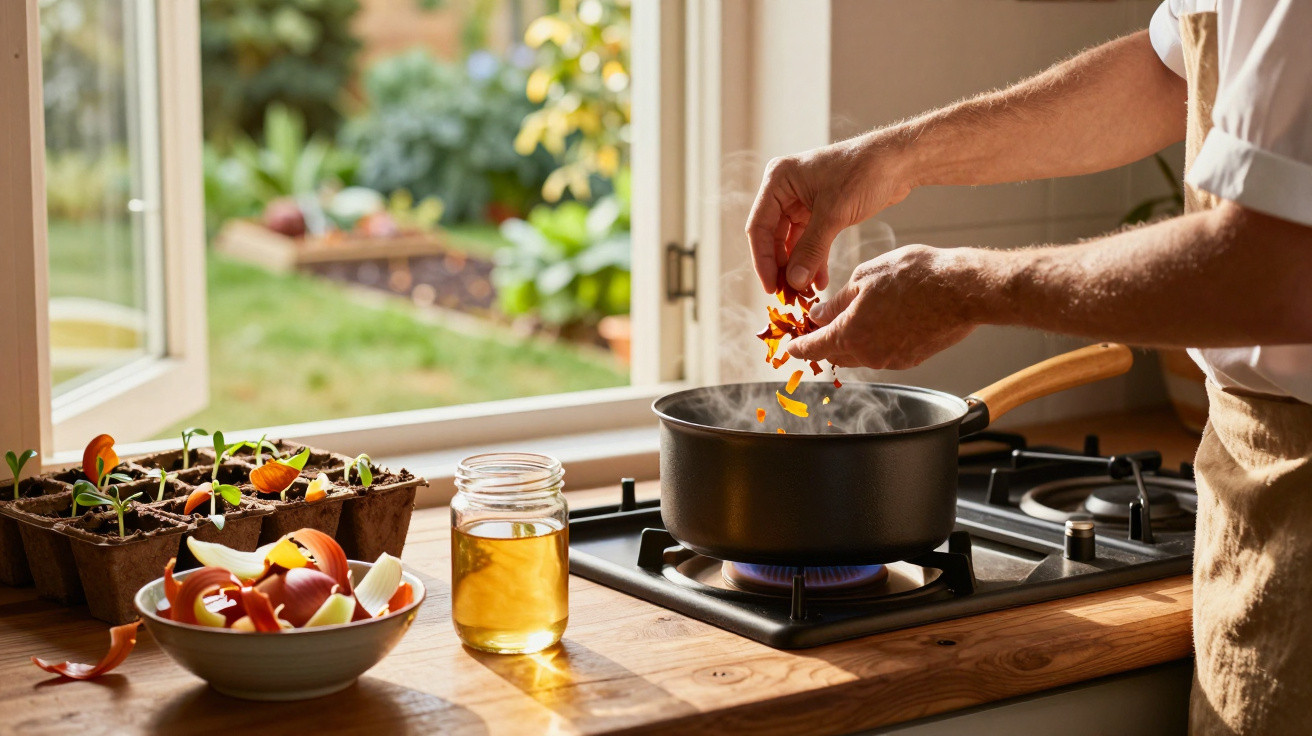
The shopping bag is still on the worktop, onions have rolled towards the fruit bowl, and the first dry skins are already gathering in your hand. We all know the automatic gesture: they go straight in the bin, without a second thought, because they seem entirely useless. Yet these fine coppery or purple layers hold surprising colour, a subtle aroma and a genuinely practical use in the garden. They will not turn an everyday kitchen into a chef’s laboratory, nor make a balcony into a lush jungle. However, they can prevent a little waste, and that already matters. Next time you peel onions, set this small pile aside. You may see it differently.
In the kitchen, onion skins offer unexpected possibilities
The most obvious idea is also the easiest: add clean onion skins to homemade stock. They are not really edible, as they remain dry and fibrous, but they give the liquid an appealing amber shade, much like stock that has simmered for hours. Add a handful of yellow onion skins, a chicken carcass or a few tired vegetables to cold water, and the pan suddenly looks far more promising. Their aroma stays gentle and never overwhelms the other ingredients. Simply strain the stock thoroughly before serving, just as you would remove a bouquet garni.
For some home cooks, onion skins even become a small store cupboard staple for impromptu soup evenings. They are dried in a jar or paper bag, then combined with carrot peelings, leek tops and parsley stalks. For one and a half litres of water, six to eight skins will usually be enough to deepen the colour. It may not look remarkable at first, but the finished bowl has a surprisingly warm appearance. Families who make stock every week know that one visual detail can make a dish seem more substantial.
This approach also brings a very practical benefit: it makes use of something already at hand, rather than requiring another stock cube. Onion skins contain antioxidant compounds, including quercetin, which are particularly concentrated in the outer layers. There is no need to regard them as a miracle food: their main value is culinary. Just choose untreated onions or wash them carefully, as the skin is directly exposed to any residues. Damaged, mouldy or soil-covered skins should go straight into the compost.
Three easy ways to use onion skins without making dinner more complicated
Onion skins can also act as a natural colouring for rice, hard-boiled eggs or even rustic bread dough. Simmer them in water for twenty minutes, strain the liquid, then use this golden-brown water for cooking. Red onion skins can sometimes produce a deeper reddish-brown hue, almost mahogany. This is an old trick, often brought out at Easter to dye eggs, but it works all year round for risotto, pilaf rice or steamed potatoes. The food will not take on a strong onion flavour.
Another useful option is to keep the skins for flavouring slow-cooked dishes without leaving them on the plate. In a pot of beans, a vegetarian stew or a sauce base, they add the mild, slightly toasted note that an entire onion can sometimes provide. Put them in a muslin bag, a sufficiently large tea infuser or a small piece of food-safe gauze, then remove them at the end. To be honest, hardly anyone does this every day. Yet on Sundays, when a large pot is quietly simmering, the habit takes almost no effort.
To avoid any unpleasant surprises, follow one straightforward rule: only dry, clean and undamaged onion skins deserve a second use in the kitchen.
“A peeling is not necessarily waste: it all depends on what you do with it before throwing it away,” Claire, an amateur market gardener and fan of homemade stocks, often points out.
- For stock: add the skins from the start, then strain the liquid finely.
- For colour: infuse them separately in water before cooking.
- For slow-cooked dishes: enclose them in muslin so they can be removed easily.
In the garden, onion skins become useful material rather than waste
Once cooking is finished, onion skins can be added to the compost. They are dry, rich in organic matter and blend well with moist peelings, coffee grounds or grass clippings. The only trap is tossing them in as one large, compact clump: they may dry out instead of properly breaking down. Crush them in your hands or roughly tear them up before adding them to the heap. Whether you use a balcony compost bin or have a larger garden, this small step helps them incorporate more quickly. In time, they simply feed the soil.
They can also be used as a light mulch around certain plants, particularly tomatoes, strawberry plants or herbs grown in pots. Mix them with dead leaves or wood chippings, because on their own they will blow away in the first gust of wind and can sometimes create an overly compact layer after rain. A thin covering helps the compost retain moisture and gives planters a neater look. Do not treat them as a powerful fertiliser: onion skins replace neither mature compost nor good-quality potting compost. They are one part of a wider mix.
Above all, this small routine changes how we view everyday waste. Keep a paper bag close to the sink, place clean skins inside it, then divide them between stock and compost according to the week’s needs. Treated or very dirty onions should not be used to make an infusion intended for consumption; in the garden too, it is best to favour skins from organic onions where possible. There is no obligation to reuse everything. The point is simply to throw things away less automatically and to make sensible choices.
| Key point | Detail | Added value for the reader |
|---|---|---|
| More golden stock | Clean skins infuse alongside the vegetables and are removed when the stock is strained. | A warm colour and subtle flavour without any extra purchase. |
| A natural colouring | The infused water colours rice, hard-boiled eggs or certain homemade preparations. | A fun, economical tip that is easy to try using what you already have. |
| Better-balanced compost | Crushed skins mix with moist materials and gradually decompose. | Less waste in the bin and useful organic material for the soil. |

















Comments
No comments yet. Be the first to comment!
Leave a Comment