Visit Laura’s website here.
When mental wellbeing comes to mind, we usually focus on what is happening in our brain. That makes complete sense: it is where we work through thoughts and feelings. Yet the gut may have far more influence over our mood than was once believed. Indeed, it is now described as ‘our second brain’.
The community in our gut
You may already know about the gut microbiome. If not, the phrase describes the TRILLIONS of organisms living in the gut, including bacteria, yeasts, parasites and viruses. There are so many bacterial cells that estimates suggest our bodies contain more bacterial cells than human cells (1). It certainly makes you wonder: ‘who is actually in charge of who here?!’
Although bacteria are often seen as something to avoid, we could not survive without the bacteria in our gut. They are vital for digestion, immune function and metabolism, as well as making certain vitamins and even producing neurotransmitters (2).
This ‘second brain’ in the gut is now understood to produce around 90% of serotonin, our happy hormone, alongside dopamine, our reward/feel-good hormone, and GABA, a hormone that promotes calm and supports sleep. The gut not only produces these neurotransmitters, but is also lined with millions of neurons that communicate with the brain via the ‘vagus nerve’. We do not yet fully understand this connection, but it is beginning to show that ‘gut instinct’ really is a thing.
Supporting your gut health
Having seen the importance of gut bacteria for both physical and mental health, it is worth doing what we can to help it flourish. Fortunately, there are many nutritional ways to support gut health.
1 – Eat a variety of fibre-rich foods
Fibre is crucial for a healthy gut microbiome, as this useful carbohydrate provides fuel for beneficial bacteria. Sadly, people in the UK, as in much of the Western world, do not consume enough fibre. We typically eat only around 19g each day, despite a recommended target of around 30g.
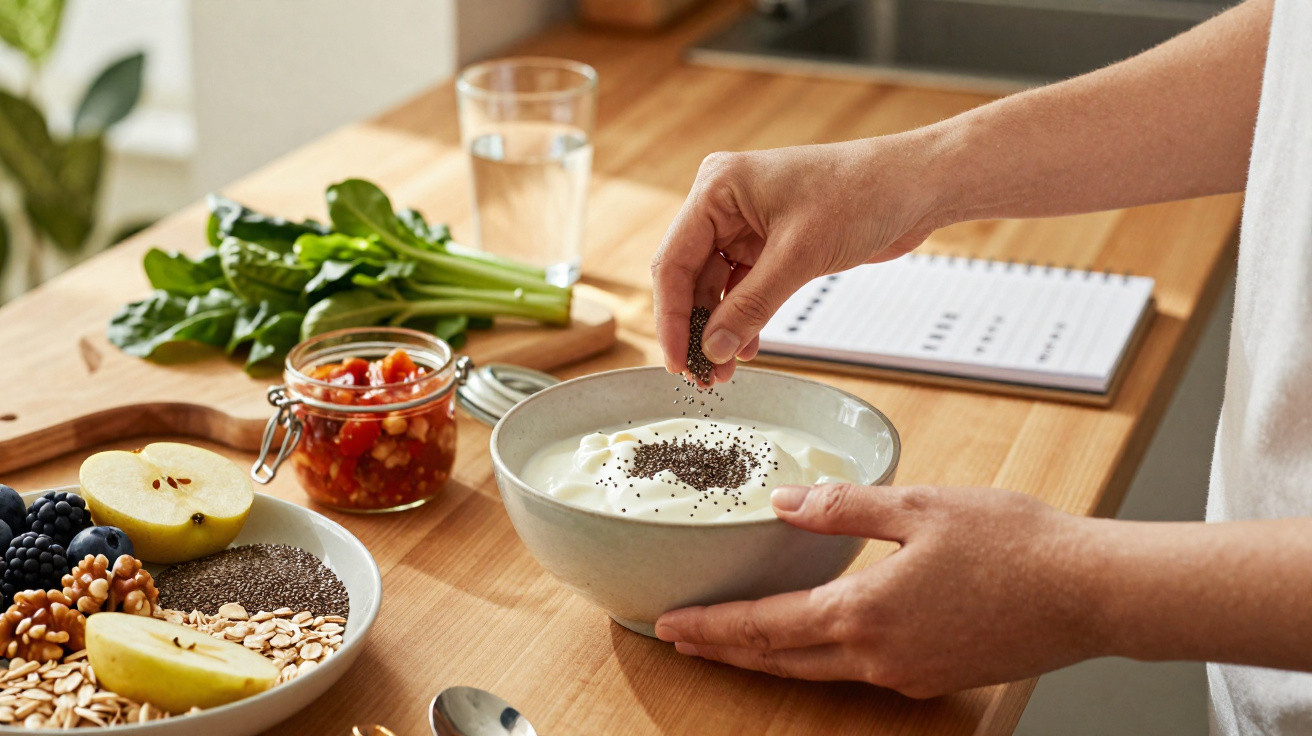
One of the most effective ways to boost your fibre intake is to eat a broad range of fruit and vegetables. Ideally, try building meals around vegetables, with plants making up at least half your plate.
Variety matters too, because different fruit and vegetables contain different forms of fibre. This variation supports the growth of a range of beneficial bacteria, which is important because the healthiest people in the world tend to have the most diverse gut microbiome (3).
Other fibre-rich choices include wholegrains, beans, nuts, seeds and lentils.
2 – Be aware of your sugar intake
I enjoy chocolate as much as anyone, but unfortunately our ‘bad bacteria’ do too. These pathogenic bacteria use sugar for fuel, and feeding them too frequently can allow them to thrive, making it more difficult for beneficial bacteria to survive. As the gut communicates with the brain, researchers are also recognising that these bacteria may send signals encouraging you to eat more sweet foods (4)… talk about a vicious craving cycle!
Consistently giving in to these cravings can encourage an overgrowth of this type of bacteria. This imbalance, also known as dysbiosis, is commonly associated with bloating, gut pain, constipation and diarrhoea.
Before you worry that I am about to tell you never to eat cake again… don’t! The most helpful approach is simply to be mindful about what you eat and pay attention to how it makes you feel. Completely denying yourself sweet foods will probably lead to a major binge followed by guilt. Start gradually: perhaps replace some treats, such as chocolate and biscuits, with sweeter high-fibre options like fruit, and notice how you feel. Once we recognise how good proper nourishment makes us feel, it becomes easier to make sustainable, long-term changes.
3 – Consider trying fermented foods!
Fermented foods can be brilliant for the gut because beneficial bacteria are produced during fermentation. By eating or drinking these products, we take in the good guys!
Sauerkraut, kimchi, kefir and kombucha are all examples of fermented foods and drinks. They may sound unfamiliar, but they can make an excellent addition to your diet and are now widely available if you do not want to ferment them yourself. If you buy them, however, check that they are ‘raw’ and stored in the fridge. Otherwise, they may have been heat-treated to extend their shelf life, which unfortunately kills the bacteria.
If all of this feels like too much, you could cut out the middleman and try a probiotic supplement instead. It may be worth asking a health practitioner for guidance, as they can recommend the strain that has been researched for your desired outcome.
Recap
In short, I hope this has encouraged you to see that small adjustments to your eating habits could help create a healthier, happier future. Better still, because the microbiome changes so rapidly, positive dietary changes made today really can affect how you feel tomorrow.
References
- Sender, R., Fuchs, S. and Milo, R., 2016. Revised Estimates for the Number of Human and Bacteria Cells in the Body. PLOS Biology, 14(8), p.e1002533.
- Jandhyala, S., 2015. Role of the normal gut microbiota. World Journal of Gastroenterology, 21(29), p.8787.
- Valdes, A et al., 2018. Role of the gut microbiota in nutrition and health. BMJ, p.k2179.
- Alcock, J., Maley, C. and Aktipis, C., 2014. Is eating behavior manipulated by the gastrointestinal microbiota? Evolutionary pressures and potential mechanisms. BioEssays, 36(10), pp.940-949.















Comments
No comments yet. Be the first to comment!
Leave a Comment