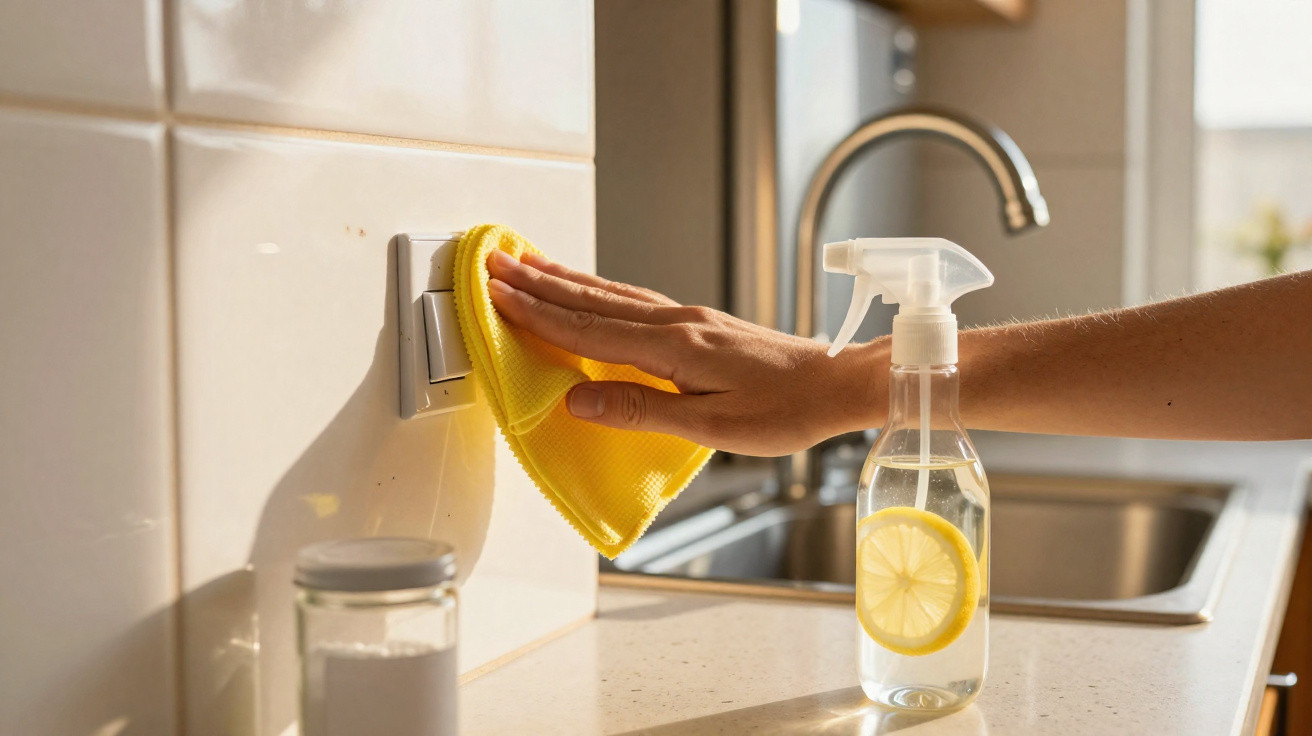
We wipe worktops, scrub sinks and clean floors – yet one tiny surface at the heart of the kitchen is almost always overlooked.
It is touched dozens of times a day, sits in the middle of a mist of grease and steam, and is positioned exactly where raw food is handled: the kitchen light switch. Hardly anyone considers cleaning it regularly. Yet it is among the dirtiest places in the entire home – and a few simple steps can make it considerably more hygienic.
Why the kitchen light switch gets so dirty
Picture an everyday cooking scenario: you are cutting raw meat, realise the lighting is poor, and quickly press the switch. Or you are washing vegetables still covered in soil and turn up the lights to check how food is cooking.
Every one of these movements leaves something behind. Tiny food residues, grease, moisture and bacteria all end up on a surface that rarely features on a cleaning schedule. Over days and weeks, a genuine biofilm can build up there.
“The kitchen switch is a crossroads between a door handle, chopping board and mobile phone screen – except we almost never clean it.”
Particularly concerning is that pathogens such as E. coli and Salmonella do not simply disappear on their own. They can survive for a surprisingly long time on hard surfaces. The kitchen can even offer them fairly favourable conditions:
- Warmth from the hob, oven and hot pans
- Moisture from steam and splashes
- Organic residues from hands, grease and food
Studies of kitchen hygiene show that frequently touched surfaces can carry bacterial loads comparable to those on a chopping board used for raw meat. When several people touch a switch dozens of times each day, it becomes a transfer point for germs – from raw chicken breast to children’s lunchboxes and back again.
A risk for children, older people and vulnerable individuals
This effect is amplified in households with several people. Children grabbing a quick snack, older relatives who need to steady themselves more often, and stressed parents cooking while on the phone all use the same switch.
For healthy adults, this often has no consequences. More vulnerable groups, including young children, older people and those with weakened immune systems, can react much more quickly to kitchen germs. Stomach bugs, nausea and diarrhoea can often result from precisely these inconspicuous contact surfaces.
How often you should clean the kitchen light switch
Experts recommend cleaning it once a week in most households, which is enough to noticeably reduce the germ load. If you frequently prepare raw meat, have many people at home or have young children, shorten the interval to every two or three days.
“The perfect cleaning product matters less than making sure cleaning happens at all – and happens regularly.”
If you already give the kitchen and bathroom a more thorough clean once a week, simply include the switch in that routine. Setting a fixed day in the diary – Saturday morning, for example – helps turn it into a habit.
How to clean kitchen light switches properly and safely
Electricity and moisture are not a good combination. For this reason, the right technique matters more here than vigorous cleaning with lots of spray.
Step-by-step guide
- Turn off the power if in doubt – especially if you want to be extra cautious or have older switches.
- Prepare a cloth – lightly moisten a microfibre cloth with a mild cleaning or disinfecting solution.
- Never spray directly – do not spray cleaning product onto the switch; always apply it to the cloth instead.
- Wipe the surface thoroughly – pay particular attention to edges and grooves, where most dirt collects.
- Clean detailed areas afterwards – a slightly damp cotton bud will reach narrow gaps.
- Dry it – finish by wiping with a dry cloth so that no moisture remains near the electrics.
A gentle alternative: household remedy instead of chemicals
If you prefer not to use harsh cleaners close to food, opt for a simple mixture: one part white vinegar and one part water.
This solution is sufficient to significantly reduce most germs while also loosening greasy marks. Its faint smell soon disappears, leaving clean surfaces with less contamination.
“Spending two minutes on the switch once a week saves you many unnecessary germ contacts over the year – it is a minimal hygiene effort with a major effect.”
Other kitchen areas that are similarly critical
The light switch is rarely the only problem. Similar amounts of bacteria collect anywhere you touch with ‘cooking hands’. It makes sense to create a small set of surfaces to clean on the same schedule.
- Fridge handles – constantly opened and closed while cooking.
- Cupboard knobs and drawer handles – grease and flour residues particularly like to settle here.
- Taps and levers at the sink – often touched with dirty hands before the water is even running.
- Microwave controls and buttons – quickly pressed when rushed and seldom cleaned.
- Hob knobs and other control panels – magnets for grease and sticky residue.
Cleaning these surfaces alongside the kitchen light switch significantly reduces the circulation of germs throughout the kitchen. An extra ten minutes once a week is often enough.
Why long-term hygiene habits make such a difference
A switch that is spotless on one occasion offers little benefit if it is then ignored for months. The real value lies in routine. Wiping a surface regularly prevents the build-up of grease, dust and food residue in which germs thrive.
This makes a noticeable difference for children and older people. The number of germs they come into contact with falls. It can also substantially reduce the risk of stomach and intestinal complaints caused by contaminated hands after cooking.
“Even a professional chef’s glance at a private kitchen shows that the small details matter, not just shiny worktops.”
In professional kitchens, light switches, door handles and control panels have been part of standard hygiene plans for years. Everything touched regularly is disinfected. Taking a similar approach raises the safety level of the home kitchen too – without industrial-strength cleaners or hours of work.
How to maintain the new cleaning habit without stress
Simple methods can stop the plan from disappearing in daily life:
- A checklist on the fridge – keep a short list of weekly surfaces to tick off.
- A fixed order – always clean in the same sequence: fridge handle, switch, cupboard handles, tap.
- A small bottle of solution – keep the vinegar-water mixture ready in a spray bottle, but spray it onto the cloth only.
- A reminder on your phone – set a weekly appointment until the routine becomes established.
That turns what seems like an additional task into a step as routine as emptying the dishwasher. After a few weeks, it will happen almost automatically.
Better awareness of hidden germ hotspots in the kitchen
Many people pay close attention to correct food storage times in the fridge or to cooking temperatures. The routes germs take through the room via hands and switches are less widely considered.
Keeping these contact points in mind reduces several risks at once: fewer bacteria on lunchboxes, fridge handles and children’s crockery, and therefore fewer opportunities for digestive problems. Combined with simple measures such as airing the room regularly and keeping the washing-up cloth clean, this creates a markedly more hygienic kitchen with little effort.
Ultimately, the truth is simple: the tiny plastic switch on the wall looks harmless, but plays a major role in the hygiene picture. Giving it a quick wipe with a cloth each week is a surprisingly big step towards a cleaner, safer kitchen – without the pressure to be perfect.











Comments
No comments yet. Be the first to comment!
Leave a Comment