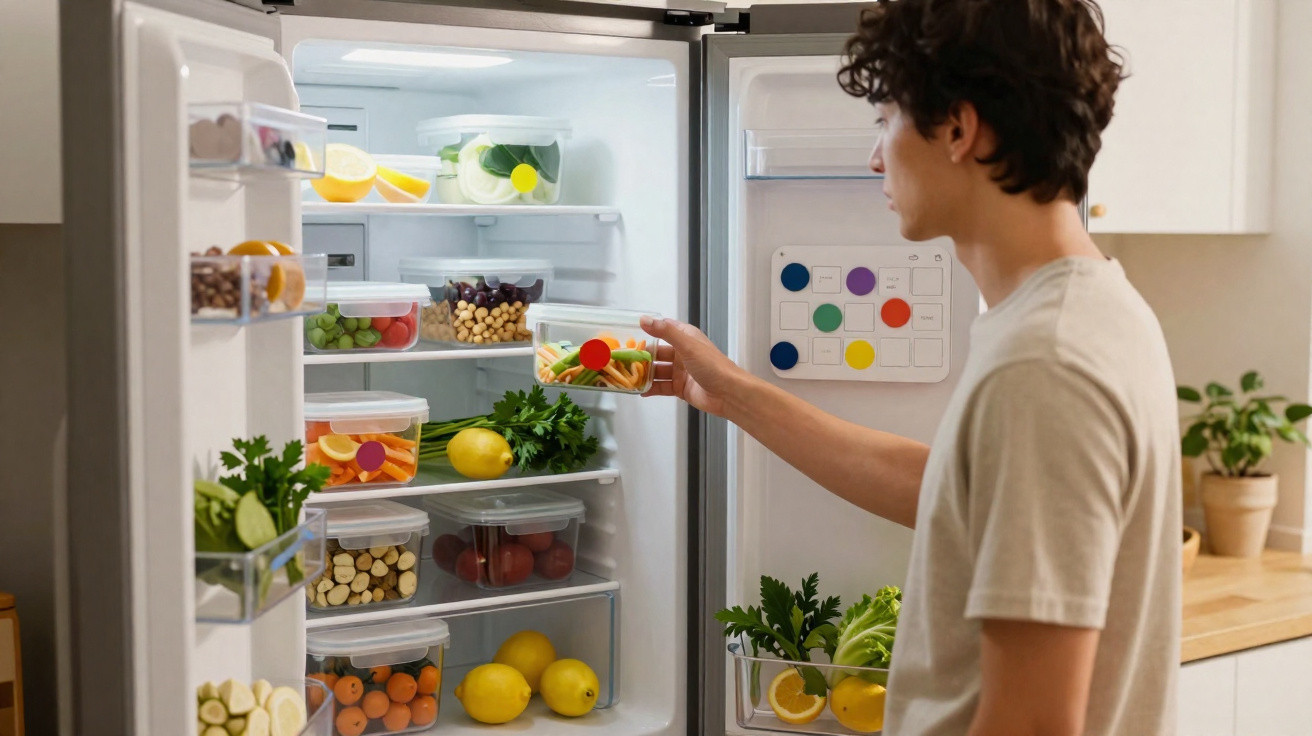
You get home after a long day and open the fridge, already imagining dinner. The light comes on to reveal shelves packed with jars, partly used sauces, an overlooked yoghurt and three kinds of mustard. On paper, it is full. In reality, it feels completely barren. You linger with the door open and cold air around your legs, looking at food that refuses to turn itself into a proper meal. Then you shut the door, pick up your phone and order a takeaway. Again.
Perhaps the issue is not what you are buying. Perhaps your fridge is quietly making it harder for your brain to choose.
One modest change can transform the situation.
Why a full fridge can feel empty
For most of us, the issue is not a lack of food but a lack of visibility. A fridge looks well stocked when every shelf is full of visual clutter. Yet the food that would actually help tonight is tucked behind the jam or hidden beneath leftovers you no longer quite trust. Your brain takes a rapid look, fails to identify a complete meal within five seconds and decides there is “nothing to eat”.
That is how you can feel strangely deprived despite having plenty. It is an exhausting disconnect.
Imagine a Sunday evening after a large food shop. You unpack the bags, push everything into whatever space is available, close the door and feel quietly pleased with yourself. Two days later, the spinach has wilted at the back, the strawberries are wearing a white fuzzy coating and toast becomes dinner. One American study estimates that the typical household discards around 30% of the food it purchases. It is not because we are monsters. We simply forget what is there.
What disappears from view soon disappears from mind, before eventually ending up in the bin.
There is an easy explanation. Our brains prefer clarity and dislike too many decisions. A disorganised fridge resembles an overcrowded inbox: your gaze jumps from item to item, you feel a flicker of stress and your brain says “nope”. You then choose the fastest, simplest and most familiar option: pasta, frozen pizza or delivery. Your fridge layout quietly influences what you eat. Alter the layout, and your everyday choices shift with it. This is where one quick organising change can reverse the pattern.
The fridge “meal map” fix
The quick solution is to stop arranging food by product category and begin arranging it around how you really eat. Rather than having a dairy shelf, a vegetable shelf and a shelf of miscellaneous chaos, make your fridge a visual guide to meal-ready components. Use the top shelf for “eat this first”, the middle shelf for “meal builders”, drawers for “raw ingredients” and the door for “flavour boosts”. This is not about creating a Pinterest-ready fridge. It is about building a low-effort system that lets your tired 8 p.m. brain spot dinner within five seconds.
Your fridge should act like a menu rather than a storage cupboard.
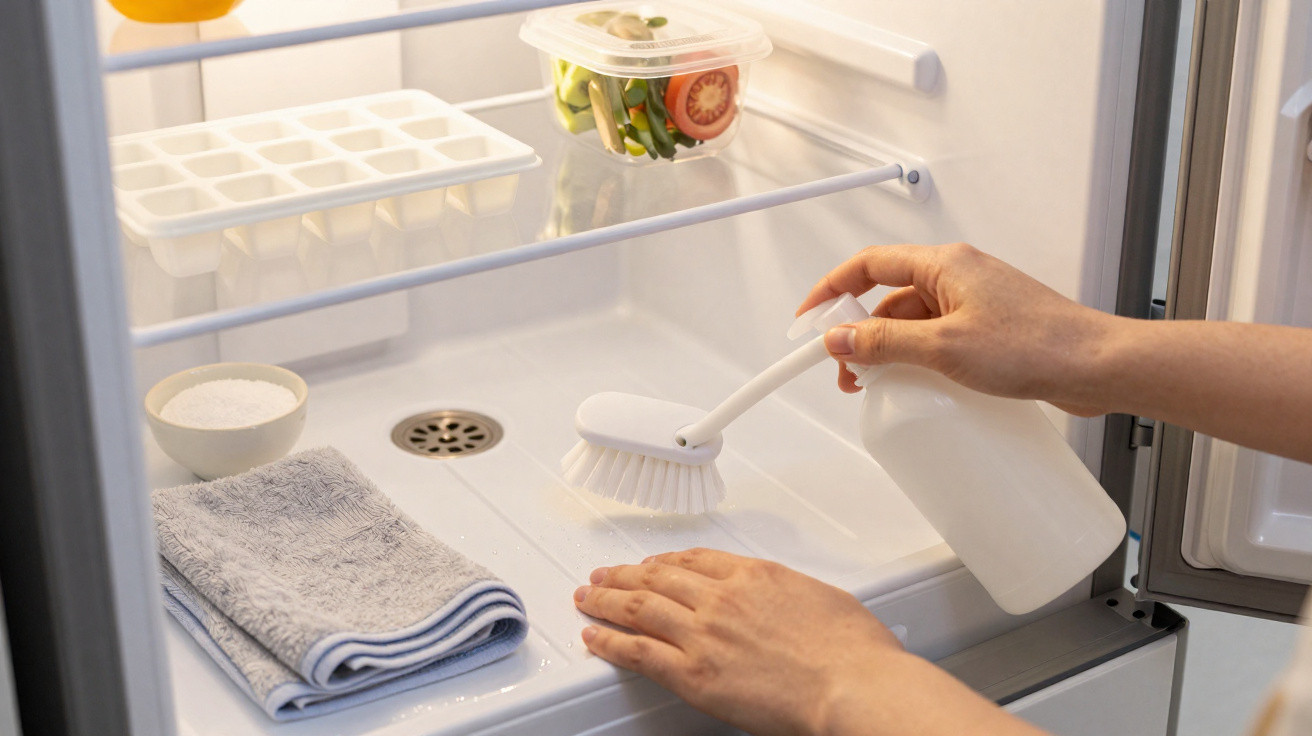
For your first attempt, spend no more than 20 minutes on it. Remove only food that is visibly off or out of date. Clean one shelf rather than tackling the entire fridge. Next, mentally relabel one space: the middle shelf, for instance, can become “this week’s meals only”. Gather all opened packs, chopped vegetables, cooked grains and leftovers there. All at once, you have a deliberately chosen display in the middle of the clutter. When you open the door, there is no need to inspect every corner; you check one shelf. Decision fatigue eases.
We have all had that moment of discovering we had everything needed for tacos… three days too late.
The reasoning is simple. Your future self is not more disciplined; they are either better supported or more boxed in. Separating food into “use soon” and “ingredient storage” removes countless tiny decisions. It steers you towards ingredients that have already been started, opened or partly prepared. Just as an orderly desk makes writing more likely, a “meal map” fridge makes it more likely that you will cook something, rather than scroll for options. One plain-truth sentence: nobody really does this every single day.
The aim is not perfection. It is making the better choice the easiest choice.
Reset your fridge in 20 minutes
Begin with the area your tired self notices first, which is usually at eye level. Clear only that middle section, then quickly make three groups on the worktop: “eat in 2 days”, “fine for later” and “nope”. Throw away the obvious science experiments without feeling guilty. Return only the “eat in 2 days” group to the newly cleared middle shelf. This is now your hot zone. Store leftovers here in transparent containers instead of scattering them across random shelves. Add opened cheese, partly used sauces and cut fruit too.
If you want to use it soon, keep it in the spotlight.
Then bring some order to the ingredient chaos. Designate the bottom drawers for “raw ingredients”: whole vegetables, unopened packs and fruit. There is no need to make it complicated. Use one small clear box for “snack stuff” and another for “lunch bases”, such as boiled eggs, cooked grains or washed salad. The fridge door should stop being a graveyard for 17 condiments and become your “flavour bar”: soy sauce, mustards, hot sauce and dressings. When you pick something from the hot zone, your brain can immediately see how to make it into a proper meal. It is like having a tiny kitchen assistant whispering, “Use this first, then add that.”
Sometimes the problem isn’t that you don’t like cooking, it’s that your fridge makes you think in ingredients when your brain is begging to think in meals.
- Middle shelf = “eat first” zone
Leftovers, cut fruit, opened packs and cooked grains. - Bottom drawers = raw ingredients
Whole vegetables, fruit and unopened items. - Door = flavour station
Sauces, condiments, dressings and little jars. - One small box for snacks
Yoghurts, cheese sticks, houmous and sliced vegetables. - Weekly 5-minute check
Pull out the “eat first” shelf, make adjustments and move items up from the drawers.
When your fridge starts working for you
The effect of this small reset is not immediately dramatic. You will still open the fridge automatically and still pause for a moment. But your eyes will settle on the middle shelf, where you notice last night’s roasted vegetables, a container of cooked rice and half an avocado. Your brain does the calculation without fuss: a bowl meal in five minutes. A couple of days later, you realise nothing has turned slimy and vanished at the back. You have eaten the food you bought. The fridge feels unexpectedly calmer, like a room that can breathe again.
You also feel slightly more in control, without becoming a meal-prep robot.
| Key point | Detail | Value for the reader |
|---|---|---|
| Turn your fridge into a “meal map” | Arrange it around how you eat (eat-first, meal builders, raw, flavour) | Makes dinner ideas immediately visible and less stressful |
| Use a visible “eat first” shelf | Keep all opened, ready-to-use items on the middle shelf | Reduces food waste and supports quick home-cooked meals |
| Keep a 5-minute weekly reset | Quickly inspect the hot zone, bring items forward and discard what is genuinely gone | Keeps the system orderly without unrealistic daily effort |
FAQ:
- Question 1 What if my fridge is really small?
- Answer 1 Use only one section as your “eat first” zone, even if it is half a shelf. The purpose is not a flawless arrangement but a clear, visible place where almost-ready food is kept together.
- Question 2 Do I need fancy containers or labels?
- Answer 2 No. Old jars, takeaway containers and anything transparent will do. Labels are great if you enjoy them, but the system should still work during your laziest week.
- Question 3 How often should I reorganise?
- Answer 3 For most people, one fast 5-minute reset each week is enough. Pull out the “eat first” shelf, throw away what has gone and bring up anything from the drawers that needs using.
- Question 4 What about kids or multiple roommates?
- Answer 4 Give each person a small dedicated area, while keeping the shared “eat first” shelf in the middle. Tell them: “If it’s here, choose this first.” It cuts down on arguments and mysterious leftovers.
- Question 5 Will this actually save money?
- Answer 5 Most people find that they throw away less produce and order slightly fewer takeaways within a few weeks. The savings may not be dramatic overnight, but they steadily build over the month.











Comments
No comments yet. Be the first to comment!
Leave a Comment