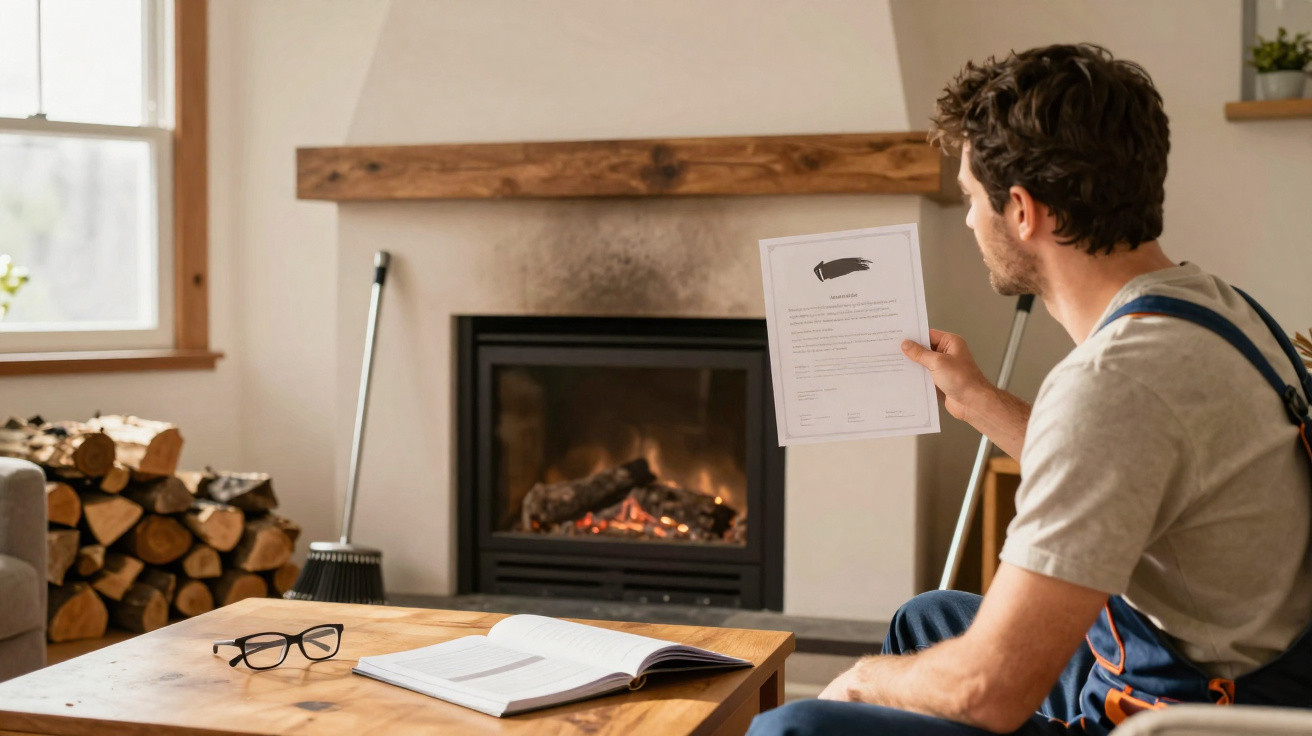
On a bitterly cold evening, the fire crackles while children watch the logs burn down, and calling the chimney sweep is put off yet again. After all, the stove appears to be working properly. Then a chimney fire or flames breaking out in the loft changes everything, and one question suddenly becomes pressing when completing the insurance claim: was the chimney swept, and can this be proved?
After a fire, a chimney sweeping certificate can carry considerable weight
We all know the moment when a household formality seems less pressing than everything else: the shopping, the bills, the boiler making an odd noise, and everyday life piling up. With a fireplace or wood-burning stove, postponing the task can become hazardous, as soot and tar deposits can build up inside the flue without any obvious outward sign.
When handling fire claims, insurers first try to establish the cause of the loss. A chimney fire that has got out of control, an overheated flue or embers reaching a nearby material may lead the loss adjuster to request the invoice and the chimney sweeping certificate. Without this paperwork, the property owner is often left trying to piece together an appointment that took place several months earlier and for which no record was kept.
Chimney sweeping is not merely an administrative box to tick: it is intended to remove deposits that obstruct the draw and may catch fire. A clean flue also reduces smoke blowback and exposure to carbon monoxide. A wood fire is comforting, but it does not always forgive shortcuts. Any compensation will then depend on the policy, the circumstances and the findings of the expert assessment.
What insurers actually consider after a claim
The simplest approach is to have the installation swept by a qualified professional, then keep the evidence with the property documents. How often this must be done may vary according to local regulations, local practice and the manufacturer's recommendations; an annual inspection is very commonly the starting point. For appliances in heavy use, a second visit during the heating season may be recommended.
A common mistake is assuming that cleaning the system yourself is always enough. Using a so-called “chimney-sweeping log” or emptying the ashes does not necessarily replace a professional sweep, nor does it provide the document required in the event of a dispute. Let us be honest: nobody really does this every day, and many households only discover what their policy requires when the problem has already occurred.
Failure to have a chimney swept does not automatically entitle an insurer to reject all cover: it must rely on the terms of the policy and, depending on the case, demonstrate a connection with the incident or a breach covered by the policy conditions. However, the conversation may become more difficult, delay settlement or result in disputed compensation.
“The strongest file is one that can show, with invoices to support it, that the installation has been maintained in line with the obligations and the manufacturer's recommendations,” notes a broker specialising in home insurance.
- Read the fire cover and exclusions set out in the home insurance policy;
- Request a detailed certificate after every chimney sweep;
- Photograph the installation and retain invoices in a digital folder;
- Report any crack, unusual smell or smoke blowback without delay.
A small appointment that prevents major worry
The best course is often to book an appointment before the first cold weather, while chimney sweeps still have available slots. Checking the condition of the flue, chimney cowl, stove seals and safety clearances around the appliance does not take an entire evening. These are modest actions compared with the cost of a fire, temporary accommodation and cherished memories going up in smoke.
Attention must also be paid to the fuel. Wood that is too damp creates more residue in the appliance, produces less heat and encourages deposits in the flue; waste, painted timber and treated pallets have no place in a fireplace. A clean fire starts before it is lit, with the selection and storage of the logs. This routine may seem ordinary until the day it genuinely protects a home.
Keeping supporting documents is not particularly dramatic, but this habit can transform the tone of a discussion with the loss adjuster after a claim. Both homeowners and tenants should know who is responsible for arranging maintenance, as this allocation depends on the tenancy agreement and the circumstances. Between the very real pleasure of a glowing fire and obligations that are sometimes overlooked, chimney sweeping remains the discreet appointment that should no longer be delayed.
| Key point | Detail | Benefit for the reader |
|---|---|---|
| Regular chimney sweeping | Use a professional in accordance with local rules, the insurance policy and how the appliance is used. | Reduces the risk of build-up, chimney fires and toxic fumes. |
| Proof of maintenance | Keep the invoice and chimney sweeping certificate in an accessible file. | Makes dealings with the insurer easier after a fire. |
| Insurance policy | Check the cover, exclusions and obligations relating to wood heating. | Prevents unpleasant surprises when making a compensation claim. |

















Comments
No comments yet. Be the first to comment!
Leave a Comment