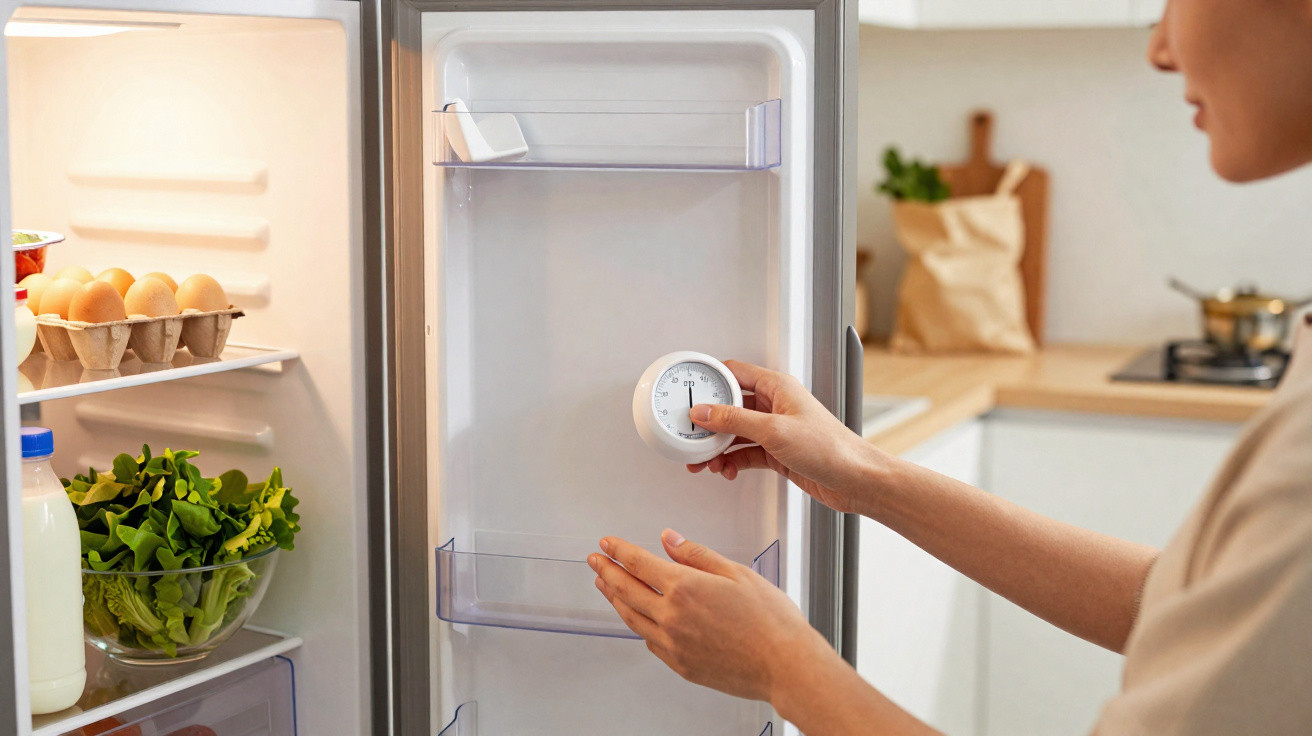
After a long day, you open the fridge expecting to find that crisp salad or leftover curry saved especially for you.
The light comes on, cool air brushes your face… and then you notice it: an unpleasant smell, cucumbers covered in slime, yoghurt puffed up like a balloon. You could swear you bought it just a few days earlier. The food bin gets fuller, the mental tally on your receipt grows, and you shut the door a little too sharply, irritated but unsure what has gone wrong.
Most of us point the finger at the supermarket, the “use by” date or plain bad luck. Far less often do we consider how we use the large, quietly humming cold cupboard in the background of everyday life. Yet a small daily behaviour may be undermining your shopping, and chances are you do it several times each day.
The most frustrating part is that you barely ever realise you are doing it.
The unnoticed habit that heats up your fridge
Picture this: someone is standing before an open fridge, gazing at the shelves and waiting for an idea to emerge from behind the jars. The door remains open. Cold air pours out like water from an overturned bucket, while warm, humid kitchen air takes its place within seconds. The motor starts working again with a quiet hum. There is no warning or drama, only a gradual, unseen disruption to the fridge’s internal conditions. Your food is the one that suffers for it.
Leaving the fridge open “just for a moment” is a common mistake that hastens food spoilage much more than people tend to imagine. By itself, it seems harmless: just part of domestic life, like putting the kettle on or turning on a light. But whenever the door is left open while you check your phone, speak to a child or search for mustard, the temperature inside can rise by several degrees.
Your food does not complain when this happens. It simply goes off more quickly.
In one British study, researchers monitored the temperatures inside family fridges over several days. Their findings resembled a rollercoaster rather than a refrigeration system. In some households, fridge temperatures repeatedly climbed from a safe 4°C to 9°C and back again during the day, simply because doors were opened and left wide during meal preparation. For bacteria, those recurring ups and downs are rather like tropical weather. Some estimates indicate that a 5°C increase can double the growth of certain microbes. That is hardly the sort of growth you want in leftover chicken.
Consider an ordinary Sunday: brunch is being made, children are looking for cheese sticks, one person is marinating meat and another is preparing Monday’s lunch. The door opens and stays open “while I just…” chop, check, chat or taste. By the end of the day, the fridge has had to fight repeated battles against warm air and condensation. It may still feel cool when you touch the outside, making everything seem fine. Your spinach and ham would tell a different story.
In technical terms, a fridge is intended to hold food below 5°C in order to slow bacterial growth. With the door open, warm air comes in and cold air escapes, although the shelves and food take longer to respond to the change. A thermometer may therefore fail to reveal the whole picture. The surfaces of exposed foods warm first, particularly items at the front and those stored in the door. This produces micro-zones in which bacteria can flourish, especially around ready-to-eat foods such as cooked meats, salads and dairy products. Over time, frequent temperature fluctuations put strain on the compressor, cause condensation in places and encourage frost build-up, each of which makes cooling less efficient.
This is not merely about the number shown on a display. It concerns the time food spends in the “danger zone” between 5°C and 60°C, where bacteria reproduce far more rapidly. Every prolonged, absent-minded look into the fridge is like giving them overtime. The process is invisible, but you notice it later when milk turns sooner than expected or strawberries become soft mush. The assumption that “the fridge keeps everything safe no matter what” soon disappears alongside wasted fruit and vegetables.
How to use your fridge without spoiling food
The answer does not require a smart fridge or a robotic approach to kitchen life. It begins a few minutes before your hand reaches the handle. Treat it as a quick routine: decide what you need, open the door, take it out and close it. Nothing more complicated than that. It is a mental shopping list in your own kitchen. Want butter, eggs and jam for breakfast? Name them in your head, open the fridge, take them purposefully and shut the door again. That can mean ten seconds rather than sixty.
While cooking, combine your fridge visits. Take out everything needed for the recipe in one go: meat, vegetables, sauce and herbs. Put them on the worktop, rather than repeatedly opening the door throughout the preparation. If something is forgotten, wait until it is actually required and make another short, deliberate trip. It may sound almost too straightforward, but it keeps cold air where it should be: surrounding your food rather than escaping into the kitchen.
Another useful detail is to make frequently used items easy to see and reach instead of hiding them at the back. Less searching means less time spent with the door open.
We have all seen somebody stand in front of an open fridge, transfixed, as though tonight’s dinner inspiration could suddenly appear behind the ketchup. It is only human. You are tired, hungry and not especially keen to make another decision. On a hot summer evening, the habit matters even more: the gap between the kitchen and fridge temperatures is greater, so every second takes its toll on lettuce and cheese.
There is also a curious psychological comfort in the cool light and low hum. The fridge can feel like a pause button in the middle of your day. Your yoghurt, however, is unconcerned with your need for a break. Each extended “thinking session” at the shelves adds to the unnoticed strain on your food. And, honestly, people do not keep the door open for so long because they have to; they do it because it is effortless.
Let us be honest: nobody truly follows this routine every day. No one is using a timer or planning fridge visits with military precision. Life is untidy. Children may forget to close the door fully, friends can linger around it at parties, and someone may leave it ajar after putting drinks away. The aim is not perfection. It is simply to cut out those unnecessary extra seconds and become aware enough to prevent the biggest waves of heat entering. A minor reflex can preserve a surprising amount of food – and money.
“The fridge is not a magic box that freezes time,” says a London-based food safety inspector I spoke to. “It just slows the clock. When people leave the door open, they basically press fast forward on that clock without realising it.”
This realistic approach is important, since guilt has never stopped anyone opening the fridge. Small, easy adjustments that become almost automatic after a week are more effective:
- Keep milk, deli meats and ready-to-eat leftovers off the door shelves, where temperature changes are greatest.
- Store the snacks and drinks your household reaches for most often on a clearly visible middle shelf.
- Choose transparent containers, so you can identify what you need immediately.
- Remove old food once a week, preventing you from searching through clutter with the door wide open.
- Give children one straightforward rule: open, choose, close – then inspect what you have taken out, rather than what remains inside.
Closing the fridge door slightly faster each day can quietly extend the life of almost everything stored inside.
What a small fridge-door change can save
Once you begin noticing the habit, the difference can feel almost obvious. The same bag of salad that previously wilted after three days may now last nearly a week. Cheese remains firm rather than becoming sweaty and splitting around the edges. By the middle of the week, strawberries look less like a biology experiment. You may not congratulate yourself, but you will notice fewer unpleasant fridge clear-outs and a food bin containing less food that was paid for but never eaten.
There is a further, subtler benefit. You start to view the fridge not as an unmoving piece of furniture but as a working system that responds to your behaviour. Its humming sound becomes less meaningless. Every lengthy open-door moment means more work for the compressor, more electricity drawn from the socket and a higher cost on the bill. You might not know the precise figures, but the connection becomes clear: speed up spoilage and you pay twice, once in the supermarket and once through household energy costs.
At a more personal level, this small piece of domestic awareness can touch a deeper issue. Food waste is not simply a statistic in a report; it is the guilt of scraping soft cucumbers into the bin. On a planet where some people miss meals, discarding an entire bag of grapes because they went mouldy in a back corner can sting, even if you dismiss it. Closing the door more promptly, deciding what to take before opening it and treating the fridge as a partner rather than a storage cave can lessen that feeling. It creates a small measure of control in a life that often feels hurried and improvised.
This common fridge mistake will not vanish entirely. People will still stare dreamily at the shelves at 10 p.m., hungry and exhausted, hoping for inspiration. But once you have seen that cloud of cold air spilling out, it is difficult to ignore it again. You will probably still do it occasionally. You will simply do it less often. Over a year, the difference between “always open” and “open with intention” could be the unseen dividing line between a fridge that quietly wastes money and one that quietly safeguards it.
| Key point | Detail | Benefit for the reader |
|---|---|---|
| Door-open time matters | Long or frequent openings raise internal temperature and speed up bacterial growth. | Helps reduce food spoilage and the risk of foodborne illness. |
| Simple planning works | Mental lists and grouped fridge trips keep the cold air inside where it belongs. | Extends shelf life without buying gadgets or changing your whole routine. |
| Smart layout supports habits | Placing high-risk foods away from the door and keeping favourites visible cuts rummaging time. | Makes everyday use easier, reduces waste and lowers the energy bill. |









Comments
No comments yet. Be the first to comment!
Leave a Comment